
 Label Bas Carbone
Examples: reducing the frequency of soil cultivation, minimalist plot preparation, restoring organic matter and preserving soil microfauna.

Examples: Consideration of wetlands, use of adapted species, drip-connected irrigation tools.
Examples: reduction in the use of chemical mineral fertilizers, phytosanitary products, measurement of crop needs in real time via predictive tools.
Improvement of the practices of a farm in Oise
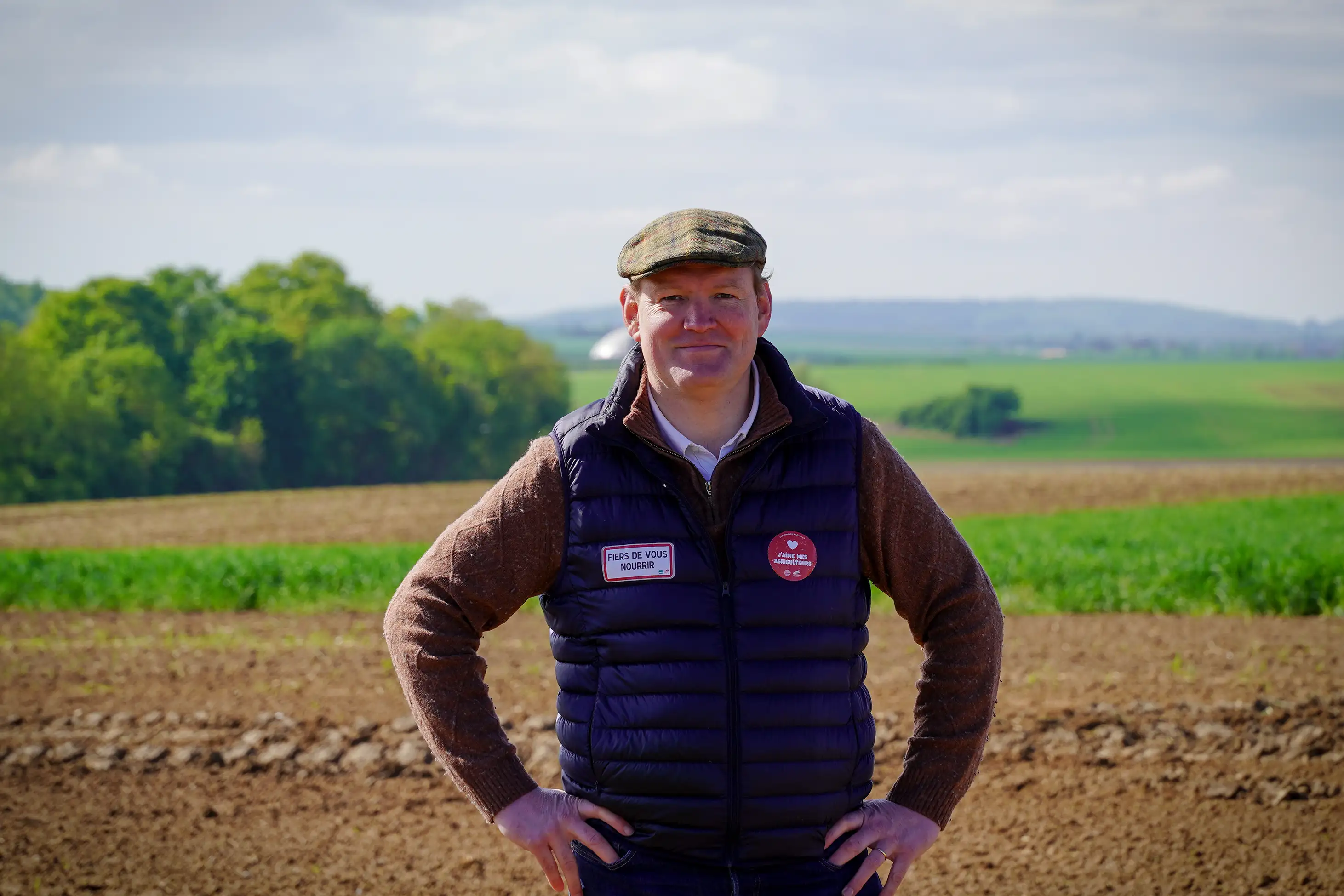
Jean Lefevre's farm is located in Ognes in the Oise region. It is charting a new path towards more environmentally friendly agriculture. This project emerges from Jean's desire to go beyond his current practices, paving the way for diversified and sustainable agriculture. The expected results are significant: by changing its practices, the operation will avoid the emission of 578.02 tonnes of CO2 equivalents per year, or 2890.1 tonnes over the five years of the project*.
Financing a project to reduce emissions in large scale crops makes it possible to reward reductions in emissions that are already effective depending on the progress of the project, unlike planting trees which will only sequester the CO2 expected in decades.
- Reduction of the dose of mineral nitrogen applied to crops : better optimization of inputs, less volatile forms of nitrogen, decision support tools, adjustment of yield targets, etc.
Introduction of crops with lower nitrogen requirements: legumes.
- Increase of permanent cover : This technique allows to increase the organic nitrogen produced by the crushing of intercrops to reduce the dose of mineral nitrogen brought on the crops. In addition, keeping the soil permanently covered will improve the soil structure by encouraging water infiltration during heavy rainfall and its retention.
- Increase the surface area sown with intermediate crops or catch crops : Increase in biomass produced sequestering carbon.
- Increase organic inputs : Additional inputs in the form of poultry manure to reduce mineral fertilizer inputs and burying of crop residues.
Distinguished agricultural practices
A fervent follower of agroecology, Jean Lefevre obtained High Environmental Value (HVE) certification for his operation in Hauts-de-France.
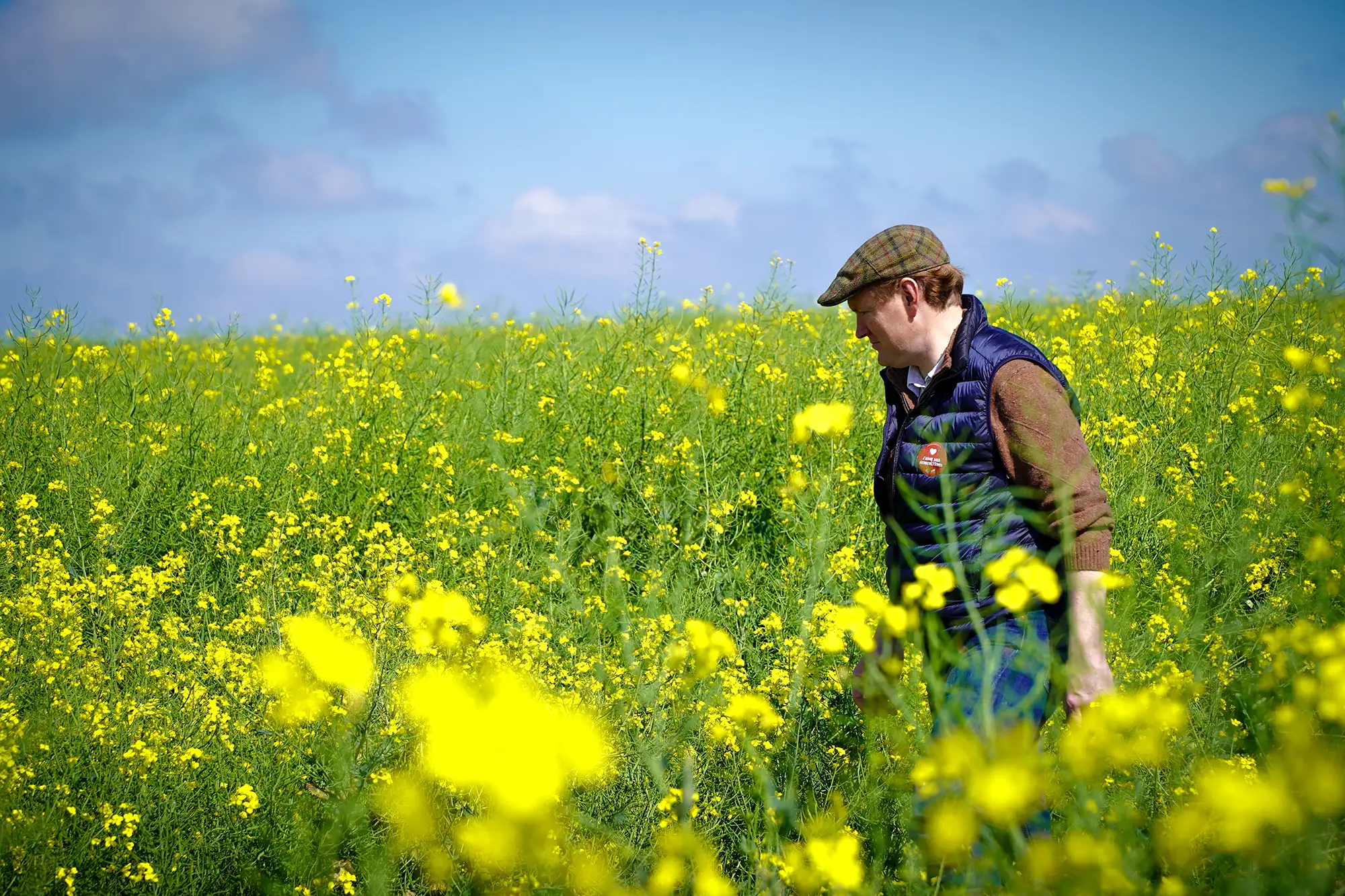
On his land, Jean favors crop rotation associated with legumes, such as beans intercropped with wheat. Periodic tillage to a depth of 15 cm, and the minimal use of phytosanitary products demonstrate its commitment to sustainable agriculture.
With a thoughtful approach, Jean constantly monitors his crops, intervening in an informed manner based on pH and other indicators such as sugar or chlorophyll levels. Thus, Jean Lefevre's farm in Ognes embodies a model of responsible agriculture, harmoniously integrating environmentally friendly practices and sustainable agricultural performance.
* The final value of the estimate will only be established after verification by an independent auditor and an administrative verification decision.
 Label Bas Carbone
Examples: reducing the frequency of soil cultivation, minimalist plot preparation, restoring organic matter and preserving soil microfauna.
Examples: Consideration of wetlands, use of adapted species, drip-connected irrigation tools.
Examples: reduction in the use of chemical mineral fertilizers, phytosanitary products, measurement of crop needs in real time via predictive tools.
Improvement of the practices of a farm in Oise
Jean Lefevre's farm is located in Ognes in the Oise region. It is charting a new path towards more environmentally friendly agriculture. This project emerges from Jean's desire to go beyond his current practices, paving the way for diversified and sustainable agriculture. The expected results are significant: by changing its practices, the operation will avoid the emission of 578.02 tonnes of CO2 equivalents per year, or 2890.1 tonnes over the five years of the project*.
Financing a project to reduce emissions in large scale crops makes it possible to reward reductions in emissions that are already effective depending on the progress of the project, unlike planting trees which will only sequester the CO2 expected in decades.
- Reduction of the dose of mineral nitrogen applied to crops : better optimization of inputs, less volatile forms of nitrogen, decision support tools, adjustment of yield targets, etc.
Introduction of crops with lower nitrogen requirements: legumes.
- Increase of permanent cover : This technique allows to increase the organic nitrogen produced by the crushing of intercrops to reduce the dose of mineral nitrogen brought on the crops. In addition, keeping the soil permanently covered will improve the soil structure by encouraging water infiltration during heavy rainfall and its retention.
- Increase the surface area sown with intermediate crops or catch crops : Increase in biomass produced sequestering carbon.
- Increase organic inputs : Additional inputs in the form of poultry manure to reduce mineral fertilizer inputs and burying of crop residues.
Distinguished agricultural practices
A fervent follower of agroecology, Jean Lefevre obtained High Environmental Value (HVE) certification for his operation in Hauts-de-France.
On his land, Jean favors crop rotation associated with legumes, such as beans intercropped with wheat. Periodic tillage to a depth of 15 cm, and the minimal use of phytosanitary products demonstrate its commitment to sustainable agriculture.
With a thoughtful approach, Jean constantly monitors his crops, intervening in an informed manner based on pH and other indicators such as sugar or chlorophyll levels. Thus, Jean Lefevre's farm in Ognes embodies a model of responsible agriculture, harmoniously integrating environmentally friendly practices and sustainable agricultural performance.
* The final value of the estimate will only be established after verification by an independent auditor and an administrative verification decision.