Discover projects tailored to your low-carbon strategy
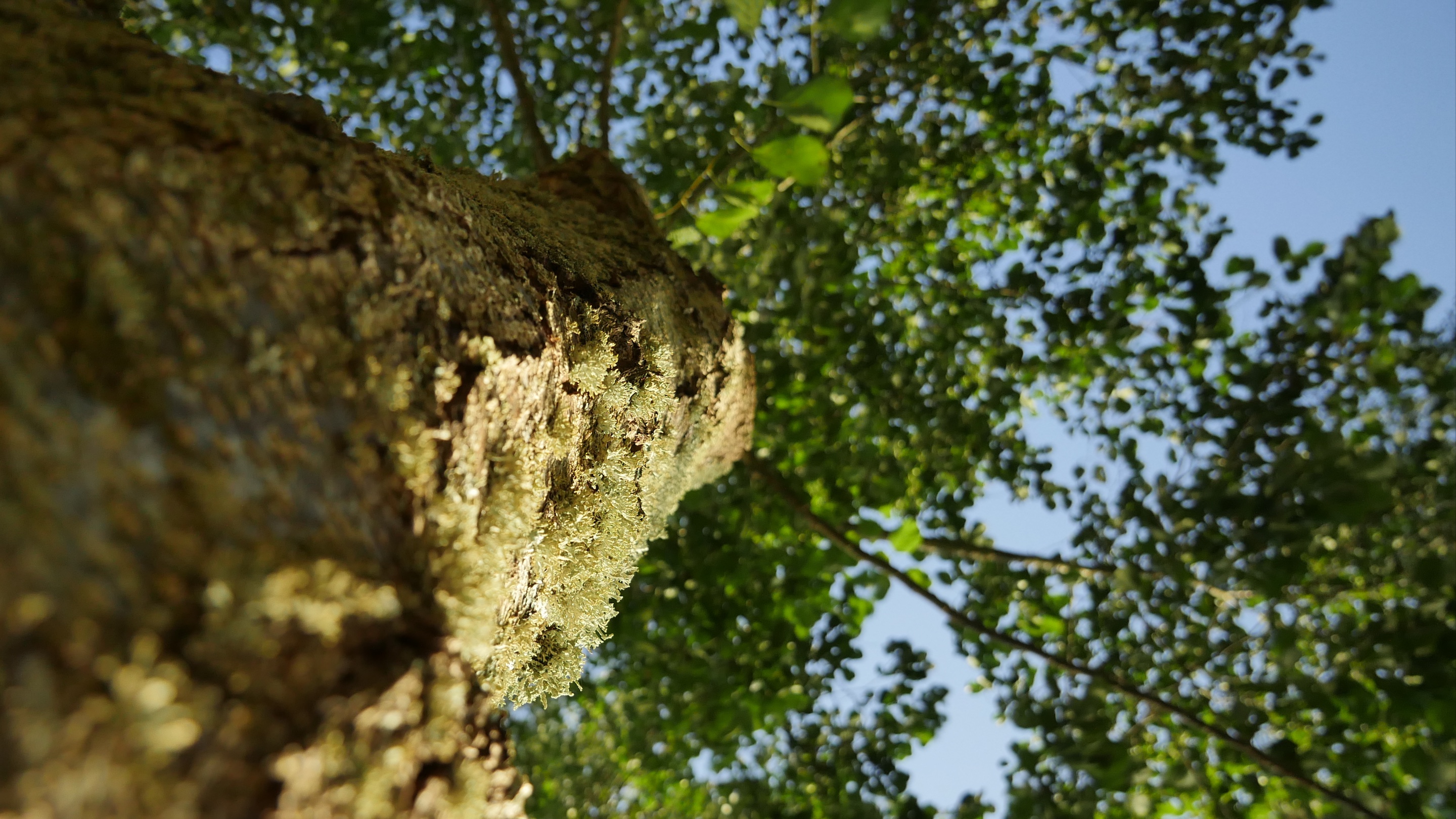
Carbonapp has established itself as the French leader in the development of multi-sector, multi-standard carbon contribution projects. These are all projects based on nature-based solutions: regenerative agriculture, reforestation of dying forest stands, restoration of Posidonia seagrass beds, but also industrial projects such as biochar production or the construction of bio-sourced buildings.
Benefit from tailor-made support
Carbonapp's 15-strong team is based in Rennes or Paris. Our carbon engineers specialise in decarbonisation and offsetting outside the value chain. The service provided by Carbonapp is comprehensive, covering legal, accounting, financial and carbon issues. Our aim is to optimise the social, economic and environmental impact of your voluntary financing.
Track your projects in real time
Our secure platform enables you to monitor your projects and consult all the associated documents (certification decisions, audit reports, contracts, invoices, etc.) for total transparency. Your dashboard can also be used to track, compile and extract data in the format of your choice (pdf, excel) to facilitate your extra-financial reporting. This data is returned in the formats expected by the most recent extra-financial declarations, such as the CSRD.
NO, Carbonapp is a project developer or project operator. In other words, our teams work directly with project owners in the construction of their carbon offset project, in the generation of the related carbon credits, and in the financial valuation of these credits. The Carbonapp Platform only presents projects developed by Carbonapp.
The location is an important point, as it allows you to take a local approach, to the benefit of a local dynamic. Our catalogue and its interactive map allow you to visualise the location and nature of these projects. The type of project can also be an important criterion, as can its environmental and socio-economic co-benefits. Finally, volume (in tonnes of CO2 equivalent), standard (low-carbon label, Puro.earth, Riverse, GoldStandard, etc.) and price are decisive factors in finding the ideal project.
The Carbonapp team works directly with project owners throughout France and abroad (Canada, USA, Europe), in all sectors. These include farmers, foresters, winegrowers, livestock farmers and agroforesters, as well as property companies and reconditioners implementing circular economy projects. They all mandated Carbonapp to help them generate their carbon credits and enhance the financial value of their projects.
All the projects proposed by Carbonapp are certified by the best standards in the market. The Label Bas-Carbone is the spearhead of this process, supported by the French Ministry for Ecological Transition. It is the only government offset label recognised in France and internationally. Carbonapp also uses other carbon offsetting standards such as Riverse, Gold Standard and Puro.earth.
Carbonapp runs a large network of partners throughout France and internationally, in all sectors. Our role is to encourage the emergence of local carbon offset projects and to support the low-carbon transition of industries. We draw on the expertise of forestry and agricultural experts, circular economy consultancies, forestry and agricultural cooperatives, chambers of agriculture and others who join us every day. Our platform allows you to put out local calls for projects, so that the best carbon contribution projects emerge, depending on your requirements.
Some large projects may require several funders, and the platform is transparent on this point. Conversely, some ambitious funders (large carbon equivalent tonnage) may require several projects, for which a carbon contribution portfolio is set up. In practice, we favour exclusive project financing as much as possible in order to facilitate financing and operational deployment on the ground. Carbonapp is able to propose projects ranging from a few tens of TeqCO2 to several tens of thousands of TeqCO2.
The voluntary carbon contribution is aimed at companies, local authorities and individuals. It is known as a voluntary contribution, as opposed to the bond scheme, which is aimed solely at companies with the highest greenhouse gas emissions, such as manufacturers and energy companies, which are subject to the NAP (National Allocation Plan). In this way, the voluntary carbon contribution makes it possible to go beyond one's own perimeter; within one's value chain for "Insetting" or outside one's value chain for "Offsetting". The voluntary carbon contribution is used in conjunction with an action plan to reduce and avoid the funder's carbon footprint as part of an exemplary low-carbon approach.
Carbon offsetting is the legal name for the scheme as it stands. All the legal, scientific and accounting literature refers to it as such. Carbon offsetting, on the other hand, refers to the action of offsetting part, all or more of one's GHG emissions. For example, some public services are subject to the Climate and Resilience Act and must offset certain areas of their activities, which is a regulated carbon contribution. On the other hand, others do so voluntarily and can be referred to as a voluntary carbon contribution. Historically, the term "offsetting" was widely used, but it implied that financing projects would make it possible to offset, and therefore "cancel out", a company's emissions. The term, as used, was therefore a bridge to corporate or product carbon neutrality, which is not scientifically possible. It is this interpretation that has given rise to 'greenwashing'. In fact, net carbon neutrality can only be assessed on a planetary scale, and carbon offsetting actions have been renamed carbon contribution to better illustrate participation in planetary net carbon neutrality.