
 Label Bas Carbone
Examples: reducing the frequency of soil cultivation, minimalist plot preparation, restoring organic matter and preserving soil microfauna.

Examples: diversity and locality of crop species, preservation of habitat for local flora and fauna, presence of beehives for pollination.

Examples: Consideration of wetlands, use of adapted species, drip-connected irrigation tools.
EI Emmanuel Carbonnière
EI Emmanuel Carbonnière - Exploitation agricole cultivant entre autres des noyers.
Read morePlantation of 0.64 hectare of walnut trees in Corrèze
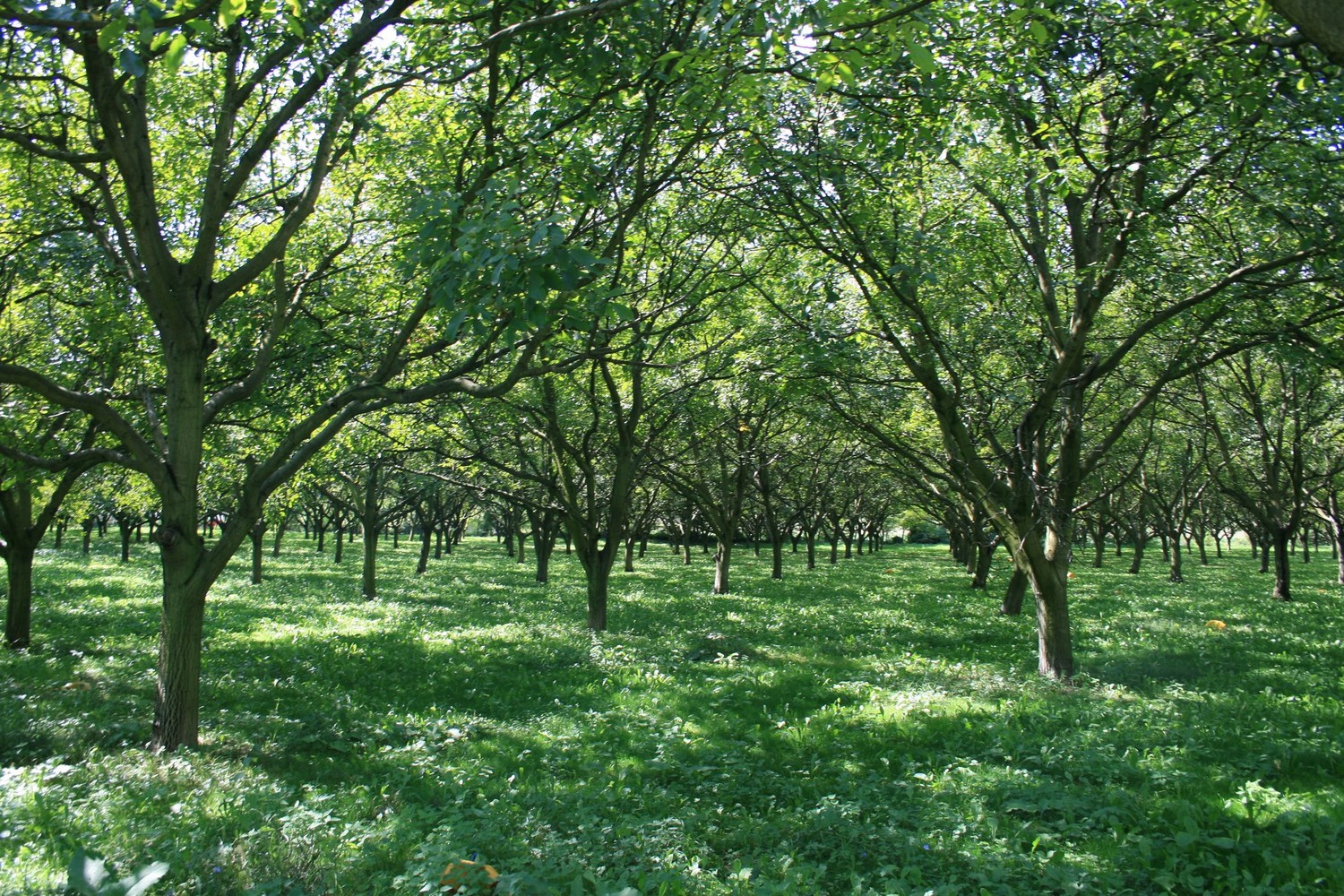
Located in the heart of Corrèze, the commune of Saint-Julien-Maumont is part of the Nouvelle-Aquitaine region, renowned for its rolling landscapes, fertile agricultural land, and rich rural heritage. This area, shaped by plateaus and valleys, enjoys a temperate climate with oceanic influences, making it ideal for diversified agriculture such as fruit cultivation and livestock farming. Corrèze is distinguished by its charming villages, rivers, and forests, with a longstanding tradition of mixed farming and agroforestry. The local economy is built on agriculture, crafts, and green tourism, highlighting the region’s terroir and expertise. Walnut cultivation has a special place in Corrèze, with the Franquette variety recognized as a benchmark for French walnuts.
Emmanuel Carbonnière plans to plant 0.64 hectares of Walnut trees in January 2023. The selected plots were previously used for annual cereal crops.
Planting permanent trees will sequester more CO2 throughout the year compared to a temporary crop. This project will make it possible to store 28.95 tons of CO2 equivalent in 20 years*.
The farm has been certified High Environmental Value (HVE) since 2022, which guarantees a reasoned and efficient management of its inputs (fertilizers, irrigation, phytosanitary products) as well as the preservation of hedges, tree lines, wood edges and others. natural features of ecological interest around the plots.
The orchard will use a micro-irrigation system to use a minimum of water.
The soil will also be able to sequester more CO2 because it will no longer be worked each year. In addition, this new plantation will require little fertilizer and treatment compared to previous crops. This new cultural itinerary will contribute to avoiding emissions and makes the project even more virtuous.
* The final value of the estimate will only be established after verification by an independent auditor and an administrative verification decision.
 Label Bas Carbone
Examples: reducing the frequency of soil cultivation, minimalist plot preparation, restoring organic matter and preserving soil microfauna.
Examples: diversity and locality of crop species, preservation of habitat for local flora and fauna, presence of beehives for pollination.
Examples: Consideration of wetlands, use of adapted species, drip-connected irrigation tools.
EI Emmanuel Carbonnière
EI Emmanuel Carbonnière - Exploitation agricole cultivant entre autres des noyers.
Read morePlantation of 0.64 hectare of walnut trees in Corrèze
Located in the heart of Corrèze, the commune of Saint-Julien-Maumont is part of the Nouvelle-Aquitaine region, renowned for its rolling landscapes, fertile agricultural land, and rich rural heritage. This area, shaped by plateaus and valleys, enjoys a temperate climate with oceanic influences, making it ideal for diversified agriculture such as fruit cultivation and livestock farming. Corrèze is distinguished by its charming villages, rivers, and forests, with a longstanding tradition of mixed farming and agroforestry. The local economy is built on agriculture, crafts, and green tourism, highlighting the region’s terroir and expertise. Walnut cultivation has a special place in Corrèze, with the Franquette variety recognized as a benchmark for French walnuts.
Emmanuel Carbonnière plans to plant 0.64 hectares of Walnut trees in January 2023. The selected plots were previously used for annual cereal crops.
Planting permanent trees will sequester more CO2 throughout the year compared to a temporary crop. This project will make it possible to store 28.95 tons of CO2 equivalent in 20 years*.
The farm has been certified High Environmental Value (HVE) since 2022, which guarantees a reasoned and efficient management of its inputs (fertilizers, irrigation, phytosanitary products) as well as the preservation of hedges, tree lines, wood edges and others. natural features of ecological interest around the plots.
The orchard will use a micro-irrigation system to use a minimum of water.
The soil will also be able to sequester more CO2 because it will no longer be worked each year. In addition, this new plantation will require little fertilizer and treatment compared to previous crops. This new cultural itinerary will contribute to avoiding emissions and makes the project even more virtuous.
* The final value of the estimate will only be established after verification by an independent auditor and an administrative verification decision.