
 Label Bas Carbone
Examples: reducing the frequency of soil cultivation, minimalist plot preparation, restoring organic matter and preserving soil microfauna.

Examples: territorial dynamics, societal demand, diversification of the activity, local sales/processing, working conditions, sharing of good practices.

Examples: Consideration of wetlands, use of adapted species, drip-connected irrigation tools.
EARL de la Grange
EARL de la Grange - Exploitation agricole cultivant entre autres des noyers
Read morePlantation of 2.52 hectares of walnut trees
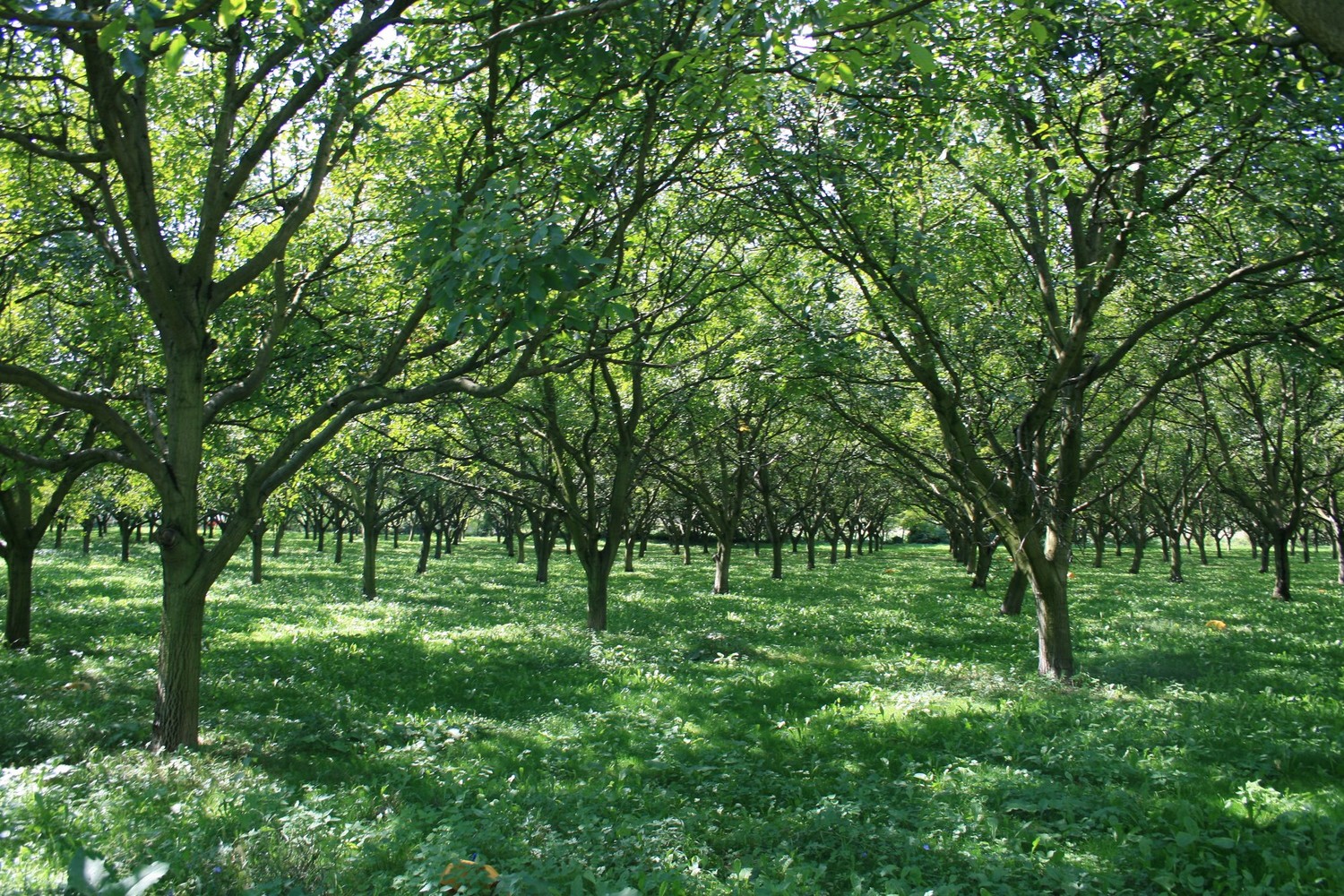
The village of Bardenac, nestled in the Charente department, in the Nouvelle-Aquitaine region, embodies the authentic charm of French countryside. This rural area, influenced by a mild oceanic climate with warm summers and temperate winters, has a history rooted in diversified agriculture. Charente, with its rich clay-limestone soils and rolling landscapes, is a stronghold of cattle farming and arboriculture. A region of traditional polyculture, it hosts ancestral orchards and temporary meadows, supporting a local economy tied to the terroir.
Mr. Nicolas Roy plans to plant 2.52 hectares of walnut trees in January 2023 to expand his fruit orchards. The selected plots were previously used for temporary grassland.
Planting permanent trees will sequester more CO2 throughout the year compared to a temporary crop. This project will make it possible to store 118.61 tonnes of CO2 equivalent in 20 years*.
The soil will also be able to sequester more CO2 because it will no longer be worked each year. In addition, this new plantation will require little fertilizer and treatment compared to previous crops. This new cultural itinerary will contribute to avoiding emissions and makes the project even more virtuous.
The project responds to social and economic issues: Most walnut production will be sold in France.
The farmer is keen to limit soil disturbance: The soil will no longer be worked after the orchard is planted.
Water resources will be protected: In order to limit soil erosion, leaching and therefore overconsumption of fertilizers, 80% of the orchard will benefit from permanent grass cover. An action that will also be very beneficial for local biodiversity. No use of phytosanitary product is planned for these orchards.
* The final value of the estimate will only be established after verification by an independent auditor and an administrative verification decision.
 Label Bas Carbone
Examples: reducing the frequency of soil cultivation, minimalist plot preparation, restoring organic matter and preserving soil microfauna.
Examples: territorial dynamics, societal demand, diversification of the activity, local sales/processing, working conditions, sharing of good practices.
Examples: Consideration of wetlands, use of adapted species, drip-connected irrigation tools.
EARL de la Grange
EARL de la Grange - Exploitation agricole cultivant entre autres des noyers
Read morePlantation of 2.52 hectares of walnut trees
The village of Bardenac, nestled in the Charente department, in the Nouvelle-Aquitaine region, embodies the authentic charm of French countryside. This rural area, influenced by a mild oceanic climate with warm summers and temperate winters, has a history rooted in diversified agriculture. Charente, with its rich clay-limestone soils and rolling landscapes, is a stronghold of cattle farming and arboriculture. A region of traditional polyculture, it hosts ancestral orchards and temporary meadows, supporting a local economy tied to the terroir.
Mr. Nicolas Roy plans to plant 2.52 hectares of walnut trees in January 2023 to expand his fruit orchards. The selected plots were previously used for temporary grassland.
Planting permanent trees will sequester more CO2 throughout the year compared to a temporary crop. This project will make it possible to store 118.61 tonnes of CO2 equivalent in 20 years*.
The soil will also be able to sequester more CO2 because it will no longer be worked each year. In addition, this new plantation will require little fertilizer and treatment compared to previous crops. This new cultural itinerary will contribute to avoiding emissions and makes the project even more virtuous.
The project responds to social and economic issues: Most walnut production will be sold in France.
The farmer is keen to limit soil disturbance: The soil will no longer be worked after the orchard is planted.
Water resources will be protected: In order to limit soil erosion, leaching and therefore overconsumption of fertilizers, 80% of the orchard will benefit from permanent grass cover. An action that will also be very beneficial for local biodiversity. No use of phytosanitary product is planned for these orchards.
* The final value of the estimate will only be established after verification by an independent auditor and an administrative verification decision.