
 Label Bas Carbone
Examples: reducing the frequency of soil cultivation, minimalist plot preparation, restoring organic matter and preserving soil microfauna.

Examples: Consideration of wetlands, use of adapted species, drip-connected irrigation tools.

Examples: reduction of energy consumption of mobile and stationary installations, reduction of journeys, on-site energy production.
Examples: reduction in the use of chemical mineral fertilizers, phytosanitary products, measurement of crop needs in real time via predictive tools.
Improving practices on a 258-hectare arable farm
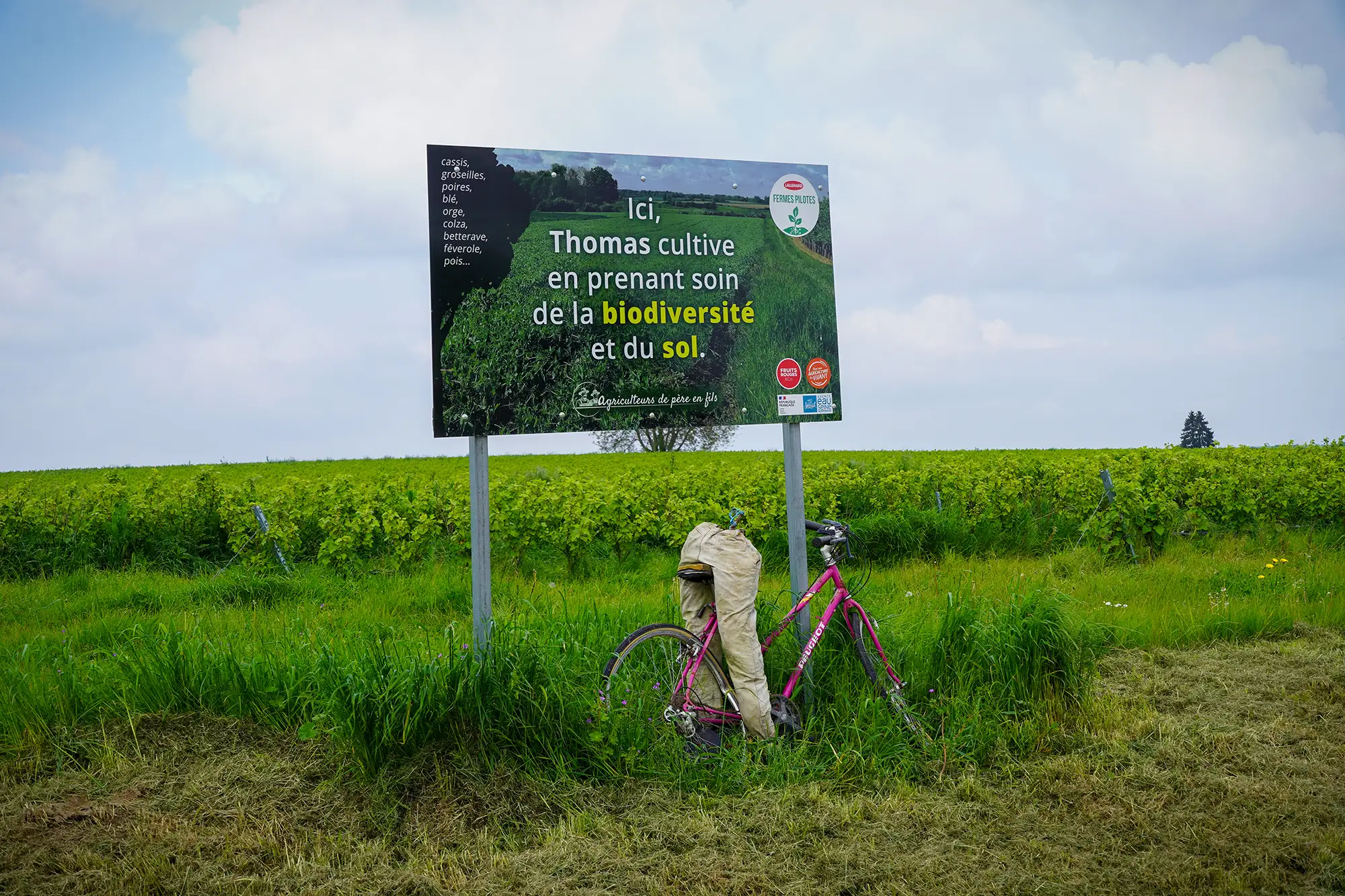
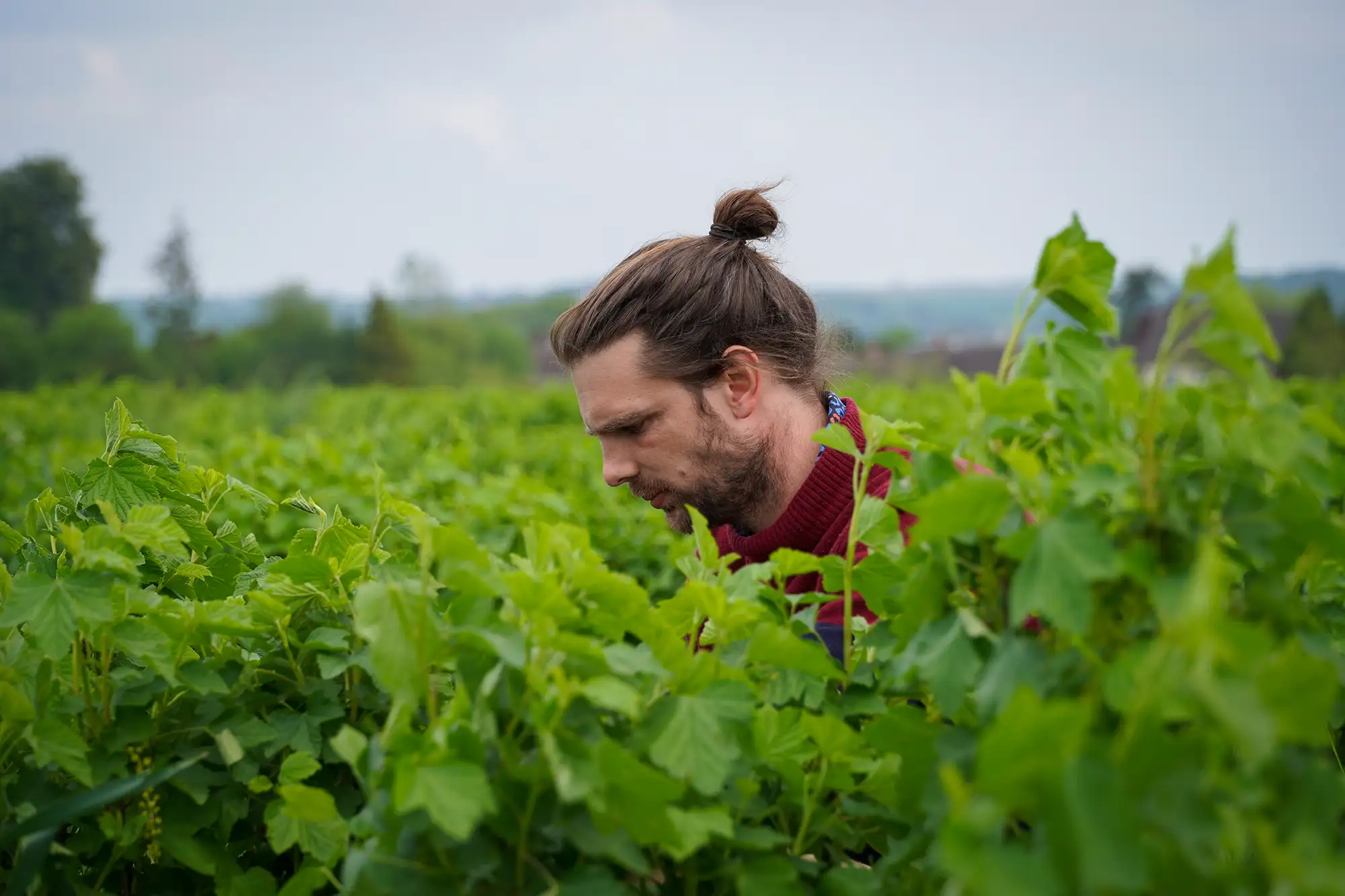
Thomas Douteluingne's farm, EARL des Novales, has been a family business for over 100 years, located in Marolles in the Oise county. In 2021, Thomas moved in with his father Marc, and took over the farm in 2023. It's a diversified operation, producing cereals, protein crops, oilseeds, sugar beet and also pear, blackcurrant and redcurrant orchards. More recently, the farm has started producing hemp.
In the coming years, Thomas Doutreluingne plans to develop several projects :
- develop conservation agriculture, direct seeding and carbon storage practices.
- expand his organic red fruit orchards.
- set up a sheep farm to enhance the value of his meadows.
- develop agroforestry on pastures and hedges on the plain.
With this project, the farmer aims to take his approach to diversified, more environmentally-friendly agriculture a step further. By changing its practices, the farm will avoid the emission of 423.48 tonnes of CO2 equivalent per year, i.e. 2117.4 tonnes over the 5 years of the project*.
Financing a project to reduce emissions in large scale crops makes it possible to reward reductions in emissions that are already effective depending on the progress of the project, unlike planting trees which will only sequester the CO2 expected in decades.
Reduce greenhouse gas emissions linked to fertilization:
- Reducing the amount of mineral nitrogen applied to crops: better optimization of inputs, less volatile forms of nitrogen, decision-support tools, adjustment of yield targets, etc.
Introduction of new crops in rotation with lower nitrogen requirements (legumes).
Reduce greenhouse gas emissions linked to fossil fuels:
- Reduce tillage and switch to direct seeding
Increase soil carbon storage:
- Improving seeding techniques and species sown to increase the biomass produced by long intercrops
The farm's projects are in line with society's expectations :
Water : limiting diffuse pollution through the creation of an organic blackcurrant and redcurrant orchard.
Social : hiring local employees.
Carbon : implementation of conservation agriculture for carbon sequestration.
* The final value of the estimate will only be established after verification by an independent auditor and an administrative verification decision.
 Label Bas Carbone
Examples: reducing the frequency of soil cultivation, minimalist plot preparation, restoring organic matter and preserving soil microfauna.
Examples: Consideration of wetlands, use of adapted species, drip-connected irrigation tools.
Examples: reduction of energy consumption of mobile and stationary installations, reduction of journeys, on-site energy production.
Examples: reduction in the use of chemical mineral fertilizers, phytosanitary products, measurement of crop needs in real time via predictive tools.
Improving practices on a 258-hectare arable farm
Thomas Douteluingne's farm, EARL des Novales, has been a family business for over 100 years, located in Marolles in the Oise county. In 2021, Thomas moved in with his father Marc, and took over the farm in 2023. It's a diversified operation, producing cereals, protein crops, oilseeds, sugar beet and also pear, blackcurrant and redcurrant orchards. More recently, the farm has started producing hemp.
In the coming years, Thomas Doutreluingne plans to develop several projects :
- develop conservation agriculture, direct seeding and carbon storage practices.
- expand his organic red fruit orchards.
- set up a sheep farm to enhance the value of his meadows.
- develop agroforestry on pastures and hedges on the plain.
With this project, the farmer aims to take his approach to diversified, more environmentally-friendly agriculture a step further. By changing its practices, the farm will avoid the emission of 423.48 tonnes of CO2 equivalent per year, i.e. 2117.4 tonnes over the 5 years of the project*.
Financing a project to reduce emissions in large scale crops makes it possible to reward reductions in emissions that are already effective depending on the progress of the project, unlike planting trees which will only sequester the CO2 expected in decades.
Reduce greenhouse gas emissions linked to fertilization:
- Reducing the amount of mineral nitrogen applied to crops: better optimization of inputs, less volatile forms of nitrogen, decision-support tools, adjustment of yield targets, etc.
Introduction of new crops in rotation with lower nitrogen requirements (legumes).
Reduce greenhouse gas emissions linked to fossil fuels:
- Reduce tillage and switch to direct seeding
Increase soil carbon storage:
- Improving seeding techniques and species sown to increase the biomass produced by long intercrops
The farm's projects are in line with society's expectations :
Water : limiting diffuse pollution through the creation of an organic blackcurrant and redcurrant orchard.
Social : hiring local employees.
Carbon : implementation of conservation agriculture for carbon sequestration.
* The final value of the estimate will only be established after verification by an independent auditor and an administrative verification decision.