 Label Bas Carbone
Examples: reducing the frequency of soil cultivation, minimalist plot preparation, restoring organic matter and preserving soil microfauna.

Examples: diversity and locality of crop species, preservation of habitat for local flora and fauna, presence of beehives for pollination.

Examples: territorial dynamics, societal demand, diversification of the activity, local sales/processing, working conditions, sharing of good practices.
Restoration of a dying forest
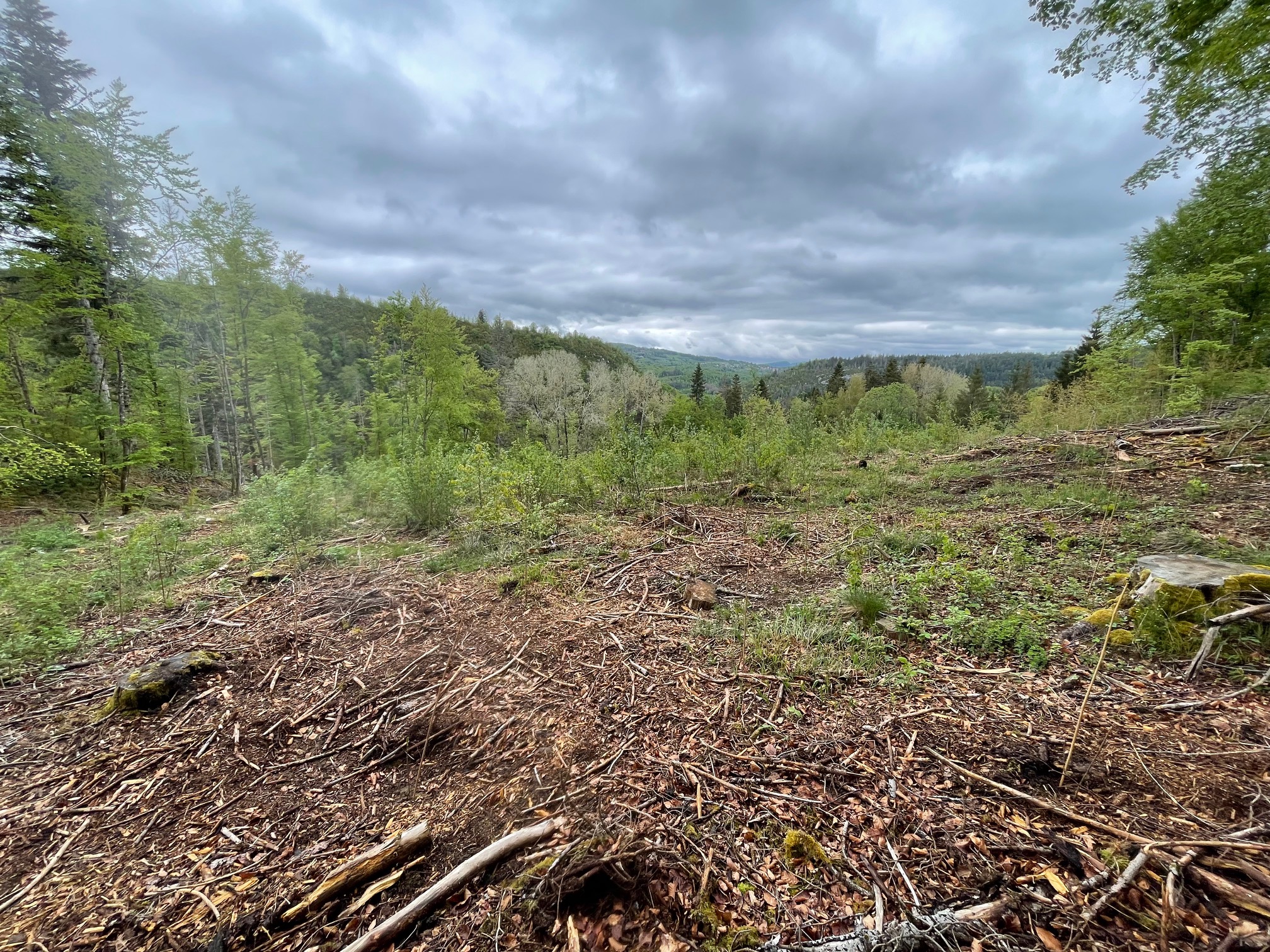
Due to the shortening of cold winters, regulating insect populations, bark beetles develop exponentially and nibble the stands. In the spruce forests of eastern France, the impact is considerable.
This epidemic causes rapid decline, even the death of trees. This phenomenon is easily identifiable with stands turning from green to brown or white, becoming sensitive to the slightest gust of wind. These “dry” forests end up crashing to the ground, giving way to desolate landscapes and no longer capture CO2. If the forest massif is neither adapted nor renewed, this situation can lead to its gradual disappearance.
Since the trees no longer have value, silvicultural management is also compromised. We are talking here about "silvicultural impasse".
This 4.3 hectare reforestation project located in Choux in the Jura will store 1,357 tonnes of CO2 equivalent over 30 years*.
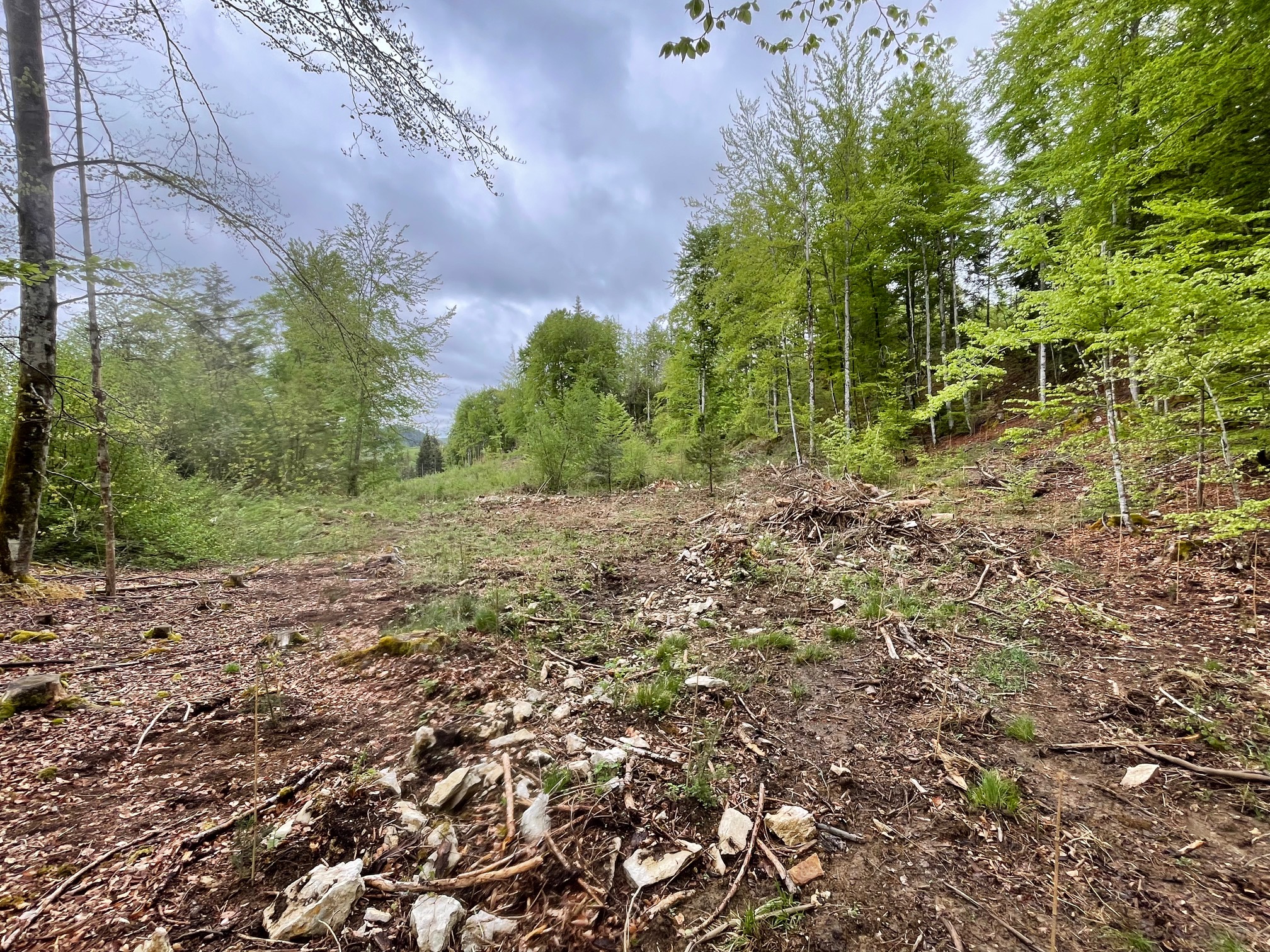
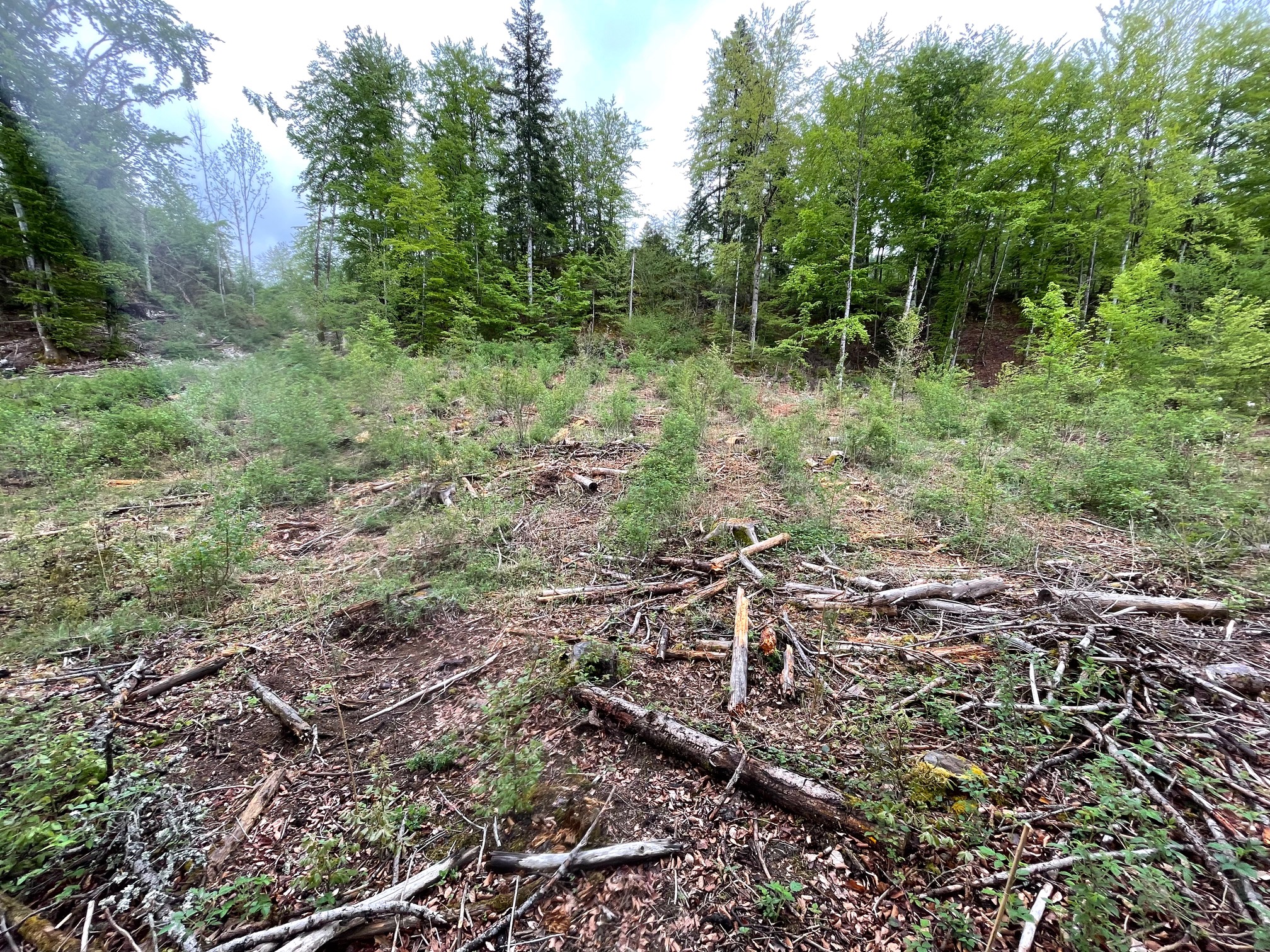
The plots concerned by the project will be entirely harvested because of the bark beetle. The stand in place was unfortunately monospecific and reforestation is therefore essential. It was chosen to install a very diversified mix of species (Douglas fir, sycamore maple, cherry, silver fir, Nordmann fir, wild service tree, Atlas cedar, sessile oak and larch) better suited to prolonged hot periods.
The work will be carried out by a local company. The organic matter of the soil will be enriched by the crushing of remnants of the old stand and a very superficial preparation of the soil is planned to preserve the life of the soil. The existing hardwoods on the edge will be preserved and accompanied by new hardwood species.
* The final value of the estimate will only be established after verification by an independent auditor and an administrative verification decision.
 Label Bas Carbone
Examples: reducing the frequency of soil cultivation, minimalist plot preparation, restoring organic matter and preserving soil microfauna.
Examples: diversity and locality of crop species, preservation of habitat for local flora and fauna, presence of beehives for pollination.
Examples: territorial dynamics, societal demand, diversification of the activity, local sales/processing, working conditions, sharing of good practices.
Restoration of a dying forest
Due to the shortening of cold winters, regulating insect populations, bark beetles develop exponentially and nibble the stands. In the spruce forests of eastern France, the impact is considerable.
This epidemic causes rapid decline, even the death of trees. This phenomenon is easily identifiable with stands turning from green to brown or white, becoming sensitive to the slightest gust of wind. These “dry” forests end up crashing to the ground, giving way to desolate landscapes and no longer capture CO2. If the forest massif is neither adapted nor renewed, this situation can lead to its gradual disappearance.
Since the trees no longer have value, silvicultural management is also compromised. We are talking here about "silvicultural impasse".
This 4.3 hectare reforestation project located in Choux in the Jura will store 1,357 tonnes of CO2 equivalent over 30 years*.
The plots concerned by the project will be entirely harvested because of the bark beetle. The stand in place was unfortunately monospecific and reforestation is therefore essential. It was chosen to install a very diversified mix of species (Douglas fir, sycamore maple, cherry, silver fir, Nordmann fir, wild service tree, Atlas cedar, sessile oak and larch) better suited to prolonged hot periods.
The work will be carried out by a local company. The organic matter of the soil will be enriched by the crushing of remnants of the old stand and a very superficial preparation of the soil is planned to preserve the life of the soil. The existing hardwoods on the edge will be preserved and accompanied by new hardwood species.
* The final value of the estimate will only be established after verification by an independent auditor and an administrative verification decision.