
 Label Bas Carbone
Examples: reducing the frequency of soil cultivation, minimalist plot preparation, restoring organic matter and preserving soil microfauna.

Examples: diversity and locality of crop species, preservation of habitat for local flora and fauna, presence of beehives for pollination.

Examples: territorial dynamics, societal demand, diversification of the activity, local sales/processing, working conditions, sharing of good practices.

Examples: Consideration of wetlands, use of adapted species, drip-connected irrigation tools.
Follow the conversion of a field crop farm into a new walnut orchard, lead by Pierre Valade and his sister Florence Verheyen
This orchard project run by Florence Verheyen, located in the heart of Périgord, consists of the conversion of field crop plots into 11 Ha of walnut orchards. This project is part of a collective movement of planting chestnut and walnut orchards on several farms. It will enable the additional storage of 581.85 tonnes of CO2 equivalent in 20 years*, the promotion of good agricultural practices, the development of biodiversity, water resource and many other co-benefits.
This former cereal farm, formerly run by the English, has been converted into an orchard which will see walnut trees and truffle oaks growing on its land. Pierre Valade, who once worked in finance, took over this operation and is helped by his sister Florence Verheyen, a farmer and bison breeder in Creuse.
The operator is keen to limit soil disturbance:Depending on the mode of operation, the soil is at risk of direct or indirect disturbance with the passage of heavy machinery, the partial destruction of vegetation or herbaceous cover which may affect both flora and fauna. In an effort to limit these risks, the farm is committed to a low frequency of deep tillage operations. Soil fertility will be developed through organic input practices.
Various levers will be put in place to preserve biodiversity: In order to avoid synthetic phytosanitary treatments, not only very impacting for the fauna and flora, but also heavy in greenhouse gases, a mechanical control will be performed on weeds. Biocontrol products using natural mechanisms will be applied as a substitute for conventional products. Their goal is to ensure a balance between insect populations to favor natural regulation.
Water resources will be protected: In order to limit soil erosion, leaching and therefore overconsumption of fertilizers, 95% of orchards will benefit from permanent grass cover. This action, combined with an irrigation system optimizing water supply (drip, micro-irrigation, etc.) and the use of management tools, will avoid overconsumption of water.
Finally, this project is also very positive from a socio-economic point of view. It makes it possible to diversify the sources of income for farmers and to ensure the creation of jobs on the various farms brought together in this project. It also brings added value to the scale of the territory through the sale of production from the orchards.
* The final value of the estimate will only be established after verification by an independent auditor and an administrative verification decision.
 Label Bas Carbone
Examples: reducing the frequency of soil cultivation, minimalist plot preparation, restoring organic matter and preserving soil microfauna.
Examples: diversity and locality of crop species, preservation of habitat for local flora and fauna, presence of beehives for pollination.
Examples: territorial dynamics, societal demand, diversification of the activity, local sales/processing, working conditions, sharing of good practices.
Examples: Consideration of wetlands, use of adapted species, drip-connected irrigation tools.
Follow the conversion of a field crop farm into a new walnut orchard, lead by Pierre Valade and his sister Florence Verheyen
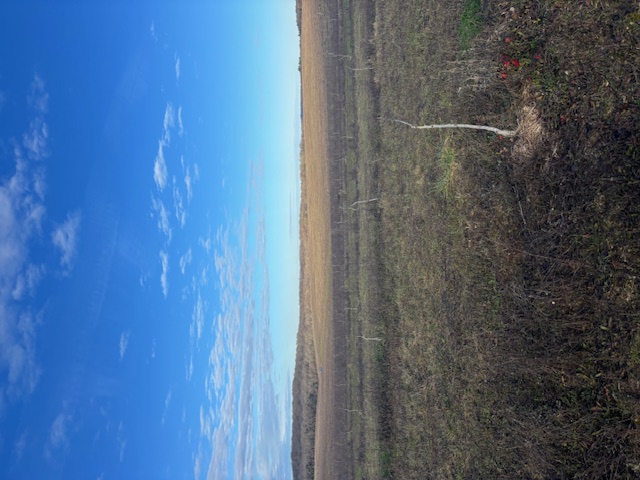
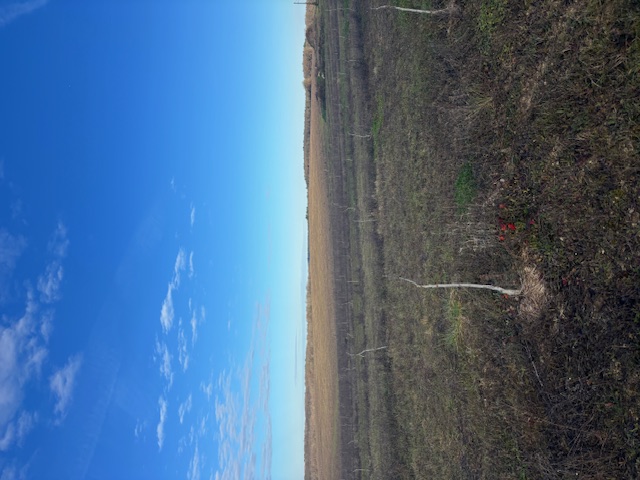
This orchard project run by Florence Verheyen, located in the heart of Périgord, consists of the conversion of field crop plots into 11 Ha of walnut orchards. This project is part of a collective movement of planting chestnut and walnut orchards on several farms. It will enable the additional storage of 581.85 tonnes of CO2 equivalent in 20 years*, the promotion of good agricultural practices, the development of biodiversity, water resource and many other co-benefits.
This former cereal farm, formerly run by the English, has been converted into an orchard which will see walnut trees and truffle oaks growing on its land. Pierre Valade, who once worked in finance, took over this operation and is helped by his sister Florence Verheyen, a farmer and bison breeder in Creuse.
The operator is keen to limit soil disturbance:Depending on the mode of operation, the soil is at risk of direct or indirect disturbance with the passage of heavy machinery, the partial destruction of vegetation or herbaceous cover which may affect both flora and fauna. In an effort to limit these risks, the farm is committed to a low frequency of deep tillage operations. Soil fertility will be developed through organic input practices.
Various levers will be put in place to preserve biodiversity: In order to avoid synthetic phytosanitary treatments, not only very impacting for the fauna and flora, but also heavy in greenhouse gases, a mechanical control will be performed on weeds. Biocontrol products using natural mechanisms will be applied as a substitute for conventional products. Their goal is to ensure a balance between insect populations to favor natural regulation.
Water resources will be protected: In order to limit soil erosion, leaching and therefore overconsumption of fertilizers, 95% of orchards will benefit from permanent grass cover. This action, combined with an irrigation system optimizing water supply (drip, micro-irrigation, etc.) and the use of management tools, will avoid overconsumption of water.
Finally, this project is also very positive from a socio-economic point of view. It makes it possible to diversify the sources of income for farmers and to ensure the creation of jobs on the various farms brought together in this project. It also brings added value to the scale of the territory through the sale of production from the orchards.
* The final value of the estimate will only be established after verification by an independent auditor and an administrative verification decision.