
 Label Bas Carbone
Examples: reducing the frequency of soil cultivation, minimalist plot preparation, restoring organic matter and preserving soil microfauna.

Examples: diversity and locality of crop species, preservation of habitat for local flora and fauna, presence of beehives for pollination.
Forestry management cooperative with more than 240 members on 899 hectares covering the Haut-Jura area.
Read morePlanting of 10 different species resistant to bark beetle
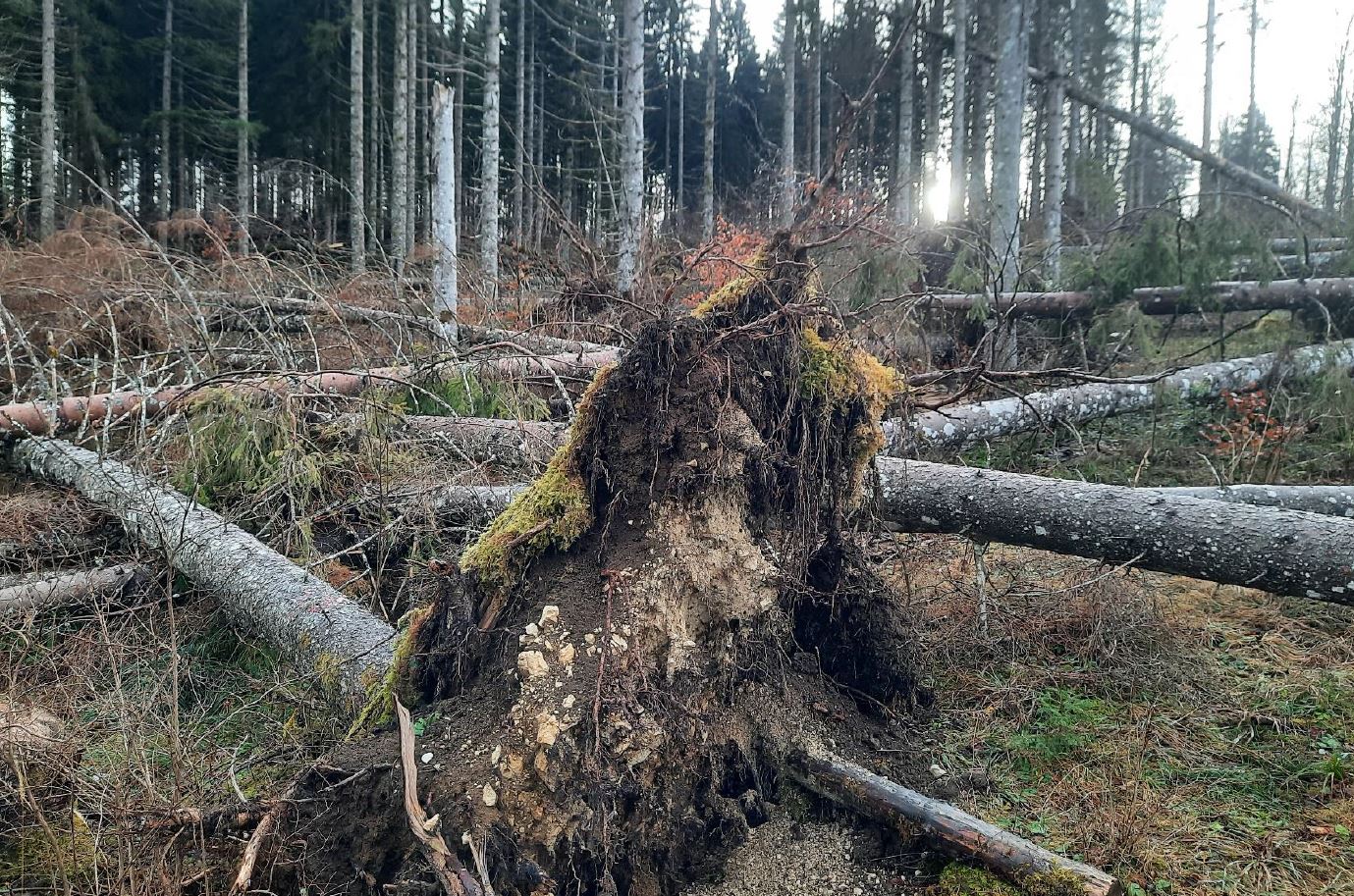
Because of the shortening cold winters regulating insect populations, bark beetles are growing exponentially and eating away at stands. In the forests of the Jura Regional Natural Park, the impact is considerable.
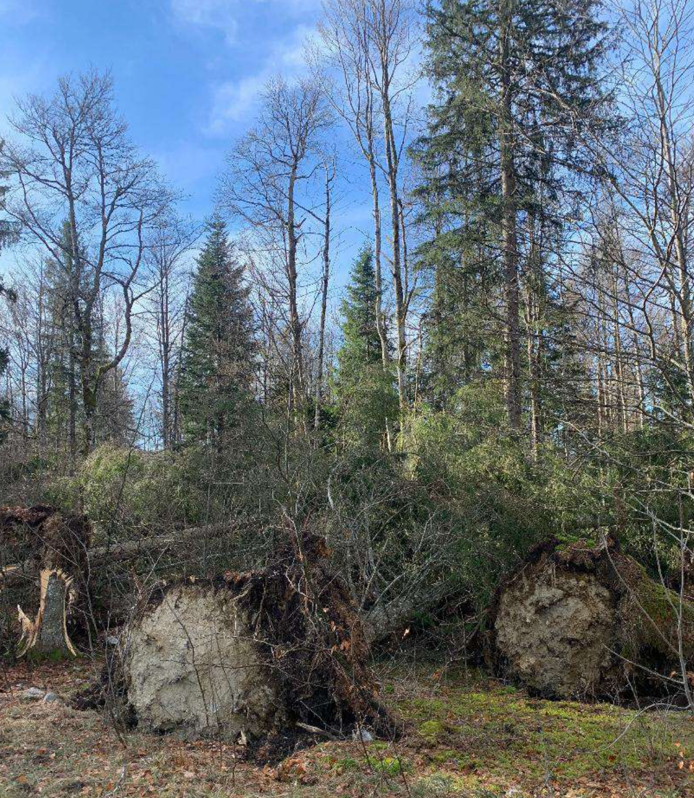
This epidemic mainly concerns the forests of northern and eastern France and causes rapid decline or even death of trees. This phenomenon is easily identifiable with the stands turning from green to brown or white, becoming sensitive to the slightest gust of wind. These “dry” woodlands end up crashing to the ground, giving way to desolate landscapes and no longer capture CO2. If the forest is neither adapted nor renewed, this situation can lead to its gradual disappearance. As the trees no longer have any value, silvicultural management is also compromised. We are talking here about a “silvicultural impasse”.
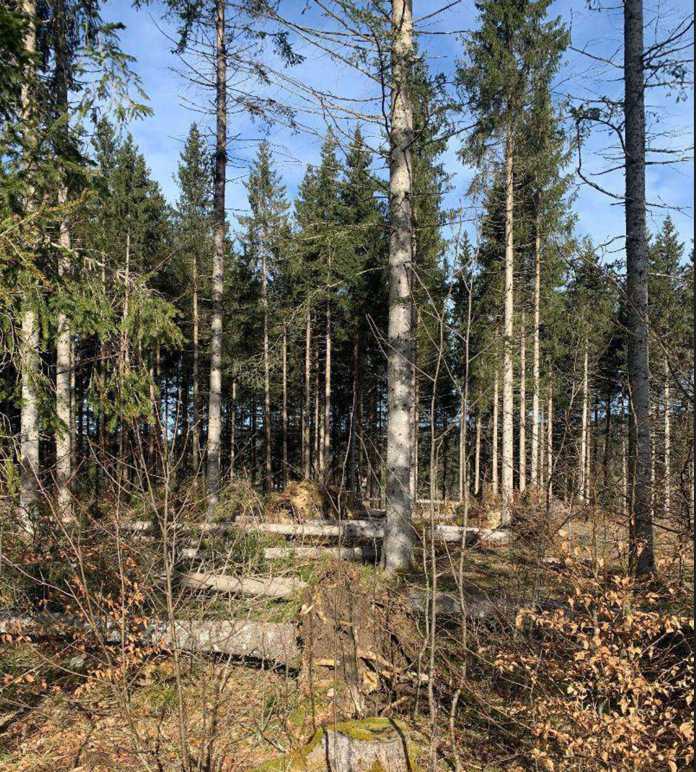
This 2,37 hectares reforestation project located in Morbier in Jura will store 515 tonnes of CO2 equivalent in 30 years*. The plots affected by the project were entirely harvested because of the bark beetle. The existing population was unfortunately almost monospecific and reforestation is therefore essential. It was chosen to install a mixture of 10 species (sycamore maple, Norway maple, field maple, European larch, Scots pine, silver fir, Calabrian black pine, small-leaved lime, large-leaved lime, Bornmüller's fir) better suited to prolonged hot periods. Such diversity on a fairly small surface area is exceptional.
Biodiversity: The majority of the 10 selected species are native; the others were chosen for their suitability for climate change. In addition, the tree species will be planted in a mixture—partly across the entire area and partly in specific plots, with borders of broadleaved species.
Soil preservation: The soil will undergo shallow preparation prior to reforestation to preserve the microfauna and carbon content of the forest soil. In particular, logging residues will be partially mulched and arranged in windrows.
* The final value of the estimate will only be established after verification by an independent auditor and an administrative verification decision.
 Label Bas Carbone
Examples: reducing the frequency of soil cultivation, minimalist plot preparation, restoring organic matter and preserving soil microfauna.
Examples: diversity and locality of crop species, preservation of habitat for local flora and fauna, presence of beehives for pollination.
Forestry management cooperative with more than 240 members on 899 hectares covering the Haut-Jura area.
Read morePlanting of 10 different species resistant to bark beetle
Because of the shortening cold winters regulating insect populations, bark beetles are growing exponentially and eating away at stands. In the forests of the Jura Regional Natural Park, the impact is considerable.
This epidemic mainly concerns the forests of northern and eastern France and causes rapid decline or even death of trees. This phenomenon is easily identifiable with the stands turning from green to brown or white, becoming sensitive to the slightest gust of wind. These “dry” woodlands end up crashing to the ground, giving way to desolate landscapes and no longer capture CO2. If the forest is neither adapted nor renewed, this situation can lead to its gradual disappearance. As the trees no longer have any value, silvicultural management is also compromised. We are talking here about a “silvicultural impasse”.
This 2,37 hectares reforestation project located in Morbier in Jura will store 515 tonnes of CO2 equivalent in 30 years*. The plots affected by the project were entirely harvested because of the bark beetle. The existing population was unfortunately almost monospecific and reforestation is therefore essential. It was chosen to install a mixture of 10 species (sycamore maple, Norway maple, field maple, European larch, Scots pine, silver fir, Calabrian black pine, small-leaved lime, large-leaved lime, Bornmüller's fir) better suited to prolonged hot periods. Such diversity on a fairly small surface area is exceptional.
Biodiversity: The majority of the 10 selected species are native; the others were chosen for their suitability for climate change. In addition, the tree species will be planted in a mixture—partly across the entire area and partly in specific plots, with borders of broadleaved species.
Soil preservation: The soil will undergo shallow preparation prior to reforestation to preserve the microfauna and carbon content of the forest soil. In particular, logging residues will be partially mulched and arranged in windrows.
* The final value of the estimate will only be established after verification by an independent auditor and an administrative verification decision.