 Label Bas Carbone
Examples: reducing the frequency of soil cultivation, minimalist plot preparation, restoring organic matter and preserving soil microfauna.

Examples: diversity and locality of crop species, preservation of habitat for local flora and fauna, presence of beehives for pollination.

Examples: territorial dynamics, societal demand, diversification of the activity, local sales/processing, working conditions, sharing of good practices.

Examples: Consideration of wetlands, use of adapted species, drip-connected irrigation tools.

The "Groupement Forestier de Guichégu" is a family group that takes care of 250 Ha in Dordogne. Gwenaël Postec is the manager and is committed to developing sustainable forestry that respects the environment.
Read moreRestoration of a Perigord forest by afforesting plots of abandoned farmland and reforesting decaying chestnut stands with Gwenaël Postec
The forests of the Nouvelle-Aquitaine region have been affected by global warming and other major damage, such as the 1999 storm or more recent fires, of which they still bear the scars today. This region has not been spared from diseases either. The chestnut tree, an emblematic species of the Périgord region, is afflicted by chestnut canker (andothia) and ink disease, as well as a parasite, the chestnut cyst. To avoid some massive carbon releases, it is important to adopt virtuous and sustainable silvicultural practices and to replace the damaged stands.
The Guichégu Forestry Group is responsible for the silvicultural management of approximately 250 hectares. It afforests agricultural wastelands and reforests dying stands with species suitable for climate change while leaving patches of senescence as biodiversity sanctuaries.
Located in Sanilhac in the Périgord region, this project involves the reforestation of a parcel of decaying chestnut trees and the afforestation of an abandoned agricultural parcel adjacent to the forest.
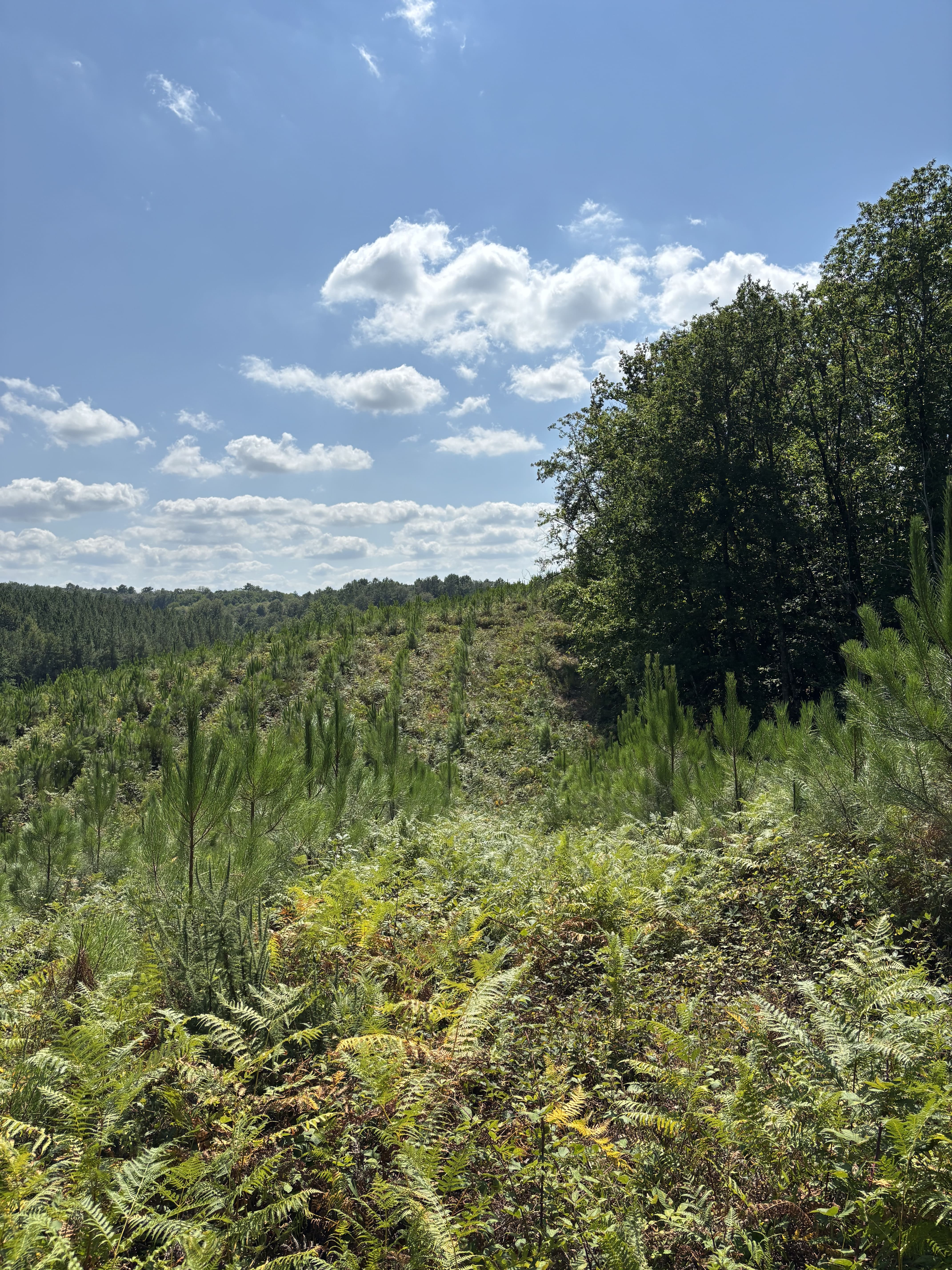
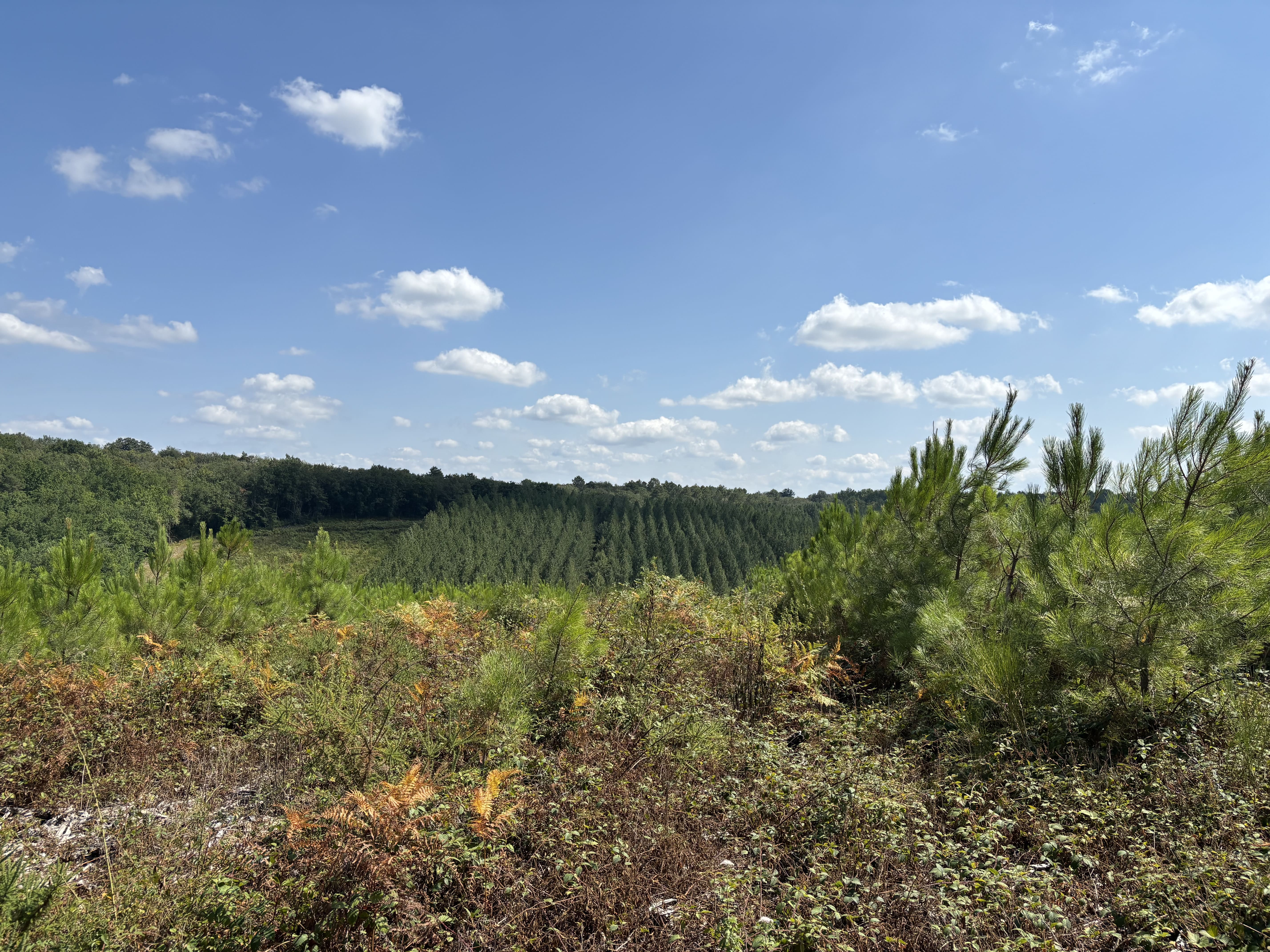
The project consists of afforesting a 1.61-hectare plot of former agricultural land, as well as replanting 0.72 hectares of coppiced, dying chestnut trees. After clearing the plots, 3,700 maritime pine seedlings were planted, along with a mix of diverse deciduous trees undergoing natural regeneration.
This vast woodland made up of hillsides and thalweg (valley bottom) is managed by the so-called "mosaic" technique, which allows for highly localised management and a variety of species depending on the site.
The project is subject to a sustainable management plan. Putting these plots under silvicultural management commits the Groupement Forestier de Guichégu to maintaining the plantations for the production of PEFC-certified 40-year-old timber and therefore also ensuring the maintenance of the carbon stock over time.. Such an engagement will therefore also preserve the carbon stock over time.
The monitoring of water resources is very important as the relief creates a hydrological behaviour that must be taken into account in order to plant appropriate species on the site. Here, maritime pines are placed on the sunniest and driest heights, while hardwoods are preferable for the valley bottoms, which are less exposed to the heat and more humid.
 Label Bas Carbone
Examples: reducing the frequency of soil cultivation, minimalist plot preparation, restoring organic matter and preserving soil microfauna.
Examples: diversity and locality of crop species, preservation of habitat for local flora and fauna, presence of beehives for pollination.
Examples: territorial dynamics, societal demand, diversification of the activity, local sales/processing, working conditions, sharing of good practices.
Examples: Consideration of wetlands, use of adapted species, drip-connected irrigation tools.
The "Groupement Forestier de Guichégu" is a family group that takes care of 250 Ha in Dordogne. Gwenaël Postec is the manager and is committed to developing sustainable forestry that respects the environment.
Read moreRestoration of a Perigord forest by afforesting plots of abandoned farmland and reforesting decaying chestnut stands with Gwenaël Postec
The forests of the Nouvelle-Aquitaine region have been affected by global warming and other major damage, such as the 1999 storm or more recent fires, of which they still bear the scars today. This region has not been spared from diseases either. The chestnut tree, an emblematic species of the Périgord region, is afflicted by chestnut canker (andothia) and ink disease, as well as a parasite, the chestnut cyst. To avoid some massive carbon releases, it is important to adopt virtuous and sustainable silvicultural practices and to replace the damaged stands.
The Guichégu Forestry Group is responsible for the silvicultural management of approximately 250 hectares. It afforests agricultural wastelands and reforests dying stands with species suitable for climate change while leaving patches of senescence as biodiversity sanctuaries.
Located in Sanilhac in the Périgord region, this project involves the reforestation of a parcel of decaying chestnut trees and the afforestation of an abandoned agricultural parcel adjacent to the forest.
The project consists of afforesting a 1.61-hectare plot of former agricultural land, as well as replanting 0.72 hectares of coppiced, dying chestnut trees. After clearing the plots, 3,700 maritime pine seedlings were planted, along with a mix of diverse deciduous trees undergoing natural regeneration.
This vast woodland made up of hillsides and thalweg (valley bottom) is managed by the so-called "mosaic" technique, which allows for highly localised management and a variety of species depending on the site.
The project is subject to a sustainable management plan. Putting these plots under silvicultural management commits the Groupement Forestier de Guichégu to maintaining the plantations for the production of PEFC-certified 40-year-old timber and therefore also ensuring the maintenance of the carbon stock over time.. Such an engagement will therefore also preserve the carbon stock over time.
The monitoring of water resources is very important as the relief creates a hydrological behaviour that must be taken into account in order to plant appropriate species on the site. Here, maritime pines are placed on the sunniest and driest heights, while hardwoods are preferable for the valley bottoms, which are less exposed to the heat and more humid.