
 Label Bas Carbone
Examples: reducing the frequency of soil cultivation, minimalist plot preparation, restoring organic matter and preserving soil microfauna.

Examples: diversity and locality of crop species, preservation of habitat for local flora and fauna, presence of beehives for pollination.

Examples: territorial dynamics, societal demand, diversification of the activity, local sales/processing, working conditions, sharing of good practices.

Examples: Consideration of wetlands, use of adapted species, drip-connected irrigation tools.
David Bataille's chestnut farm promotes an environmentally friendly agricultural activity
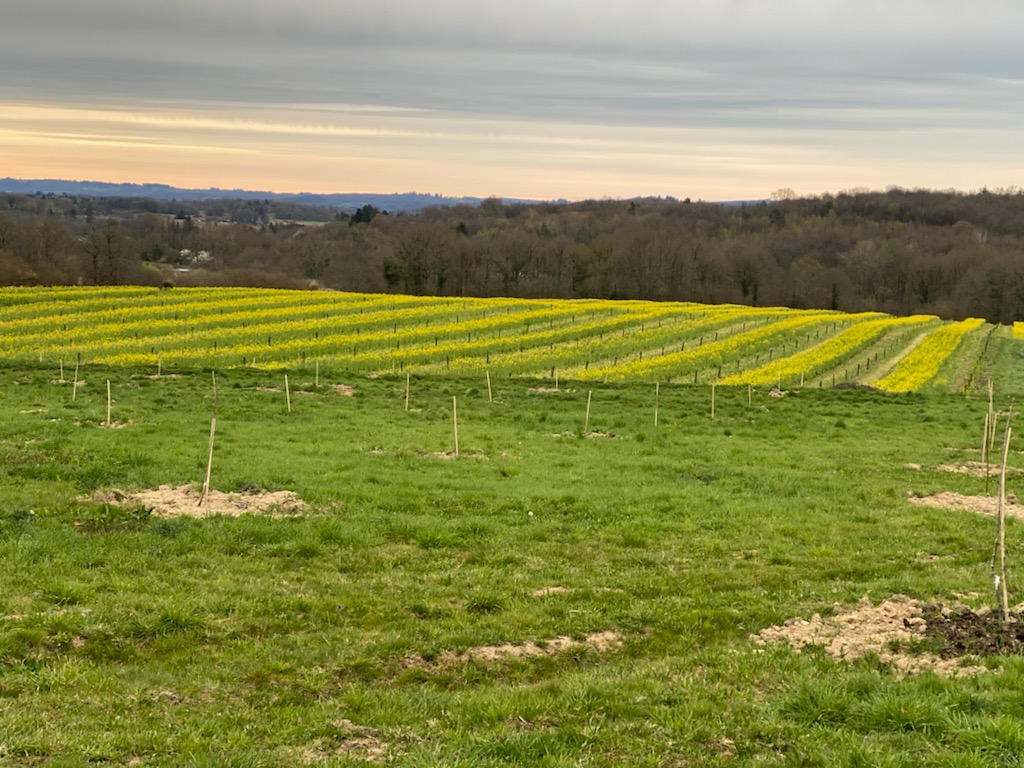
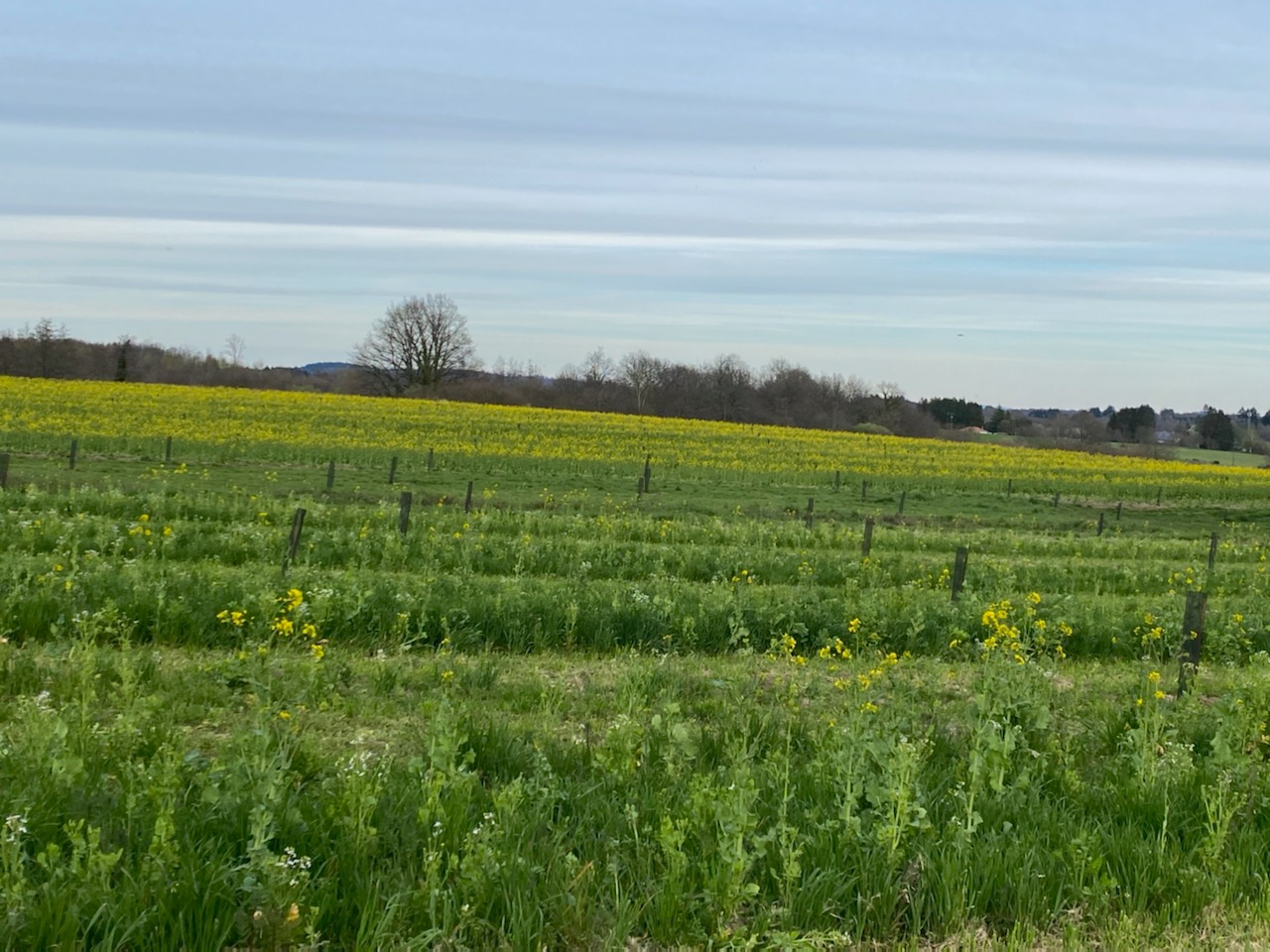
This project to plant a chestnut orchard in the winter of 2022 and 2023 is located in Bussière-Galant within the Périgord-Limousin regional natural park, in the Haute-Vienne department. This operation run by David Bataille and his wife plans to reach an area of 20 Ha of orchards and thus allow the storage of nearly 1,032 tonnes of CO2 equivalent sur 20 ans*. Historically, this plot was used for large cereal crops and a little livestock. Abandoned for several years, it is now a stain in the middle of the village. This project therefore makes it possible to bring this land back to life while promoting an agricultural activity that respects the environment. Without training in the agricultural sector and after 10 years in climate engineering, this couple wants to embark on this new adventure full-time and be able to make the operation sustainable in the years to come. Sensitive to the environment, especially beekeeping and arboriculture, this new activity takes on its full meaning for David Bataille.
The farm will benefit from Organic Agriculture (AB) and High Environmental Value (HVE) certification by 2023. It will be beneficial in many aspects. Biodiversity: 5 local species of chestnut trees will be planted in the orchard: Bouches de Bétizac, Marigoule, Maraval, Marsol and Bournette. No chemical inputs will be used for cultivation. In addition, the farm has an additional 8 ha of non-exploitable wetlands (meadows) and groves that dot the orchards. The latter represent a real refuge for fauna and flora, especially for the pollinator. About ten hives will also be present in the orchard, which is very beneficial for the development of the flora and will also allow the production of honey. Eventually, a cultivation of aromatic and medicinal plants could be launched on neighboring plots if the project takes shape, with a drying workshop on the farm. Economic and social: This project first of all makes the village more attractive. By launching such an activity, it helps to fight against rural desertification. The operation will eventually create 2 or even 3 jobs. The larger chestnuts will be destined for the fresh market, while the smaller ones will be sent for processing by the LIMDOR cooperative. In addition, the operators plan to diversify their activity: The honey harvested in the orchard and royal jelly will be sold on the farm. Visits to the orchards will be organized with other growers, then educational visits open to the general public in a second phase, which will allow the sharing of experience and good practices. Water resources: The orchards of David Bataille will benefit from moderate and reasoned watering, aiming for optimal development of the chestnut trees. This species does not require a lot of water to grow, and the presence of wetlands further reduces the needs. Soil protection: Part of the chestnuts (Bouche de Bétizac) will be harvested by hand. For the rest, the planting mode is designed to limit the back and forth of agricultural machinery in the orchard, and no deep tillage will be done after plantation.
* La valeur définitive de l'estimation ne sera établie qu'après vérification par un auditeur indépendant et une décision administrative de vérification.
 Label Bas Carbone
Examples: reducing the frequency of soil cultivation, minimalist plot preparation, restoring organic matter and preserving soil microfauna.
Examples: diversity and locality of crop species, preservation of habitat for local flora and fauna, presence of beehives for pollination.
Examples: territorial dynamics, societal demand, diversification of the activity, local sales/processing, working conditions, sharing of good practices.
Examples: Consideration of wetlands, use of adapted species, drip-connected irrigation tools.
David Bataille's chestnut farm promotes an environmentally friendly agricultural activity
This project to plant a chestnut orchard in the winter of 2022 and 2023 is located in Bussière-Galant within the Périgord-Limousin regional natural park, in the Haute-Vienne department. This operation run by David Bataille and his wife plans to reach an area of 20 Ha of orchards and thus allow the storage of nearly 1,032 tonnes of CO2 equivalent sur 20 ans*. Historically, this plot was used for large cereal crops and a little livestock. Abandoned for several years, it is now a stain in the middle of the village. This project therefore makes it possible to bring this land back to life while promoting an agricultural activity that respects the environment. Without training in the agricultural sector and after 10 years in climate engineering, this couple wants to embark on this new adventure full-time and be able to make the operation sustainable in the years to come. Sensitive to the environment, especially beekeeping and arboriculture, this new activity takes on its full meaning for David Bataille.
The farm will benefit from Organic Agriculture (AB) and High Environmental Value (HVE) certification by 2023. It will be beneficial in many aspects. Biodiversity: 5 local species of chestnut trees will be planted in the orchard: Bouches de Bétizac, Marigoule, Maraval, Marsol and Bournette. No chemical inputs will be used for cultivation. In addition, the farm has an additional 8 ha of non-exploitable wetlands (meadows) and groves that dot the orchards. The latter represent a real refuge for fauna and flora, especially for the pollinator. About ten hives will also be present in the orchard, which is very beneficial for the development of the flora and will also allow the production of honey. Eventually, a cultivation of aromatic and medicinal plants could be launched on neighboring plots if the project takes shape, with a drying workshop on the farm. Economic and social: This project first of all makes the village more attractive. By launching such an activity, it helps to fight against rural desertification. The operation will eventually create 2 or even 3 jobs. The larger chestnuts will be destined for the fresh market, while the smaller ones will be sent for processing by the LIMDOR cooperative. In addition, the operators plan to diversify their activity: The honey harvested in the orchard and royal jelly will be sold on the farm. Visits to the orchards will be organized with other growers, then educational visits open to the general public in a second phase, which will allow the sharing of experience and good practices. Water resources: The orchards of David Bataille will benefit from moderate and reasoned watering, aiming for optimal development of the chestnut trees. This species does not require a lot of water to grow, and the presence of wetlands further reduces the needs. Soil protection: Part of the chestnuts (Bouche de Bétizac) will be harvested by hand. For the rest, the planting mode is designed to limit the back and forth of agricultural machinery in the orchard, and no deep tillage will be done after plantation.
* La valeur définitive de l'estimation ne sera établie qu'après vérification par un auditeur indépendant et une décision administrative de vérification.