
 Label Bas Carbone
Examples: reducing the frequency of soil cultivation, minimalist plot preparation, restoring organic matter and preserving soil microfauna.

Examples: diversity and locality of crop species, preservation of habitat for local flora and fauna, presence of beehives for pollination.

Examples: territorial dynamics, societal demand, diversification of the activity, local sales/processing, working conditions, sharing of good practices.

Examples: Consideration of wetlands, use of adapted species, drip-connected irrigation tools.
Les Vergers Grandieu is a family business created in 2005, on bare land. In 2017, production switched to organic farming with half the conventional yield and with the development of direct sales. The company currently extends over an area of 20 hectares with a production of more than 200 tons, combining summer and autumn fruits.
Read moreProject of extension of 0,6 ha of a pear tree orchard in winter 2022 in the Vosges
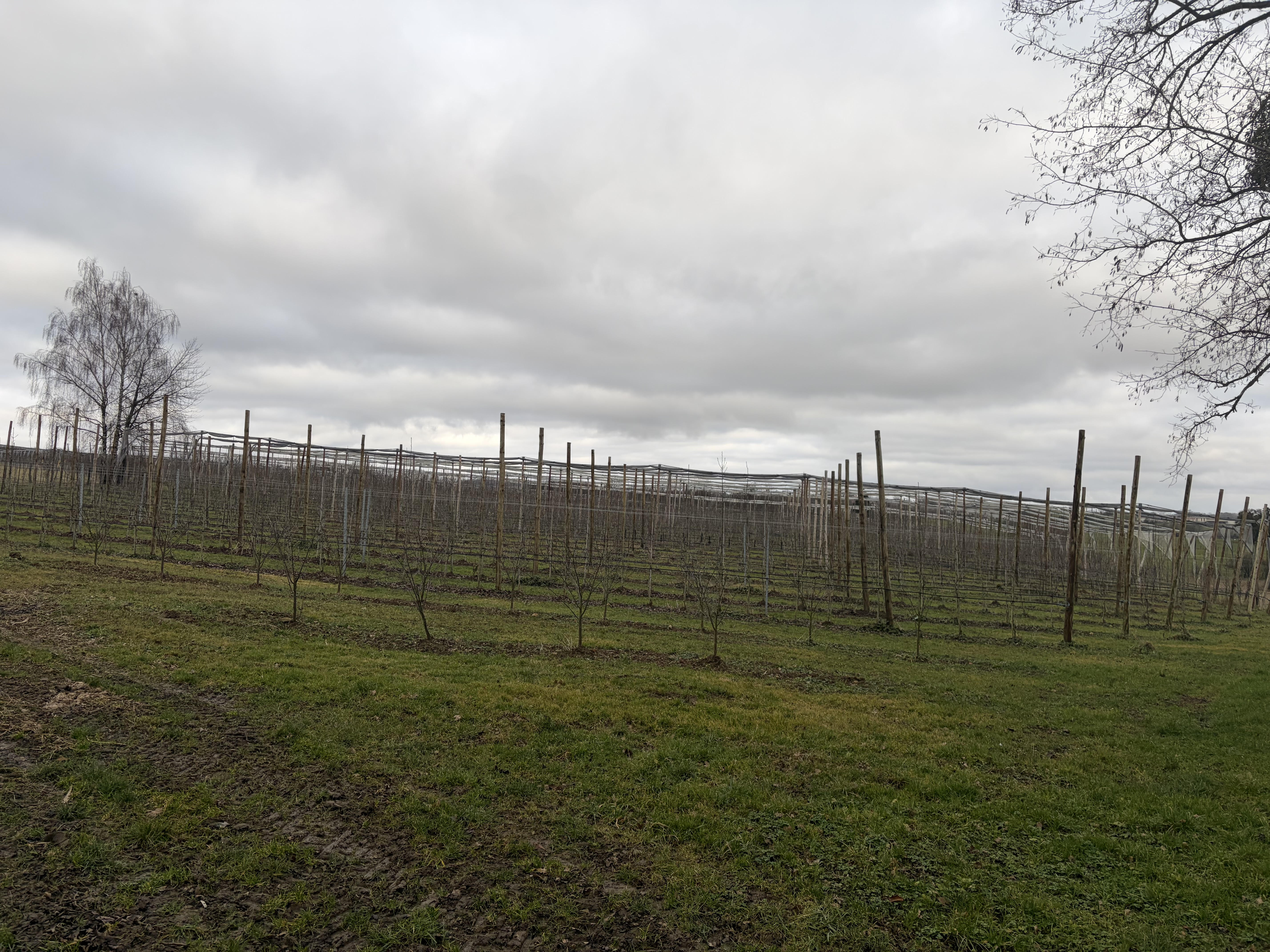
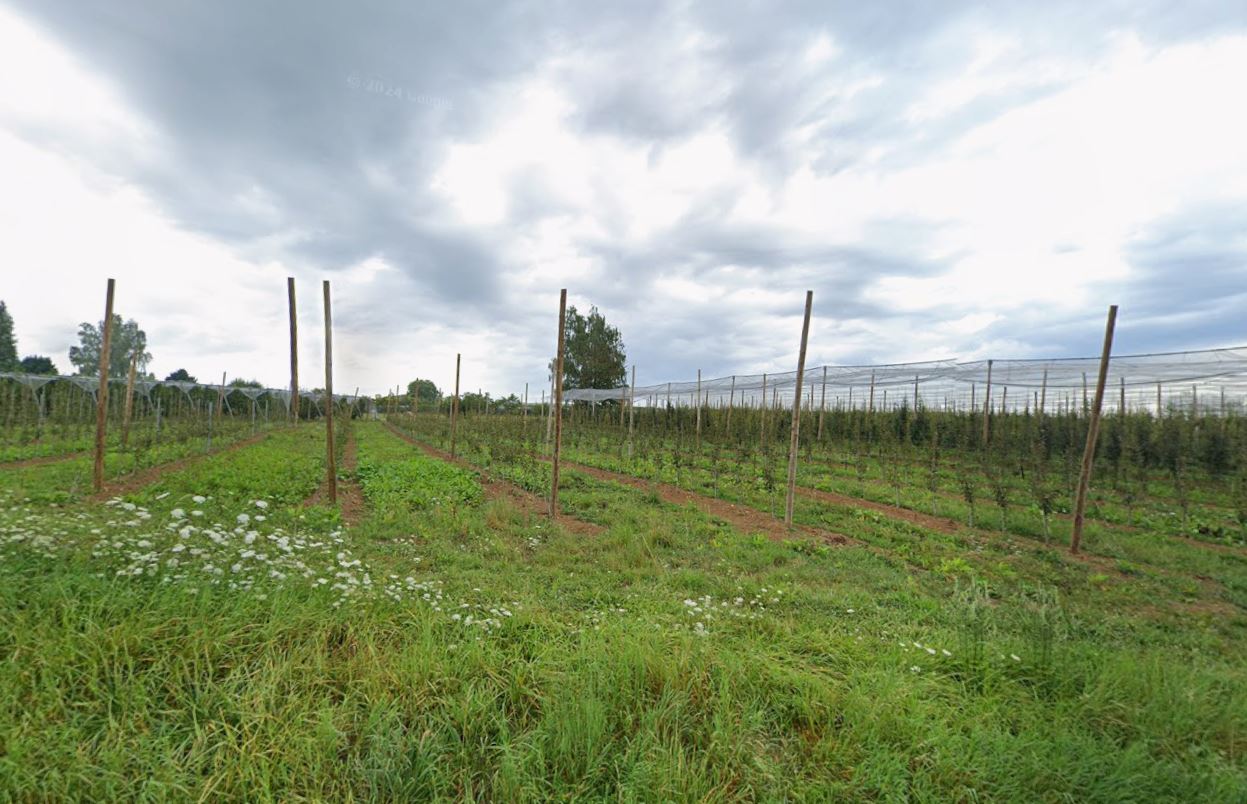
This project of extension of 0,6 ha of an orchard of pear trees in winter 2022 is located in Grignoncourt the department of Vosges and will allow the storage of 22,63 tons CO2 equivalent in 20 years*.
This farm held by Julien Grandieu was created in 2005. In 2017, the production went to organic farming with a yield of half of the conventional and with a development of direct sales. The Grandieu orchards cover 20 hectares with a production of more than 200 tons, combining summer and autumn fruits.
The production of pome fruits (apple trees, pear trees, quince trees, fig trees...) is decreasing day by day. The production of pears has decreased by half in the last 20 years. The frost and more generally the climatic hazards are the main responsible, it is what we call "agricultural calamities".
The farm benefits from the Organic Agriculture (AB) certification since 2017. It will be beneficial on many aspects:
Biodiversity:
The farm produces a wide variety of fruits to spread the sale over the year:
About thirty varieties of apples: early, seasonal and late
About ten varieties of pears: summer and winter pears
Other summer fruits: strawberries, raspberries, cherries, plums...
In addition, the orchards are 100% grassed in organic to host crop auxiliaries.
Economic and social:
This project participates in the safeguarding of the pear sector, the creation of jobs and the reduction of imports.
The farm favors short circuits by developing direct sales, including a self-picking orchard organized for the public. You can buy fruits there but also processed products: juices, syrups, sparkling wines, jams, compotes...
Moreover, the Grandieu orchards are also very favorable to the organization of educational and participative visits on the farm, which will allow the sharing of experience and good practices.
Means to fight against climate change :
To protect the water resource: Autonomy for irrigation thanks to the irrigation basin and the installation of a borehole in 2020. Reduction of erosion, no mineral fertilizers or chemical treatments.
Against rain and flies: Installation of anti-rain and anti-fly nets on the cherry trees and tunnels on the strawberry trees.
Against hail and snow: 50% of the orchards are protected by anti-hail nets.
Against frost: Anti-frost burners and the use of "fog dragons" are necessary.
* The final value of the estimate will only be established after verification by an independent auditor and an administrative verification decision.
 Label Bas Carbone
Examples: reducing the frequency of soil cultivation, minimalist plot preparation, restoring organic matter and preserving soil microfauna.
Examples: diversity and locality of crop species, preservation of habitat for local flora and fauna, presence of beehives for pollination.
Examples: territorial dynamics, societal demand, diversification of the activity, local sales/processing, working conditions, sharing of good practices.
Examples: Consideration of wetlands, use of adapted species, drip-connected irrigation tools.
Les Vergers Grandieu is a family business created in 2005, on bare land. In 2017, production switched to organic farming with half the conventional yield and with the development of direct sales. The company currently extends over an area of 20 hectares with a production of more than 200 tons, combining summer and autumn fruits.
Read moreProject of extension of 0,6 ha of a pear tree orchard in winter 2022 in the Vosges
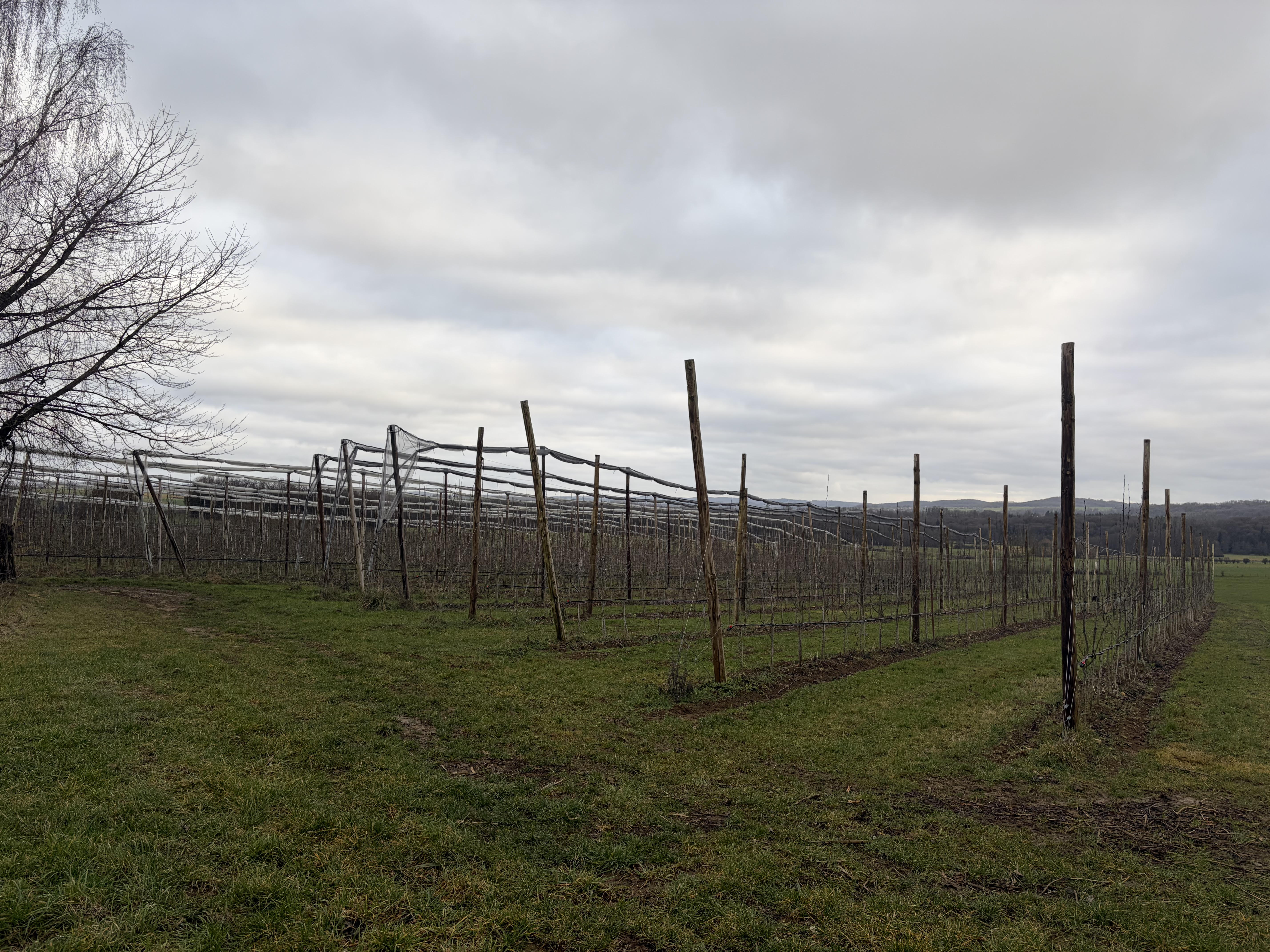
This project of extension of 0,6 ha of an orchard of pear trees in winter 2022 is located in Grignoncourt the department of Vosges and will allow the storage of 22,63 tons CO2 equivalent in 20 years*.
This farm held by Julien Grandieu was created in 2005. In 2017, the production went to organic farming with a yield of half of the conventional and with a development of direct sales. The Grandieu orchards cover 20 hectares with a production of more than 200 tons, combining summer and autumn fruits.
The production of pome fruits (apple trees, pear trees, quince trees, fig trees...) is decreasing day by day. The production of pears has decreased by half in the last 20 years. The frost and more generally the climatic hazards are the main responsible, it is what we call "agricultural calamities".
The farm benefits from the Organic Agriculture (AB) certification since 2017. It will be beneficial on many aspects:
Biodiversity:
The farm produces a wide variety of fruits to spread the sale over the year:
About thirty varieties of apples: early, seasonal and late
About ten varieties of pears: summer and winter pears
Other summer fruits: strawberries, raspberries, cherries, plums...
In addition, the orchards are 100% grassed in organic to host crop auxiliaries.
Economic and social:
This project participates in the safeguarding of the pear sector, the creation of jobs and the reduction of imports.
The farm favors short circuits by developing direct sales, including a self-picking orchard organized for the public. You can buy fruits there but also processed products: juices, syrups, sparkling wines, jams, compotes...
Moreover, the Grandieu orchards are also very favorable to the organization of educational and participative visits on the farm, which will allow the sharing of experience and good practices.
Means to fight against climate change :
To protect the water resource: Autonomy for irrigation thanks to the irrigation basin and the installation of a borehole in 2020. Reduction of erosion, no mineral fertilizers or chemical treatments.
Against rain and flies: Installation of anti-rain and anti-fly nets on the cherry trees and tunnels on the strawberry trees.
Against hail and snow: 50% of the orchards are protected by anti-hail nets.
Against frost: Anti-frost burners and the use of "fog dragons" are necessary.
* The final value of the estimate will only be established after verification by an independent auditor and an administrative verification decision.