
 Label Bas Carbone
Created in 2000 and recognized by the Ministries of Agriculture, Environment and Health, the Bleu-Blanc-Cœur association has been building responsible and sustainable agricultural sectors for 20 years, aiming to improve the nutritional and environmental quality of our food and thus positively impacting the health of the Earth, animals and humans.
Read moreEcomethane project on a 140-cow dairy farm in the Haute-Marne region of France
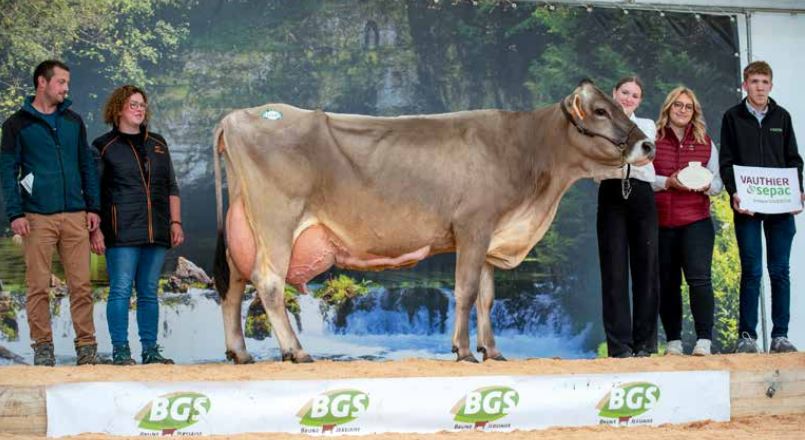
In the current context of transition, supporting French cattle breeders helps support the sustainability of our French industry and avoid imports, which have a significant carbon footprint. Reducing the greenhouse gas emissions of their animals is possible by financing virtuous practices that are more costly for the farmer.
The Ecométhane method aims to reduce methane emissions by adding plants naturally rich in omega 3, such as grass, alfalfa and linseed, to dairy cattle rations. This method measures methane emissions quickly and simply, thanks to a method for measuring milk fatty acids patented with INRAe in 2008. These measurements can be used to calculate a herd's methane emissions before and after a change in ration composition.
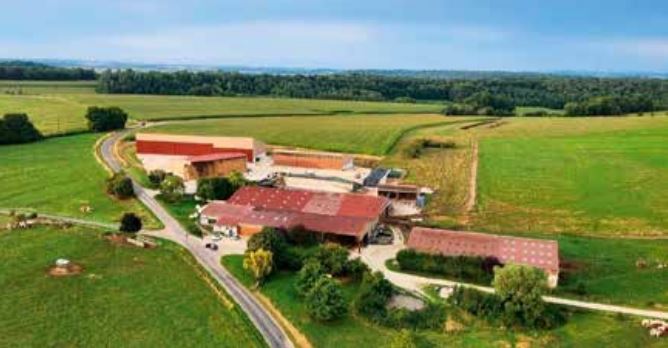
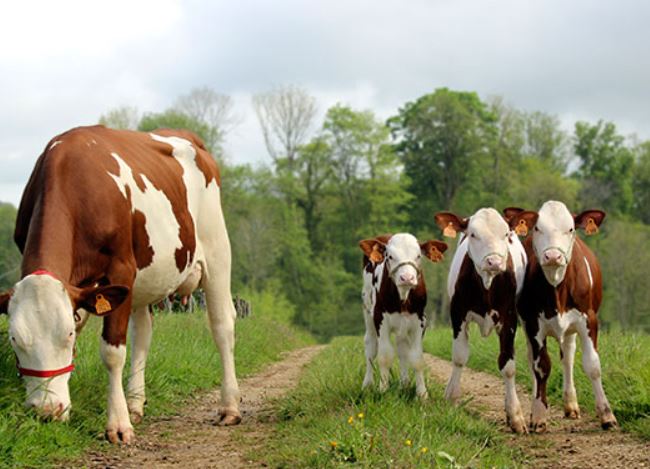
This family business, taken over by the children Jean-Marc and Elodie, is located in Graffigny-Chemin. The associates have today a workshop 140 milk compound cows in lactation. The cows are Montbéliardes (80%) and Brune (20%). Thanks to the creation of a GIEE with a dozen neighboring farms, the farm has been able to improve access to pastures and set up rotational grazing. A second workshop makes the most of the farm's pastures: 40 beef and crossbred steers and heifers are kept on the farm. The partners produce fodder for the animals with 22 ha of temporary meadows, 36 ha of corn and permanent meadows. The intercropping of grass mixes also provides fodder for the cattle, in addition to 25 ha of wheat which is sold. Since October 2021, the partners have invested in the production of renewable energy via photovoltaic panels installed on the buildings
In 2023, the farm signed up to the Ecométhane program for the next 5 years, and its action plan will help avoid greenhouse gas emissions of around 283.3 tonnes Co2 equivalent over 5 years*.
Financing a Ecométhane project makes it possible to reward reductions in emissions that are already effective depending on the progress of the project, unlike planting trees which will only sequester the CO2 expected in decades.
-Increase the proportion of grass forage in the ration.
-Increase the quality of forage in the ration.
-Increase the proportion of seeds rich in alpha linolenic acid (ALA) in the ration, with flax in particular.
* The final value of the estimate will be established only after verification by an independent auditor and an administrative decision on verification.
 Label Bas Carbone
Created in 2000 and recognized by the Ministries of Agriculture, Environment and Health, the Bleu-Blanc-Cœur association has been building responsible and sustainable agricultural sectors for 20 years, aiming to improve the nutritional and environmental quality of our food and thus positively impacting the health of the Earth, animals and humans.
Read moreEcomethane project on a 140-cow dairy farm in the Haute-Marne region of France
In the current context of transition, supporting French cattle breeders helps support the sustainability of our French industry and avoid imports, which have a significant carbon footprint. Reducing the greenhouse gas emissions of their animals is possible by financing virtuous practices that are more costly for the farmer.
The Ecométhane method aims to reduce methane emissions by adding plants naturally rich in omega 3, such as grass, alfalfa and linseed, to dairy cattle rations. This method measures methane emissions quickly and simply, thanks to a method for measuring milk fatty acids patented with INRAe in 2008. These measurements can be used to calculate a herd's methane emissions before and after a change in ration composition.
This family business, taken over by the children Jean-Marc and Elodie, is located in Graffigny-Chemin. The associates have today a workshop 140 milk compound cows in lactation. The cows are Montbéliardes (80%) and Brune (20%). Thanks to the creation of a GIEE with a dozen neighboring farms, the farm has been able to improve access to pastures and set up rotational grazing. A second workshop makes the most of the farm's pastures: 40 beef and crossbred steers and heifers are kept on the farm. The partners produce fodder for the animals with 22 ha of temporary meadows, 36 ha of corn and permanent meadows. The intercropping of grass mixes also provides fodder for the cattle, in addition to 25 ha of wheat which is sold. Since October 2021, the partners have invested in the production of renewable energy via photovoltaic panels installed on the buildings
In 2023, the farm signed up to the Ecométhane program for the next 5 years, and its action plan will help avoid greenhouse gas emissions of around 283.3 tonnes Co2 equivalent over 5 years*.
Financing a Ecométhane project makes it possible to reward reductions in emissions that are already effective depending on the progress of the project, unlike planting trees which will only sequester the CO2 expected in decades.
-Increase the proportion of grass forage in the ration.
-Increase the quality of forage in the ration.
-Increase the proportion of seeds rich in alpha linolenic acid (ALA) in the ration, with flax in particular.
* The final value of the estimate will be established only after verification by an independent auditor and an administrative decision on verification.