
 Label Bas Carbone
Created in 2000 and recognized by the Ministries of Agriculture, Environment and Health, the Bleu-Blanc-Cœur association has been building responsible and sustainable agricultural sectors for 20 years, aiming to improve the nutritional and environmental quality of our food and thus positively impacting the health of the Earth, animals and humans.
Read moreChange of feed on a 75-cow dairy farm in the Somme region of France
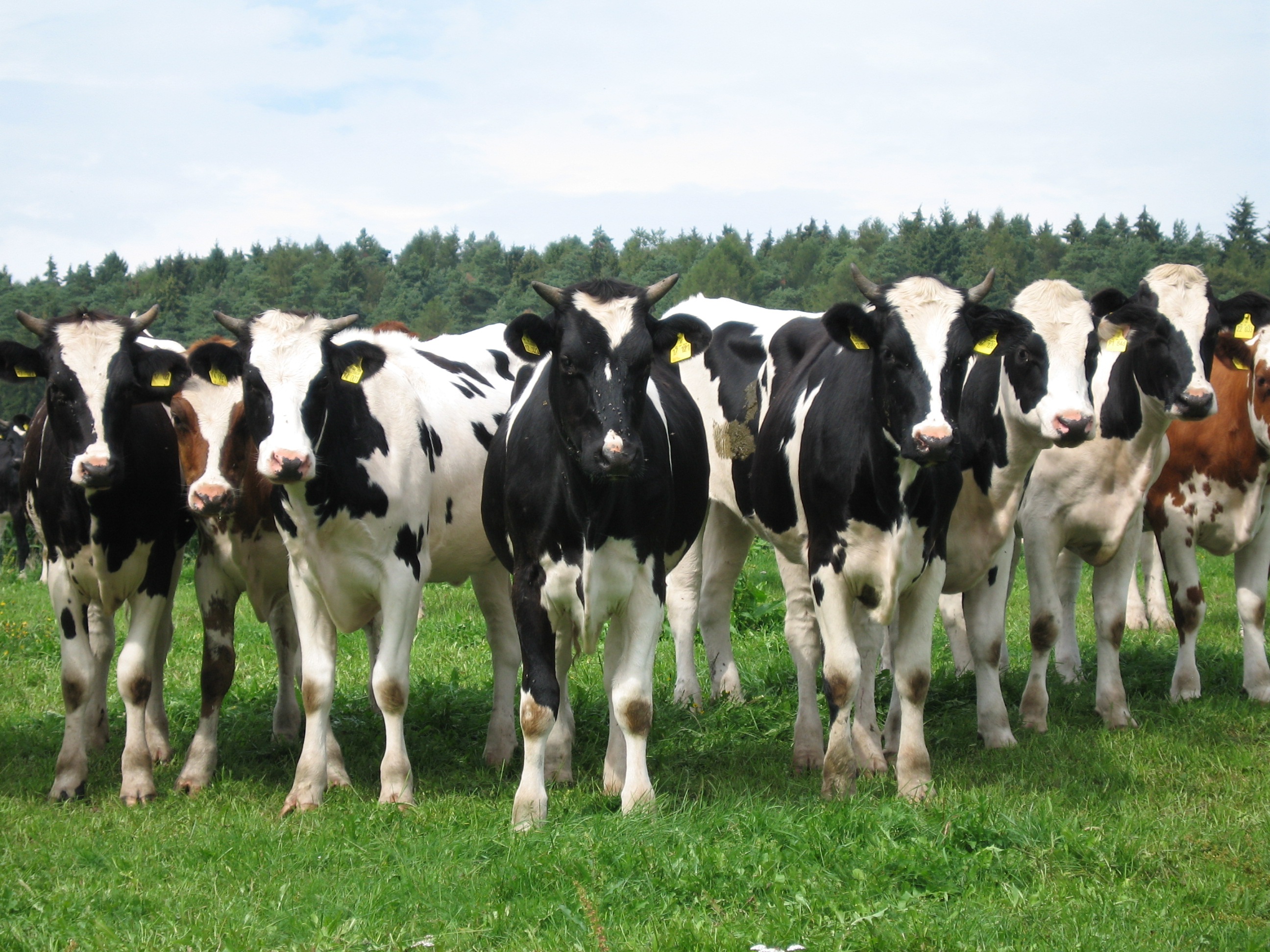
Located in the Somme department in the Hauts-de-France region, the village of Saint-Blimont is part of a land with centuries-old agricultural traditions, nestled between the Picardy plain and the Bay of Somme. This area is renowned for its fertile soils, ideal for both crop and livestock farming, and for its remarkable biodiversity, particularly around the Channel coast. The temperate oceanic climate, with mild winters and moderate summers, supports dairy production and the development of natural grasslands. The local economy is strongly anchored in agriculture and agri-food industries, while benefiting from the proximity of the Bay of Somme, one of Europe's largest natural estuaries, designated a Grand Site de France. This region is a key player in rural vitality, blending tradition and innovation to meet today’s environmental challenges.
In the current context of transition, supporting French cattle breeders helps support the sustainability of our French industry and avoid imports, which have a significant carbon footprint. Reducing the greenhouse gas emissions of their animals is possible by financing virtuous practices that are more costly for the farmer.
The Ecométhane method aims to reduce methane emissions by adding plants naturally rich in omega 3, such as grass, alfalfa and linseed, to dairy cattle rations. This method measures methane emissions quickly and simply, thanks to a method for measuring milk fatty acids patented with INRAe in 2008. These measurements can be used to calculate a herd's methane emissions before and after a change in ration composition.
In addition to the dairy unit, the farm has a meat unit and grows around 20 hectares of flax for textiles. In 2023, it signed up to the Ecométhane program for the next 5 years. Its action plan will enable it to avoid greenhouse gas emissions of around 139.7 tonnes Co2 equivalent over 5 years*.
Financing a Ecométhane project makes it possible to reward reductions in emissions that are already effective depending on the progress of the project, unlike planting trees which will only sequester the CO2 expected in decades.
- Increase the proportion of seeds rich in alpha linolenic acid (ALA) in the ration, with flax in particular.
* The final value of the estimate will be established only after verification by an independent auditor and an administrative decision on verification.
 Label Bas Carbone
Created in 2000 and recognized by the Ministries of Agriculture, Environment and Health, the Bleu-Blanc-Cœur association has been building responsible and sustainable agricultural sectors for 20 years, aiming to improve the nutritional and environmental quality of our food and thus positively impacting the health of the Earth, animals and humans.
Read moreChange of feed on a 75-cow dairy farm in the Somme region of France
Located in the Somme department in the Hauts-de-France region, the village of Saint-Blimont is part of a land with centuries-old agricultural traditions, nestled between the Picardy plain and the Bay of Somme. This area is renowned for its fertile soils, ideal for both crop and livestock farming, and for its remarkable biodiversity, particularly around the Channel coast. The temperate oceanic climate, with mild winters and moderate summers, supports dairy production and the development of natural grasslands. The local economy is strongly anchored in agriculture and agri-food industries, while benefiting from the proximity of the Bay of Somme, one of Europe's largest natural estuaries, designated a Grand Site de France. This region is a key player in rural vitality, blending tradition and innovation to meet today’s environmental challenges.
In the current context of transition, supporting French cattle breeders helps support the sustainability of our French industry and avoid imports, which have a significant carbon footprint. Reducing the greenhouse gas emissions of their animals is possible by financing virtuous practices that are more costly for the farmer.
The Ecométhane method aims to reduce methane emissions by adding plants naturally rich in omega 3, such as grass, alfalfa and linseed, to dairy cattle rations. This method measures methane emissions quickly and simply, thanks to a method for measuring milk fatty acids patented with INRAe in 2008. These measurements can be used to calculate a herd's methane emissions before and after a change in ration composition.
In addition to the dairy unit, the farm has a meat unit and grows around 20 hectares of flax for textiles. In 2023, it signed up to the Ecométhane program for the next 5 years. Its action plan will enable it to avoid greenhouse gas emissions of around 139.7 tonnes Co2 equivalent over 5 years*.
Financing a Ecométhane project makes it possible to reward reductions in emissions that are already effective depending on the progress of the project, unlike planting trees which will only sequester the CO2 expected in decades.
- Increase the proportion of seeds rich in alpha linolenic acid (ALA) in the ration, with flax in particular.
* The final value of the estimate will be established only after verification by an independent auditor and an administrative decision on verification.