
 Label Bas Carbone
Examples: reducing the frequency of soil cultivation, minimalist plot preparation, restoring organic matter and preserving soil microfauna.

Examples: diversity and locality of crop species, preservation of habitat for local flora and fauna, presence of beehives for pollination.

Pépinières Naudet is one of the main French producers of young forest plants, which are planted all over France.
Read moreCreation of 1.12 hectares of forest in Pas-de-Calais
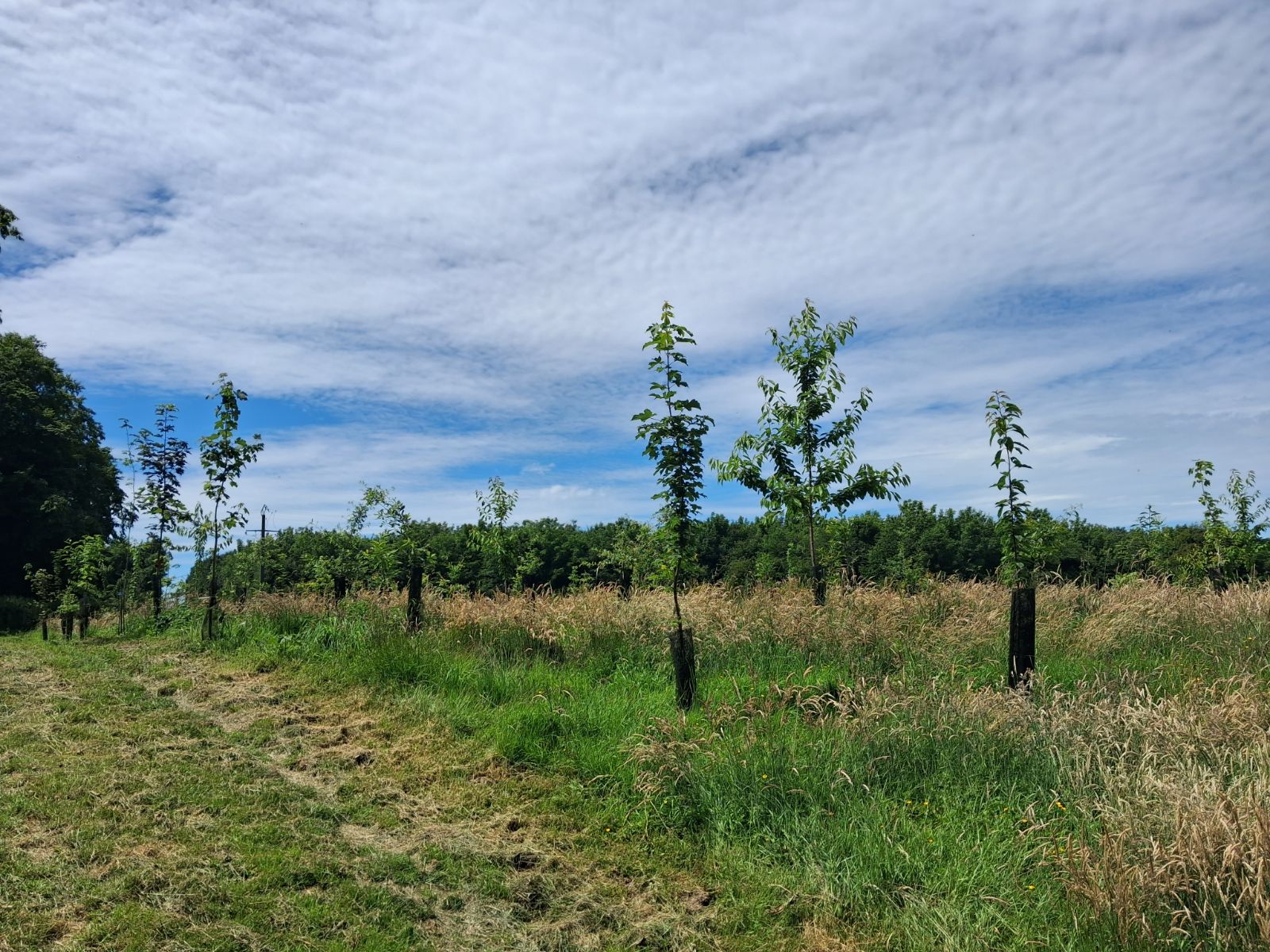
This project is located in Ablainzevelle in the Pas-de-Calais department. The afforestation will take place in the place of former agricultural meadows with little value added, and adjoining existing forests. This afforestation project will extend these forests by 1.12 hectares, using a diversified mix of tree species. Planting is scheduled for winter 2023-2024, and will sequester 325 tonnes of CO2eq over 30 years*.
Biodiversity : 6 different species were selected for this afforestation: sessile oak, downy oak, chestnut, hornbeam, black walnut and wild cherry. The species chosen have been designed to withstand global warming while remaining adapted to current conditions. As a result, 100% of the woodland is deciduous, and the existing tree lines and hedges will be preserved.
Preservation of the soil: the trees will be planted in worked pots, which allows the soil to be worked only minimally to avoid releasing carbon.
* The final value of the estimate will be established only after verification by an independent auditor and an administrative decision on verification.
 Label Bas Carbone
Examples: reducing the frequency of soil cultivation, minimalist plot preparation, restoring organic matter and preserving soil microfauna.
Examples: diversity and locality of crop species, preservation of habitat for local flora and fauna, presence of beehives for pollination.
Pépinières Naudet is one of the main French producers of young forest plants, which are planted all over France.
Read moreCreation of 1.12 hectares of forest in Pas-de-Calais
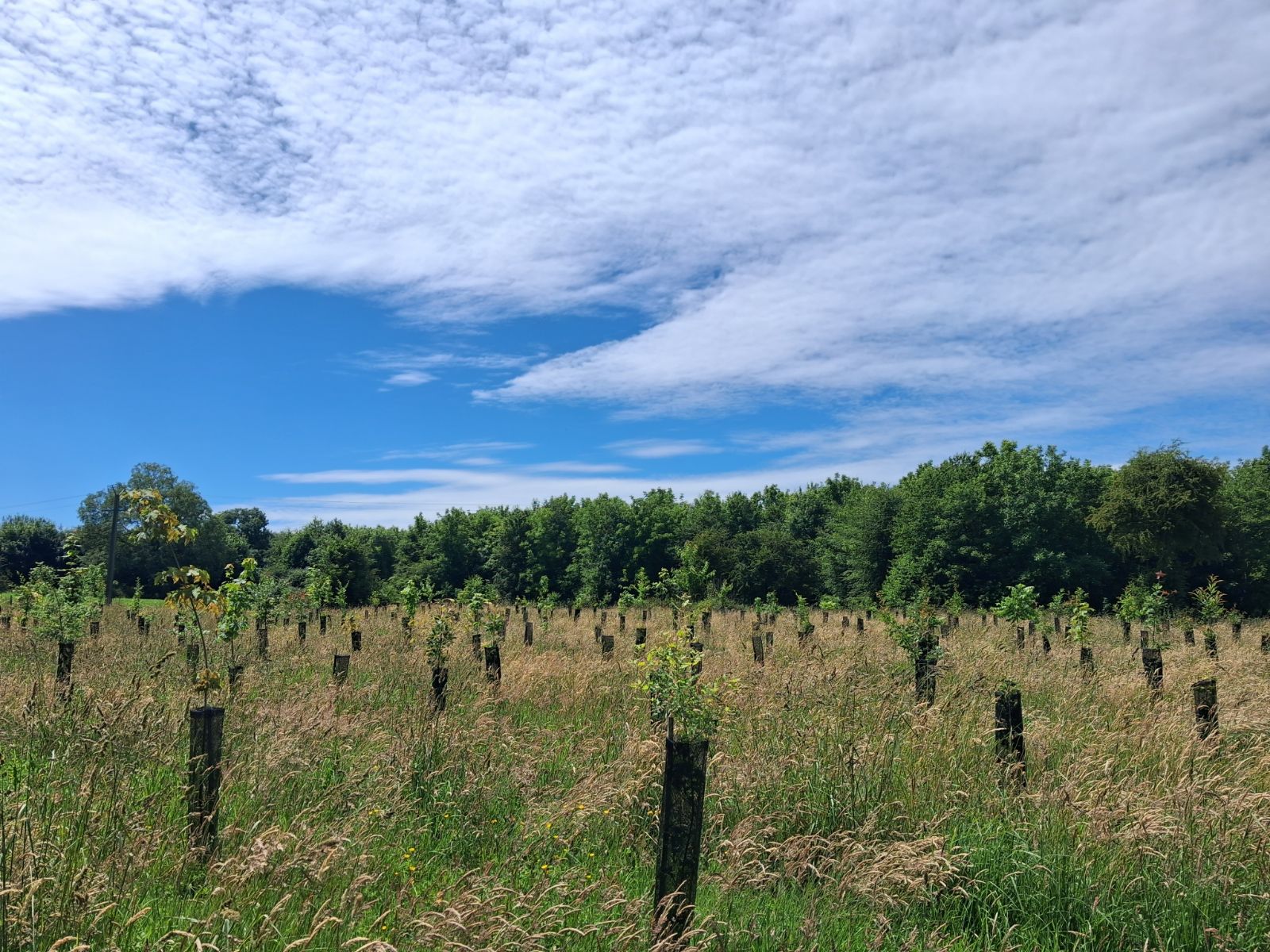
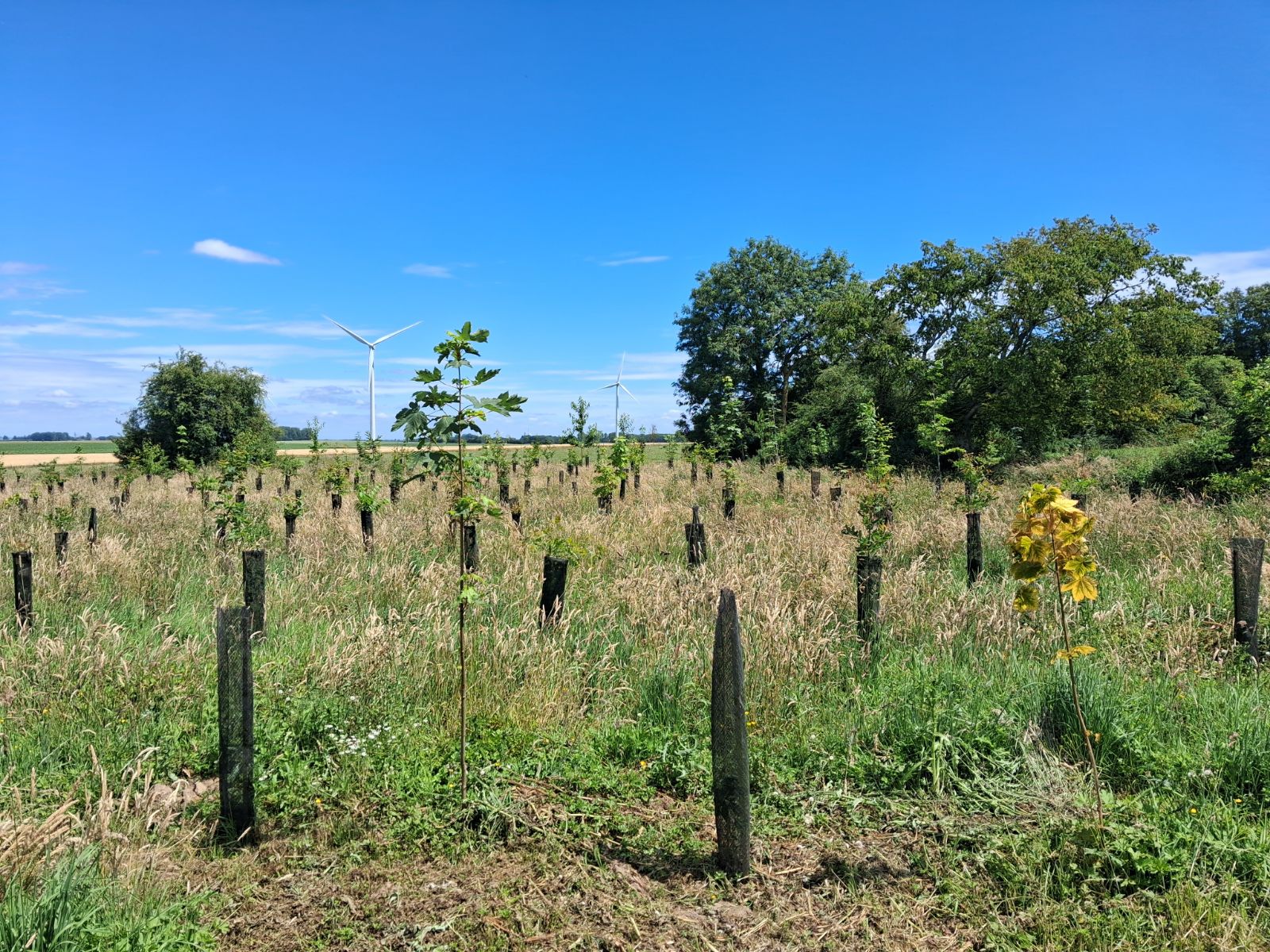
This project is located in Ablainzevelle in the Pas-de-Calais department. The afforestation will take place in the place of former agricultural meadows with little value added, and adjoining existing forests. This afforestation project will extend these forests by 1.12 hectares, using a diversified mix of tree species. Planting is scheduled for winter 2023-2024, and will sequester 325 tonnes of CO2eq over 30 years*.
Biodiversity : 6 different species were selected for this afforestation: sessile oak, downy oak, chestnut, hornbeam, black walnut and wild cherry. The species chosen have been designed to withstand global warming while remaining adapted to current conditions. As a result, 100% of the woodland is deciduous, and the existing tree lines and hedges will be preserved.
Preservation of the soil: the trees will be planted in worked pots, which allows the soil to be worked only minimally to avoid releasing carbon.
* The final value of the estimate will be established only after verification by an independent auditor and an administrative decision on verification.