
 Label Bas Carbone
Examples: reducing the frequency of soil cultivation, minimalist plot preparation, restoring organic matter and preserving soil microfauna.

Examples: diversity and locality of crop species, preservation of habitat for local flora and fauna, presence of beehives for pollination.

Examples: territorial dynamics, societal demand, diversification of the activity, local sales/processing, working conditions, sharing of good practices.

Examples: Consideration of wetlands, use of adapted species, drip-connected irrigation tools.
Plantation of orchards in Isère
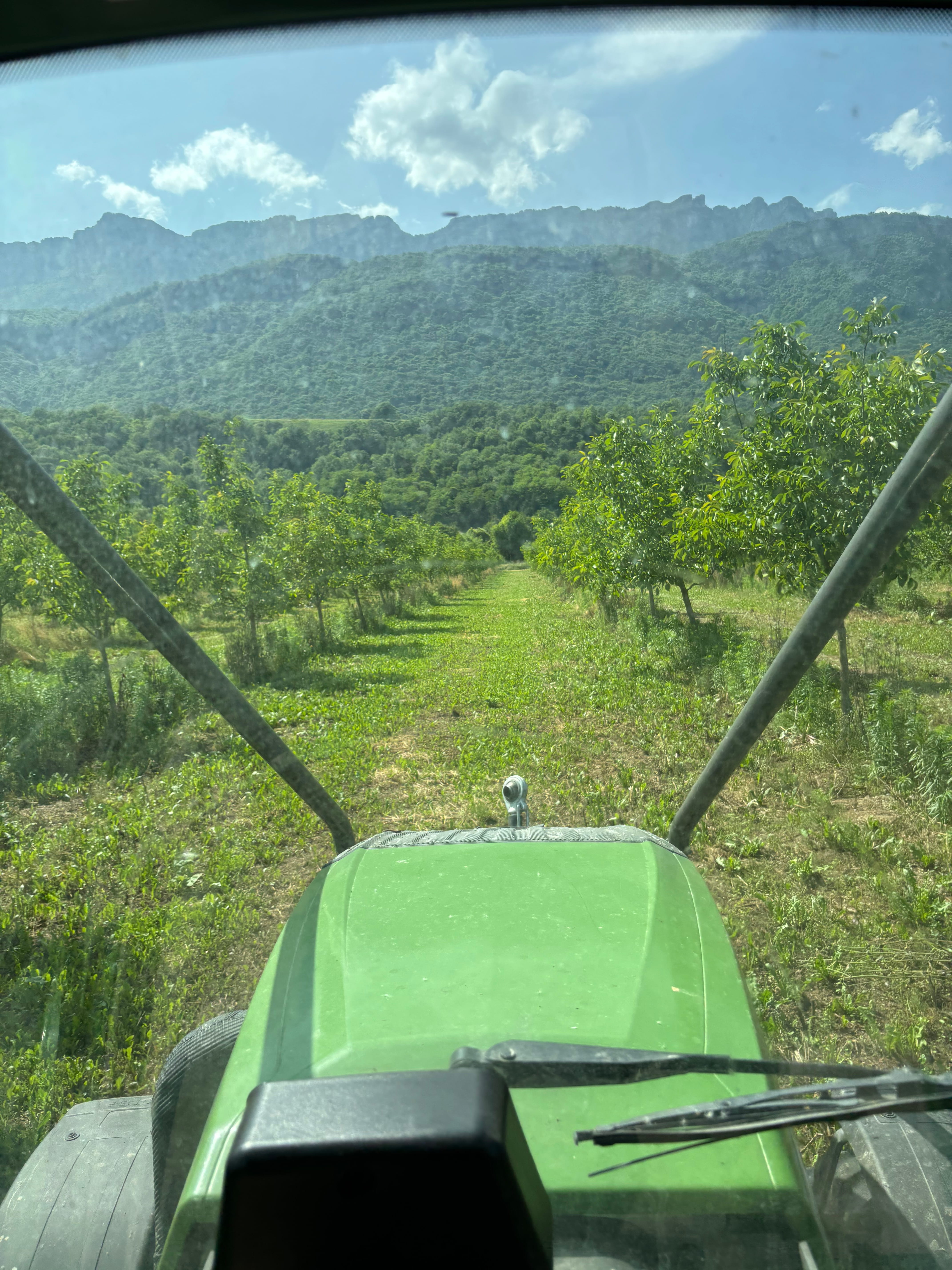
Christian Sommard’s farm is located in Le Touvet, Isère, within the Auvergne-Rhône-Alpes region of France. Nestled at the foot of the Chartreuse mountains, this area is renowned for its rolling hills, temperate mountain climate ideal for fruit growing, and a strong agricultural tradition. Isère is famous for its diversity in farming, particularly walnut cultivation—a local emblem—and for its commitment to innovation and ecological transition. Le Touvet enjoys an exceptional natural setting, close to the Alps, with remarkable biodiversity and a local economy focused on agriculture, crafts, and short supply chains.
This orchard planting project will allow storage of 187.51 tonnes of CO2 equivalent in 20 years*. It is leaded by Christian Sommard, a former chartered accountant and director of CERFrance, converted into a farmer in order to follow in his father's footsteps. In 2010 with the arrival of his son on the farm, they planted their first walnut trees: 27 Ha of traditional table walnuts of the old variety "Franquette" in Organic Farming. The farm is one of 12 “ecophyto farms” in the region. The historic family business has since evolved into several large structures:
-The SCEA Grandes Terres with 113 Ha of different varieties of nuts, such as Lara, Fernor, Ferbelle, Feradent, and Ferouette. It is certified High Environmental Value (HVE).
-The SCEA Charpiot, with 30 Ha of walnut trees.
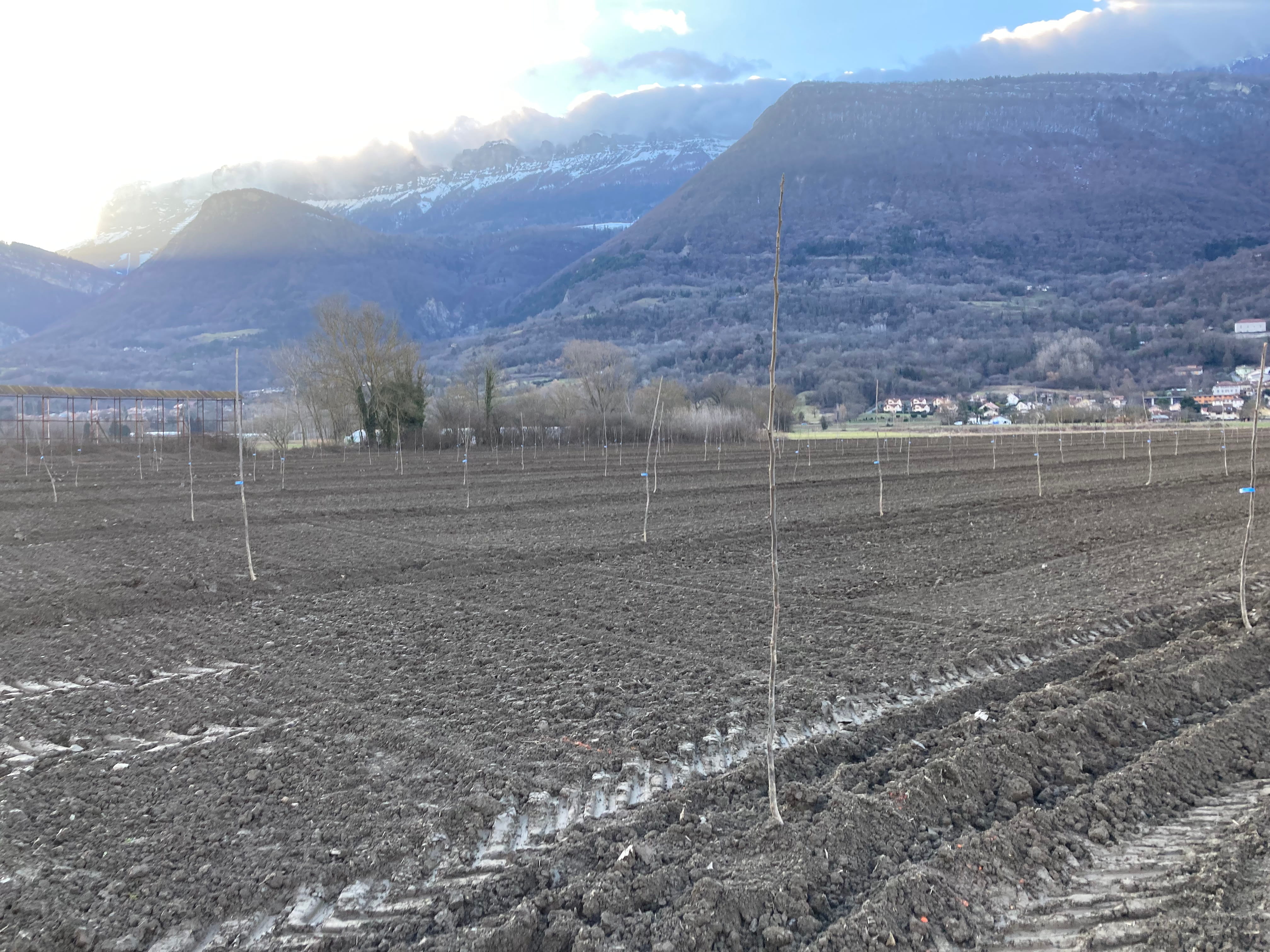
-The SCEA PAS, a new structure which is in the process of planting 30 Ha of walnut trees and which is affected by this project.
These structures employ 8 employees and support 10 families. The region is windy and dry, which partly protects the orchards from disease. There are therefore few treatments given to the trees. In addition, all the shells are "recycled" and returned to the ground in the orchards. Christian Sommard has also set up a building for sorting and washing nuts, offering energy optimization thanks to the recovery of washing water. It is an agricultural tool that is made available to other local farms.
The sequestration project in question is the first installment of the walnut plantation of the SCEA PAS structure on 3.19 ha. It has the following co-benefits:
-Soil preservation: This permanent planting will make it possible to no longer work the soil in depth after planting, which will allow the soil to sequester CO2 rather than release it.
-Water resources: the orchard will be permanently grassed at 100%, which will limit the water supply for the trees thanks to better retention of the latter.
-Biodiversity and socio-economics: the establishment of a new crop on this structure will diversify its rotation, and diversify the sources of income for its managers.
* The final value of the estimate will only be established after verification by an independent auditor and an administrative verification decision.
 Label Bas Carbone
Examples: reducing the frequency of soil cultivation, minimalist plot preparation, restoring organic matter and preserving soil microfauna.
Examples: diversity and locality of crop species, preservation of habitat for local flora and fauna, presence of beehives for pollination.
Examples: territorial dynamics, societal demand, diversification of the activity, local sales/processing, working conditions, sharing of good practices.
Examples: Consideration of wetlands, use of adapted species, drip-connected irrigation tools.
Plantation of orchards in Isère
Christian Sommard’s farm is located in Le Touvet, Isère, within the Auvergne-Rhône-Alpes region of France. Nestled at the foot of the Chartreuse mountains, this area is renowned for its rolling hills, temperate mountain climate ideal for fruit growing, and a strong agricultural tradition. Isère is famous for its diversity in farming, particularly walnut cultivation—a local emblem—and for its commitment to innovation and ecological transition. Le Touvet enjoys an exceptional natural setting, close to the Alps, with remarkable biodiversity and a local economy focused on agriculture, crafts, and short supply chains.
This orchard planting project will allow storage of 187.51 tonnes of CO2 equivalent in 20 years*. It is leaded by Christian Sommard, a former chartered accountant and director of CERFrance, converted into a farmer in order to follow in his father's footsteps. In 2010 with the arrival of his son on the farm, they planted their first walnut trees: 27 Ha of traditional table walnuts of the old variety "Franquette" in Organic Farming. The farm is one of 12 “ecophyto farms” in the region. The historic family business has since evolved into several large structures:
-The SCEA Grandes Terres with 113 Ha of different varieties of nuts, such as Lara, Fernor, Ferbelle, Feradent, and Ferouette. It is certified High Environmental Value (HVE).
-The SCEA Charpiot, with 30 Ha of walnut trees.
-The SCEA PAS, a new structure which is in the process of planting 30 Ha of walnut trees and which is affected by this project.
These structures employ 8 employees and support 10 families. The region is windy and dry, which partly protects the orchards from disease. There are therefore few treatments given to the trees. In addition, all the shells are "recycled" and returned to the ground in the orchards. Christian Sommard has also set up a building for sorting and washing nuts, offering energy optimization thanks to the recovery of washing water. It is an agricultural tool that is made available to other local farms.
The sequestration project in question is the first installment of the walnut plantation of the SCEA PAS structure on 3.19 ha. It has the following co-benefits:
-Soil preservation: This permanent planting will make it possible to no longer work the soil in depth after planting, which will allow the soil to sequester CO2 rather than release it.
-Water resources: the orchard will be permanently grassed at 100%, which will limit the water supply for the trees thanks to better retention of the latter.
-Biodiversity and socio-economics: the establishment of a new crop on this structure will diversify its rotation, and diversify the sources of income for its managers.
* The final value of the estimate will only be established after verification by an independent auditor and an administrative verification decision.