 Puro.earth
The Bordet Group positions itself as a major player in high environmental performance, characterized by its sustainable production method and its products of exceptional quality. Drawing on its know-how, the Bordet Group provides innovative solutions for the benefit of the climate transition.
Read moreFounded in 1860, the Bordet Group has evolved from a coal producer for the steel industry to a player in decarbonization through the production of high-quality biochar. It is mainly produced from waste from sawmills and forestry operations in the surrounding area.
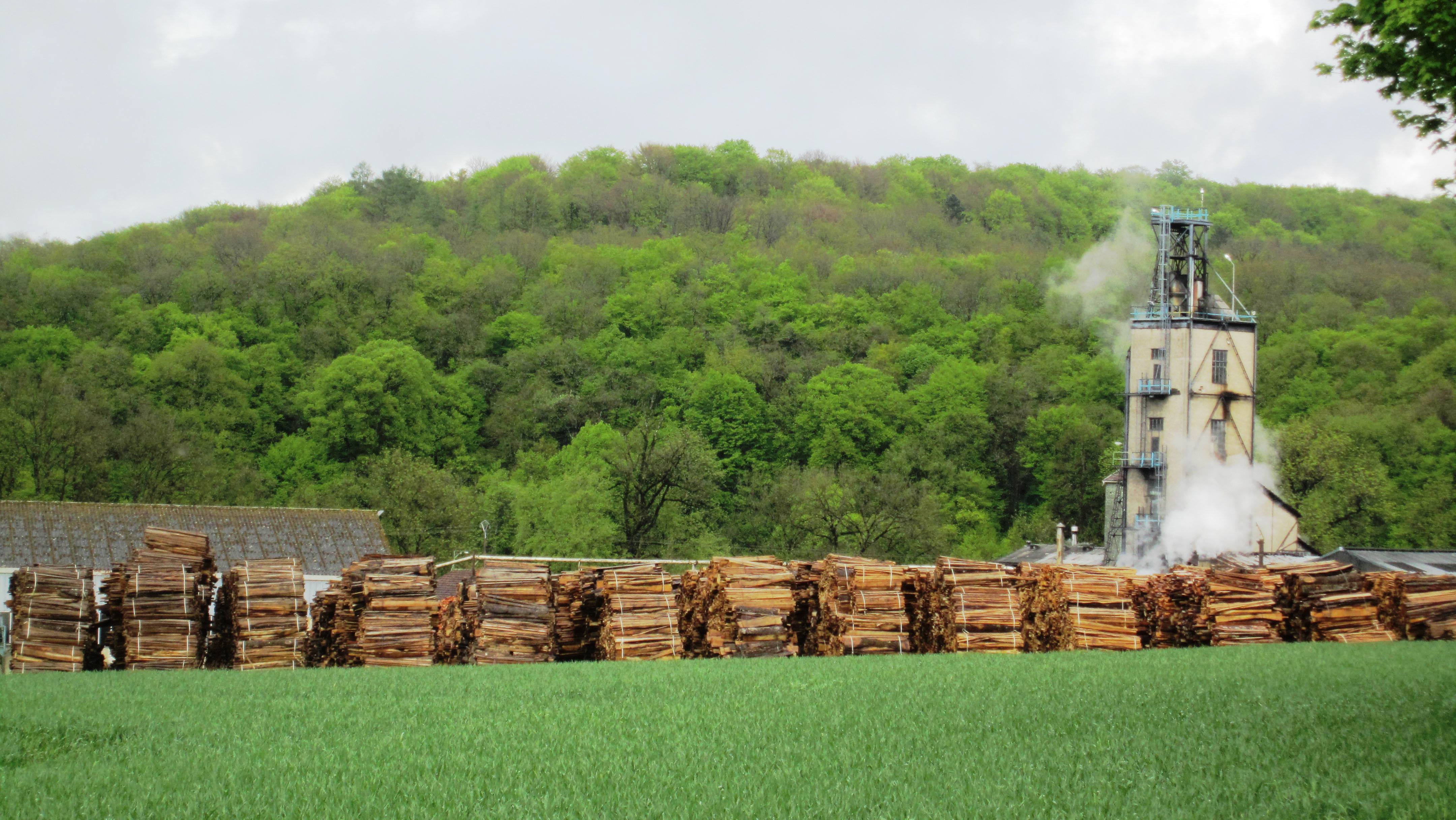
Bordet is a French industrial SME founded in Burgundy in 1860. Its products include bio-oils, activated carbon, and Carboépure® biochars. With a heritage of 160 years of experience and innovation, the Bordet Group initially specialized in the production of charcoal for ore smelting, meeting the needs of the region's strong steel industry. Since 2018, the group has been collaborating with the CNRS (French national center for Scientific Research) to develop its expertise in biochar and activated carbon, representing a natural evolution of its historical activities.
The project to establish a biochar production line is part of three major challenges for the Bordet Group:
Research and Development (R&D): Continue developing research programs in collaboration with major players in academic and industrial research. Bordet conducts laboratory and field studies with its biochar to obtain usage recommendations tailored to cropping systems. At the same time, Bordet also conducts research projects on various topics: animal nutrition, pollutant sequestration, and the substitution of fossil fuels. This R&D work, conducted in partnership with French universities and scientific research laboratories, has led to important discoveries in carbon sequestration, water decontamination, and biogas purification, on which doctoral students working at Bordet have published in recent months.
Industrialization: Modernizing and optimizing its continuous industrial model in a circular economy, unique in the world. This project represents a strategic conversion of a former charcoal factory, demonstrating the group's ability to rethink its model and adapt its products to contemporary challenges.
Deployment: Developing its neutral industrial model in France, Europe, and internationally, while gradually reducing the use of combustion coal.
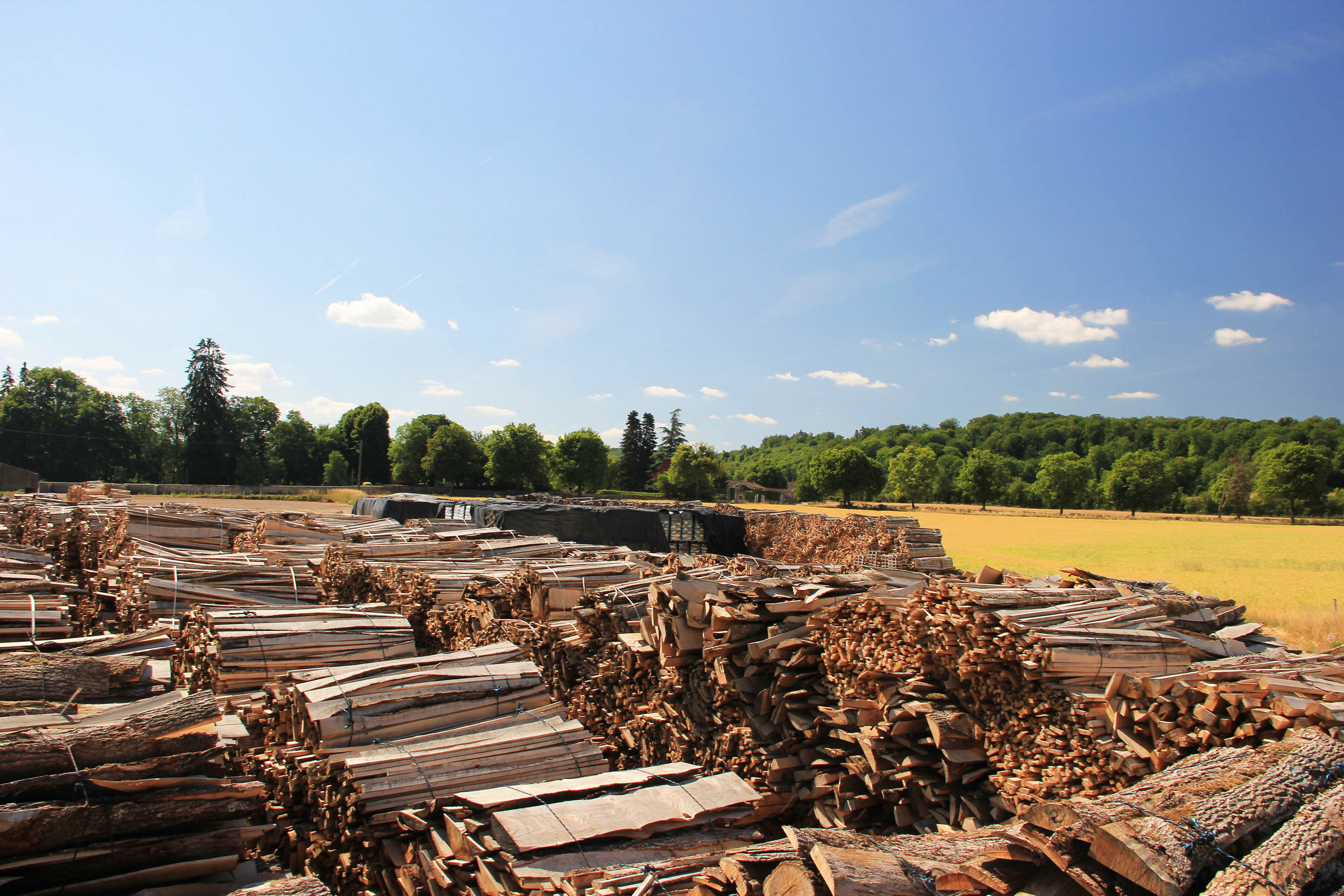
Bordet biochar is produced by pyrolysis of non-recycled sawmill waste. These wood scraps are sourced within a radius of less than 150 km from the production site and come exclusively from oak and beech. This High Environmental Performance production process uses a kiln operating continuously 24 hours a day at 600°C, producing only water vapor as waste. This method produces a biochar with unique characteristics (porosity, high specific surface area), offering an effective solution for carbon sequestration.
The project also incorporates a circular approach, with self-sufficient energy production through cogeneration and closed-loop transformation.
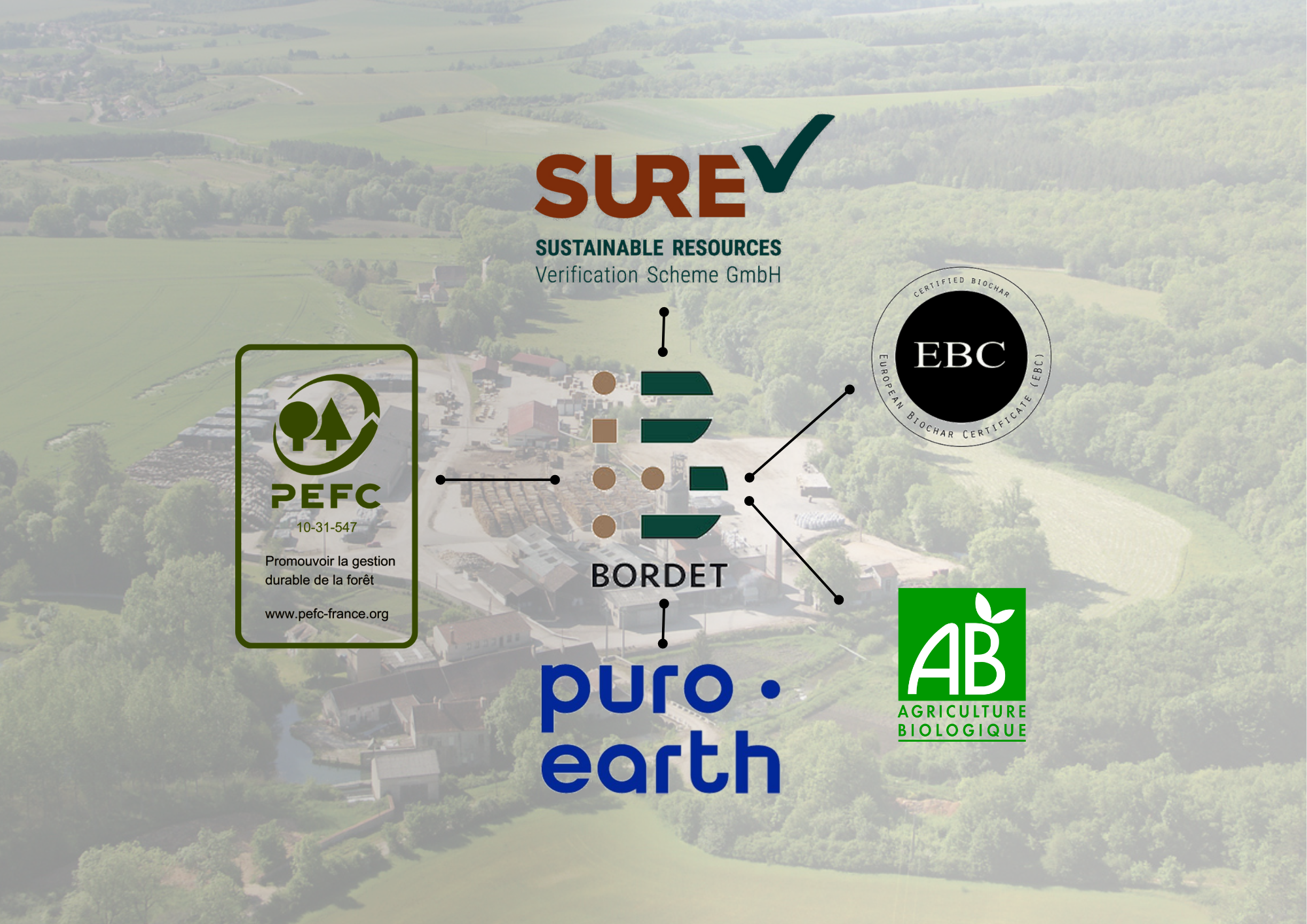
The Bordet Group produces high-quality biochar, characterized by its purity and homogeneity. Its very high carbon content (over 90%) and its H/Corg ratio of 0.25 increase the carbon storage potential in soils or materials (concrete, cement). The purity of Bordet biochar is also unique due to its low content of PAHs, heavy metals, and ash, allowing its use in demanding markets such as animal nutrition and agriculture. Furthermore, Bordet biochar has the advantage of having a very high specific surface area, thus increasing its water absorption capacity and filtering power. Its properties are recognized by the most demanding certifications, such as EBC (AgroOrganic class), AB (Organic Agriculture), and Puro.Earth.
The project issued its first 741 credits with Puro.earth in April 2024, followed by 1,403 in September 2024. The project has issued 1,768 CORCs last January and should issue as munch each in 2027. It also benefits from local certification to promote its short distribution channels.
Currently, no French regulations require historical coal producers, such as the Bordet Group, to modernize their biochar production. The decision to produce biochar is the result of strategic choices following extensive feasibility studies and R&D efforts targeting new carbon storage applications. The objective is to increase biochar production compared to historical coal production to store carbon and combat climate change.
The project contributes to SDGs through industrial modernization with R&D (SDG 9), circular economy of local sawmill waste (SDG 12), sequestration of 1,700 t CO2/year (SDG 13) and soil improvement via pure biochar (SDG 15).
The production of high-quality biochar represents a significant step forward in the fight against climate change and the transition to a more sustainable economy. Building on its 160-year heritage of experience and innovation, Bordet has established itself as a key player in strategic reconversion and industrial decarbonization.
 Puro.earth
The Bordet Group positions itself as a major player in high environmental performance, characterized by its sustainable production method and its products of exceptional quality. Drawing on its know-how, the Bordet Group provides innovative solutions for the benefit of the climate transition.
Read moreFounded in 1860, the Bordet Group has evolved from a coal producer for the steel industry to a player in decarbonization through the production of high-quality biochar. It is mainly produced from waste from sawmills and forestry operations in the surrounding area.
Bordet is a French industrial SME founded in Burgundy in 1860. Its products include bio-oils, activated carbon, and Carboépure® biochars. With a heritage of 160 years of experience and innovation, the Bordet Group initially specialized in the production of charcoal for ore smelting, meeting the needs of the region's strong steel industry. Since 2018, the group has been collaborating with the CNRS (French national center for Scientific Research) to develop its expertise in biochar and activated carbon, representing a natural evolution of its historical activities.
The project to establish a biochar production line is part of three major challenges for the Bordet Group:
Research and Development (R&D): Continue developing research programs in collaboration with major players in academic and industrial research. Bordet conducts laboratory and field studies with its biochar to obtain usage recommendations tailored to cropping systems. At the same time, Bordet also conducts research projects on various topics: animal nutrition, pollutant sequestration, and the substitution of fossil fuels. This R&D work, conducted in partnership with French universities and scientific research laboratories, has led to important discoveries in carbon sequestration, water decontamination, and biogas purification, on which doctoral students working at Bordet have published in recent months.
Industrialization: Modernizing and optimizing its continuous industrial model in a circular economy, unique in the world. This project represents a strategic conversion of a former charcoal factory, demonstrating the group's ability to rethink its model and adapt its products to contemporary challenges.
Deployment: Developing its neutral industrial model in France, Europe, and internationally, while gradually reducing the use of combustion coal.
Bordet biochar is produced by pyrolysis of non-recycled sawmill waste. These wood scraps are sourced within a radius of less than 150 km from the production site and come exclusively from oak and beech. This High Environmental Performance production process uses a kiln operating continuously 24 hours a day at 600°C, producing only water vapor as waste. This method produces a biochar with unique characteristics (porosity, high specific surface area), offering an effective solution for carbon sequestration.
The project also incorporates a circular approach, with self-sufficient energy production through cogeneration and closed-loop transformation.
The Bordet Group produces high-quality biochar, characterized by its purity and homogeneity. Its very high carbon content (over 90%) and its H/Corg ratio of 0.25 increase the carbon storage potential in soils or materials (concrete, cement). The purity of Bordet biochar is also unique due to its low content of PAHs, heavy metals, and ash, allowing its use in demanding markets such as animal nutrition and agriculture. Furthermore, Bordet biochar has the advantage of having a very high specific surface area, thus increasing its water absorption capacity and filtering power. Its properties are recognized by the most demanding certifications, such as EBC (AgroOrganic class), AB (Organic Agriculture), and Puro.Earth.
The project issued its first 741 credits with Puro.earth in April 2024, followed by 1,403 in September 2024. The project has issued 1,768 CORCs last January and should issue as munch each in 2027. It also benefits from local certification to promote its short distribution channels.
Currently, no French regulations require historical coal producers, such as the Bordet Group, to modernize their biochar production. The decision to produce biochar is the result of strategic choices following extensive feasibility studies and R&D efforts targeting new carbon storage applications. The objective is to increase biochar production compared to historical coal production to store carbon and combat climate change.
The project contributes to SDGs through industrial modernization with R&D (SDG 9), circular economy of local sawmill waste (SDG 12), sequestration of 1,700 t CO2/year (SDG 13) and soil improvement via pure biochar (SDG 15).
The production of high-quality biochar represents a significant step forward in the fight against climate change and the transition to a more sustainable economy. Building on its 160-year heritage of experience and innovation, Bordet has established itself as a key player in strategic reconversion and industrial decarbonization.