
 Label Bas Carbone
Examples: expansion of forests close to urban and peri-urban areas, use of wood materials to naturally regulate humidity.

Examples: reducing the frequency of soil cultivation, minimalist plot preparation, restoring organic matter and preserving soil microfauna.

Examples: diversity and locality of crop species, preservation of habitat for local flora and fauna, presence of beehives for pollination.

Examples: territorial dynamics, societal demand, diversification of the activity, local sales/processing, working conditions, sharing of good practices.

Examples: Consideration of wetlands, use of adapted species, drip-connected irrigation tools.

The Groupement Forestier Rural de Guichégu is a family group led by Gwenaël Postec and his brother. They are committed to bringing old family land back to life through the establishment of forests and sustainable and environmentally friendly farms.
Read moreAfforestation of agricultural wasteland in Finistère
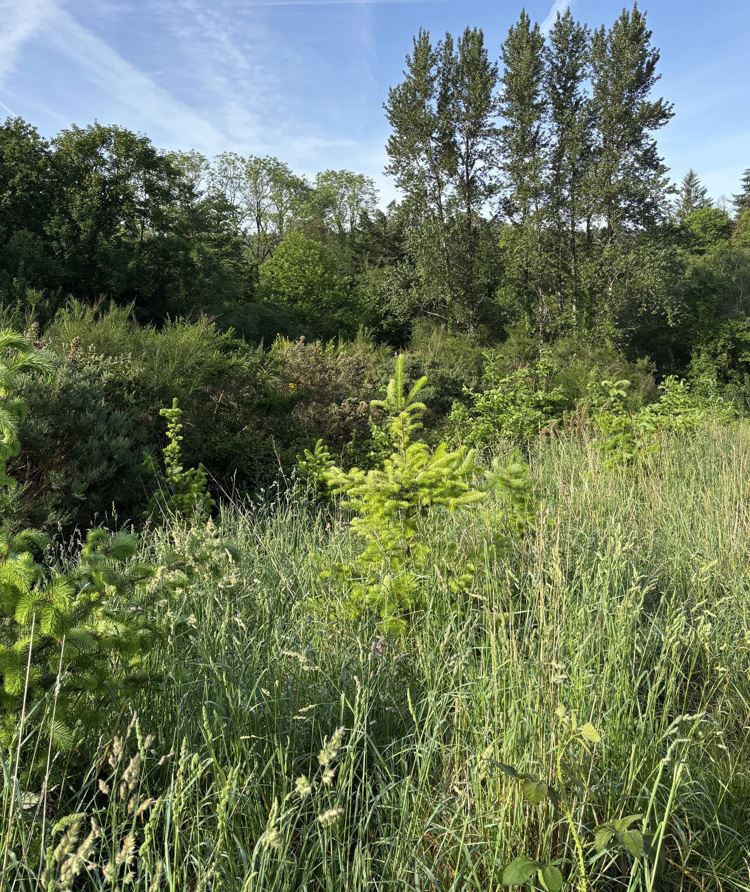
This afforestation project currently undergoing low carbon certification concerns a plot of land abandoned for agriculture, converted into a forest and will generate 518 tonnes of CO2 equivalent over 30 years*.
This 1.4-hectare afforestation was carried out in March 2022 on a 2.15-hectare plot surrounded by waterways (the surroundings are left to evolve naturally to promote biodiversity). This plot was too isolated to pursue agricultural activity, as it is steep, bordered by waterways on three sides, and a subdivision of the town of Landerneau on the higher ground.
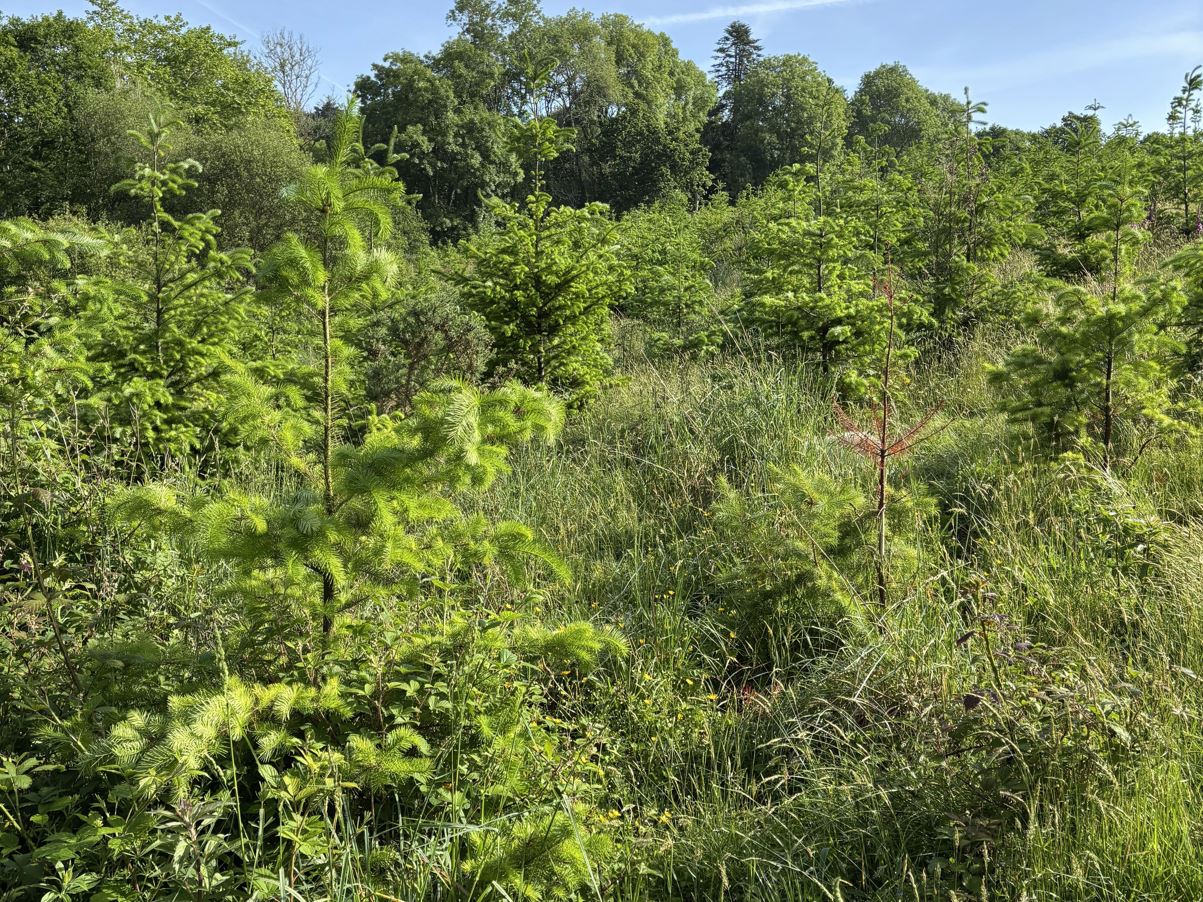
It consists of a 1.27-hectare plantation of Douglas fir, with regular high forests (harvested at 50-60 years old) and 13 ares of chestnut trees with irregular high forests. The operation will produce timber for the construction of buildings, the use of which is systematic due to new construction regulations. The industry is not yet ready to meet this increased demand through short supply chains. Carbon sequestration in timber allows for CO2 storage for 50 to 100 years.
Originally from Brittany, specifically Landerneau, and trained as an agricultural engineer, the owner was a consultant for France Bois Forêt and participated in the creation of the Low-Carbon Label and Forestry Methods in 2019.
Although carried out on a modest surface area, this project offers many co-benefits:
-By preparing the soil in strips, the operator ensures soil preservation.
-Wetlands and aquatic environments are taken into account, as the chosen species are adapted to the proximity of these ecosystems. Indeed, the chestnut tree is planted between the Douglas fir area and the streams. The coniferous afforestation is thus carried out more than 10 meters from watercourses.
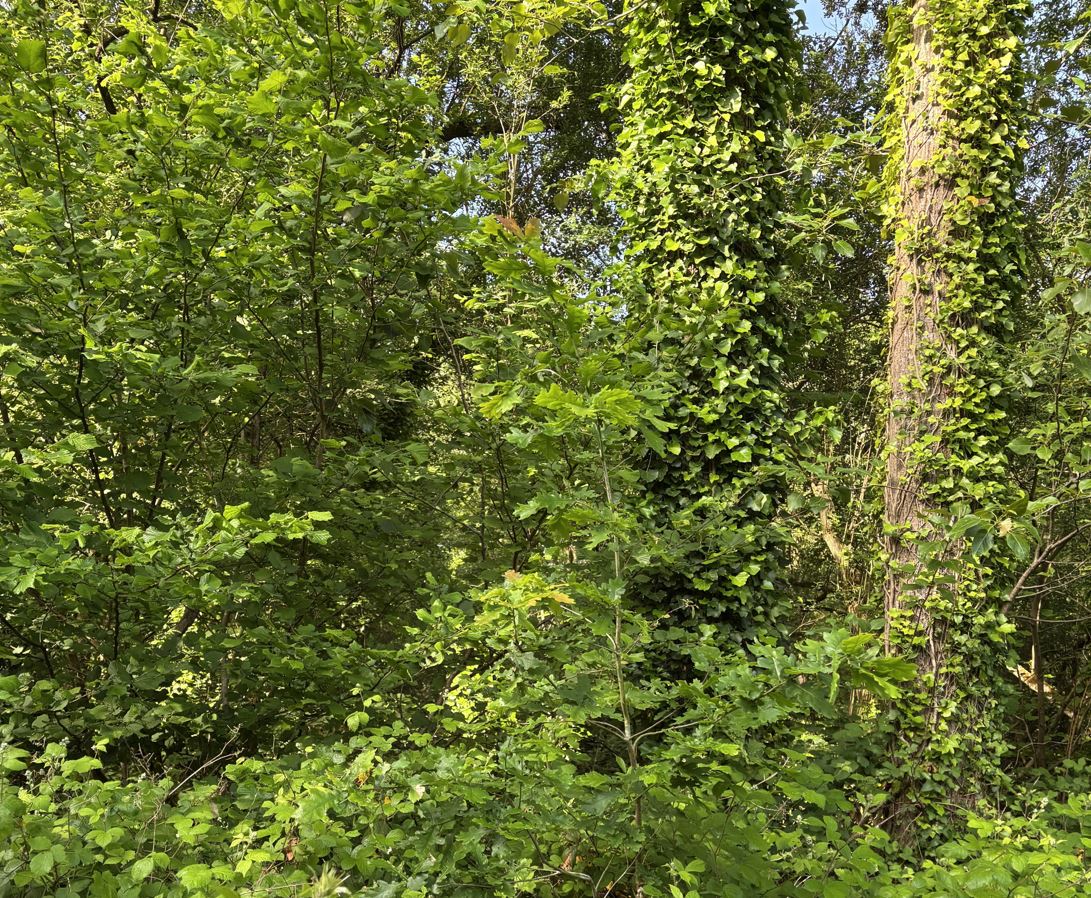
-Linear deciduous borders are also created (roads, paths, plot boundaries) and existing biodiversity is preserved by maintaining wooded edges near the plots.
-This project is also very positive from a socio-economic perspective. Since the majority of companies employed for forestry work are located within 50 km of the afforestation area, it thus provides added economic value across the region. The carbon sink was located within the Landerneau urban community and promotes improved air quality within the urban area.
-Finally, it will benefit from forest insurance, covering a portion of reforestation costs in the event of fire or storm.
* The final value of the estimate will only be established after verification by an independent auditor and an administrative verification decision.
 Label Bas Carbone
Examples: expansion of forests close to urban and peri-urban areas, use of wood materials to naturally regulate humidity.
Examples: reducing the frequency of soil cultivation, minimalist plot preparation, restoring organic matter and preserving soil microfauna.
Examples: diversity and locality of crop species, preservation of habitat for local flora and fauna, presence of beehives for pollination.
Examples: territorial dynamics, societal demand, diversification of the activity, local sales/processing, working conditions, sharing of good practices.
Examples: Consideration of wetlands, use of adapted species, drip-connected irrigation tools.
The Groupement Forestier Rural de Guichégu is a family group led by Gwenaël Postec and his brother. They are committed to bringing old family land back to life through the establishment of forests and sustainable and environmentally friendly farms.
Read moreAfforestation of agricultural wasteland in Finistère
This afforestation project currently undergoing low carbon certification concerns a plot of land abandoned for agriculture, converted into a forest and will generate 518 tonnes of CO2 equivalent over 30 years*.
This 1.4-hectare afforestation was carried out in March 2022 on a 2.15-hectare plot surrounded by waterways (the surroundings are left to evolve naturally to promote biodiversity). This plot was too isolated to pursue agricultural activity, as it is steep, bordered by waterways on three sides, and a subdivision of the town of Landerneau on the higher ground.
It consists of a 1.27-hectare plantation of Douglas fir, with regular high forests (harvested at 50-60 years old) and 13 ares of chestnut trees with irregular high forests. The operation will produce timber for the construction of buildings, the use of which is systematic due to new construction regulations. The industry is not yet ready to meet this increased demand through short supply chains. Carbon sequestration in timber allows for CO2 storage for 50 to 100 years.
Originally from Brittany, specifically Landerneau, and trained as an agricultural engineer, the owner was a consultant for France Bois Forêt and participated in the creation of the Low-Carbon Label and Forestry Methods in 2019.
Although carried out on a modest surface area, this project offers many co-benefits:
-By preparing the soil in strips, the operator ensures soil preservation.
-Wetlands and aquatic environments are taken into account, as the chosen species are adapted to the proximity of these ecosystems. Indeed, the chestnut tree is planted between the Douglas fir area and the streams. The coniferous afforestation is thus carried out more than 10 meters from watercourses.
-Linear deciduous borders are also created (roads, paths, plot boundaries) and existing biodiversity is preserved by maintaining wooded edges near the plots.
-This project is also very positive from a socio-economic perspective. Since the majority of companies employed for forestry work are located within 50 km of the afforestation area, it thus provides added economic value across the region. The carbon sink was located within the Landerneau urban community and promotes improved air quality within the urban area.
-Finally, it will benefit from forest insurance, covering a portion of reforestation costs in the event of fire or storm.
* The final value of the estimate will only be established after verification by an independent auditor and an administrative verification decision.