
 Label Bas Carbone
Improving practices on a 155-hectare arable farm in the Vienne department.
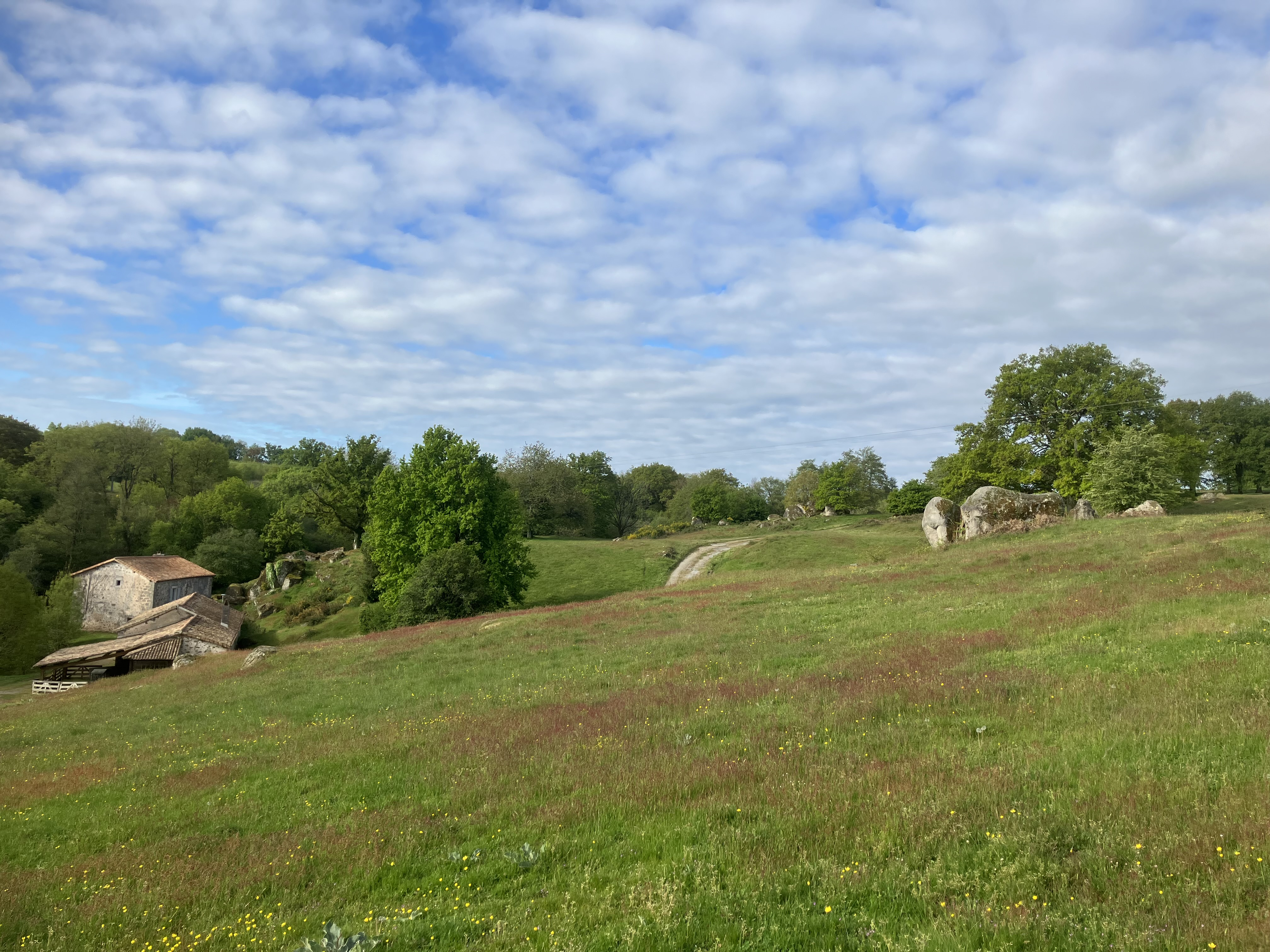
At nearly 40 years old, Aurélien Bérardengo is a passionate livestock farmer who has successfully built a viable and sustainable farm outside of his family’s agricultural heritage. Initially working two jobs, acquiring a flock of 450 sheep and installing a biogas unit on his farm allowed him to fully dedicate himself to farming and livestock raising, managing 155 hectares of cereal crops and 100 hectares of pastures.
Today, the various components of his farm work together in a virtuous cycle. Manure from his livestock feeds the biogas unit, replacing chemical fertilizers with a natural and organic alternative. Methanization has also enabled Aurélien to increase crop diversity by incorporating cover crops better suited to current climatic conditions (rye and sorghum) while allowing sheep to graze these fields in addition to pastures.
Located in Sanxay, Vienne, SCEA AA Bérardengo is a mixed crop-livestock farm covering a total area of 155.87 hectares. The farm has committed to adopting sustainable agricultural practices aimed at reducing its carbon footprint and improving soil fertility. As part of its transition project, SCEA AA Bérardengo has implemented a series of innovative practices that significantly reduce greenhouse gas emissions while increasing carbon sequestration in soils. The key strategies include:
In addition to these practices, SCEA AA Bérardengo has invested in a biogas project that transforms agricultural waste into renewable energy. This initiative contributes to reducing greenhouse gas emissions and improving the farm’s energy autonomy. The digestate, a byproduct of methanization, is used as a natural fertilizer, improving soil health and reducing the need for chemical fertilizers. This biogas unit has the capacity to supply between 1,700 and 2,000 households with renewable gas.
The transition project at SCEA AA Bérardengo has already delivered tangible results:
By monetizing its environmental efforts through the carbon credit market, SCEA AA Bérardengo generates additional revenue while actively contributing to climate change mitigation.
By combining emission reductions and carbon storage, the farm is expected to prevent the emission of 467.21 tons of CO2 equivalent per year, amounting to 2,336.05 tons over the five-year project period.
With this ambitious transition, SCEA AA Bérardengo demonstrates that it is possible to combine agricultural productivity, environmental responsibility, and economic viability. By investing in innovative practices and rigorously monitoring its emissions, the farm contributes to a more sustainable and climate-resilient agricultural model.
(*) The final value of the estimate will only be established after verification by an independent auditor and an administrative validation decision.
 Label Bas Carbone
Improving practices on a 155-hectare arable farm in the Vienne department.
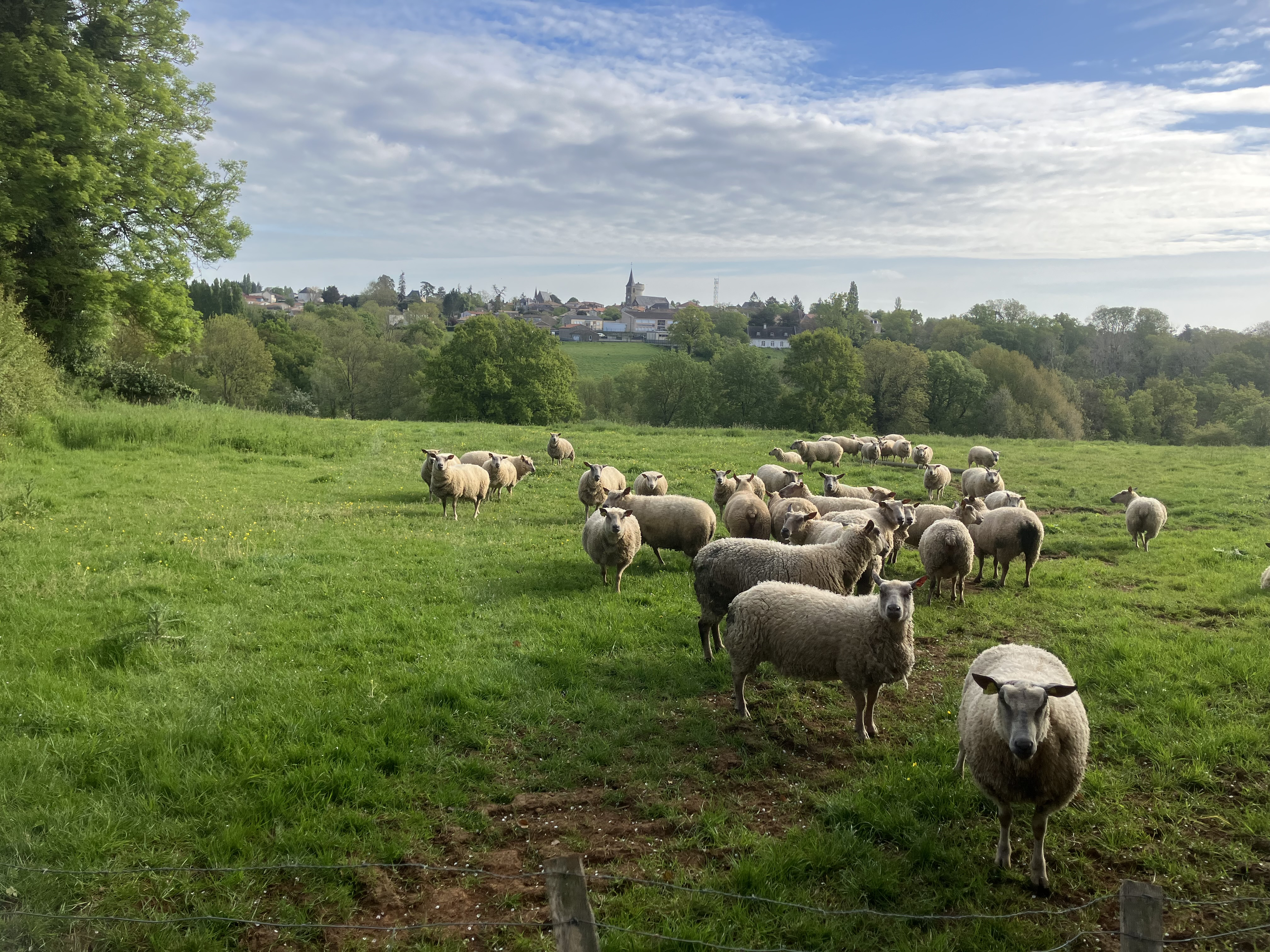
At nearly 40 years old, Aurélien Bérardengo is a passionate livestock farmer who has successfully built a viable and sustainable farm outside of his family’s agricultural heritage. Initially working two jobs, acquiring a flock of 450 sheep and installing a biogas unit on his farm allowed him to fully dedicate himself to farming and livestock raising, managing 155 hectares of cereal crops and 100 hectares of pastures.
Today, the various components of his farm work together in a virtuous cycle. Manure from his livestock feeds the biogas unit, replacing chemical fertilizers with a natural and organic alternative. Methanization has also enabled Aurélien to increase crop diversity by incorporating cover crops better suited to current climatic conditions (rye and sorghum) while allowing sheep to graze these fields in addition to pastures.
Located in Sanxay, Vienne, SCEA AA Bérardengo is a mixed crop-livestock farm covering a total area of 155.87 hectares. The farm has committed to adopting sustainable agricultural practices aimed at reducing its carbon footprint and improving soil fertility. As part of its transition project, SCEA AA Bérardengo has implemented a series of innovative practices that significantly reduce greenhouse gas emissions while increasing carbon sequestration in soils. The key strategies include:
In addition to these practices, SCEA AA Bérardengo has invested in a biogas project that transforms agricultural waste into renewable energy. This initiative contributes to reducing greenhouse gas emissions and improving the farm’s energy autonomy. The digestate, a byproduct of methanization, is used as a natural fertilizer, improving soil health and reducing the need for chemical fertilizers. This biogas unit has the capacity to supply between 1,700 and 2,000 households with renewable gas.
The transition project at SCEA AA Bérardengo has already delivered tangible results:
By monetizing its environmental efforts through the carbon credit market, SCEA AA Bérardengo generates additional revenue while actively contributing to climate change mitigation.
By combining emission reductions and carbon storage, the farm is expected to prevent the emission of 467.21 tons of CO2 equivalent per year, amounting to 2,336.05 tons over the five-year project period.
With this ambitious transition, SCEA AA Bérardengo demonstrates that it is possible to combine agricultural productivity, environmental responsibility, and economic viability. By investing in innovative practices and rigorously monitoring its emissions, the farm contributes to a more sustainable and climate-resilient agricultural model.
(*) The final value of the estimate will only be established after verification by an independent auditor and an administrative validation decision.