
 Label Bas Carbone
Improving practices on a 153 ha arable farm in the Vienne department.
A Farm in Transformation
Located in Villiers in the Vienne region, SCEA Charleane is a large-scale crop farm that has undertaken a genuine agroecological transition. With a total area of 153.81 hectares, the farm has been committed for several years to adopting sustainable agricultural practices aimed at reducing its carbon footprint and improving soil fertility.
An Intergenerational Project to Ensure the Sustainability of Local Agriculture
In a context where French farmers are retiring en masse, SCEA Charleane embodies a model for the future by ensuring the transfer of knowledge and the continuity of agricultural activities. This project involves multiple generations of farmers to secure the sustainability of the farm and job creation in the region. By integrating young farmers into strategic decisions and training new generations in sustainable practices, SCEA Charleane actively contributes to the modernization and transmission of agricultural heritage.
Regenerative and Low-Carbon Agricultural Practices
As part of its transition project, SCEA Charleane has implemented a series of innovative practices that significantly reduce greenhouse gas emissions while increasing carbon storage in the soil. The key measures include:
A Measurable Impact on the Carbon Footprint
The transition project at SCEA Charleane has delivered tangible results:
Economic Valorization of Sustainable Practices
SCEA Charleane has developed an economic model that leverages the monetization of its environmental efforts. By participating in the carbon credit mechanism, the farm generates additional revenue while actively contributing to climate change mitigation. By modifying its practices, the farm will avoid the emission of 199.34 T CO2 equivalent per year, totaling 996.7 T CO2 eq over the five-year project period.*
A Commitment to Sustainable and Resilient AgricultureThrough this ambitious transition, SCEA Charleane demonstrates that it is possible to reconcile agricultural productivity, environmental respect, and economic viability. By investing in innovative practices and rigorous emissions monitoring, the farm contributes to a more sustainable and resilient agricultural model in the face of current climate challenges.
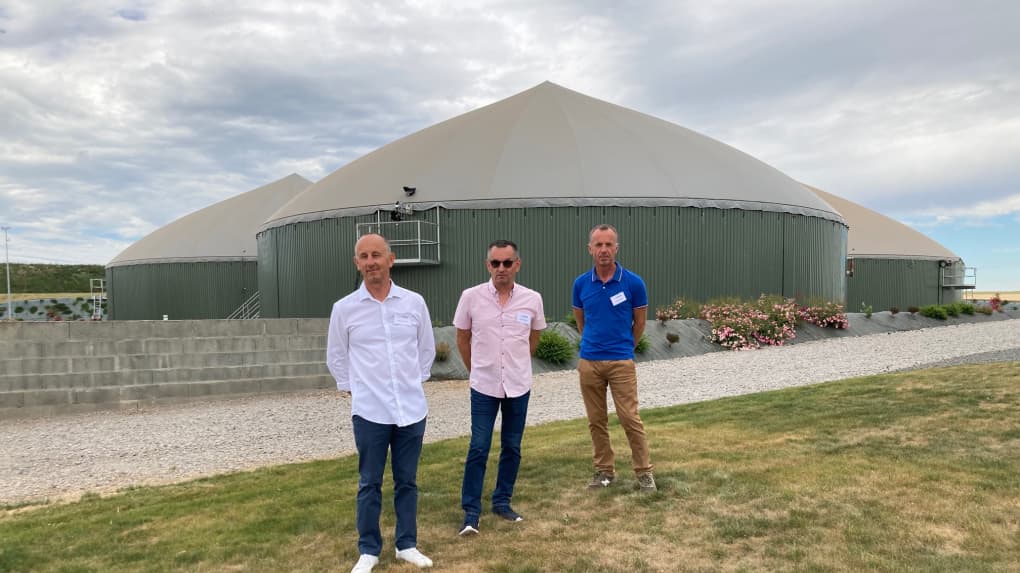
Photo credits : Pierrick, Jérôme et Freddy Surault accueillent le public jusqu'à samedi soir sur leur unité. © Vincent Buche
https://www.lanouvellerepublique.fr/vienne/commune/yversay/methanisation-a-yversay-les-freres-surault-produisent-du-gaz-pour-2-750-foyers
(*) : The final value of the estimate will only be established after verification by an independent auditor and an administrative verification decision.
 Label Bas Carbone
Improving practices on a 153 ha arable farm in the Vienne department.
A Farm in Transformation
Located in Villiers in the Vienne region, SCEA Charleane is a large-scale crop farm that has undertaken a genuine agroecological transition. With a total area of 153.81 hectares, the farm has been committed for several years to adopting sustainable agricultural practices aimed at reducing its carbon footprint and improving soil fertility.
An Intergenerational Project to Ensure the Sustainability of Local Agriculture
In a context where French farmers are retiring en masse, SCEA Charleane embodies a model for the future by ensuring the transfer of knowledge and the continuity of agricultural activities. This project involves multiple generations of farmers to secure the sustainability of the farm and job creation in the region. By integrating young farmers into strategic decisions and training new generations in sustainable practices, SCEA Charleane actively contributes to the modernization and transmission of agricultural heritage.
Regenerative and Low-Carbon Agricultural Practices
As part of its transition project, SCEA Charleane has implemented a series of innovative practices that significantly reduce greenhouse gas emissions while increasing carbon storage in the soil. The key measures include:
A Measurable Impact on the Carbon Footprint
The transition project at SCEA Charleane has delivered tangible results:
Economic Valorization of Sustainable Practices
SCEA Charleane has developed an economic model that leverages the monetization of its environmental efforts. By participating in the carbon credit mechanism, the farm generates additional revenue while actively contributing to climate change mitigation. By modifying its practices, the farm will avoid the emission of 199.34 T CO2 equivalent per year, totaling 996.7 T CO2 eq over the five-year project period.*
A Commitment to Sustainable and Resilient AgricultureThrough this ambitious transition, SCEA Charleane demonstrates that it is possible to reconcile agricultural productivity, environmental respect, and economic viability. By investing in innovative practices and rigorous emissions monitoring, the farm contributes to a more sustainable and resilient agricultural model in the face of current climate challenges.
Photo credits : Pierrick, Jérôme et Freddy Surault accueillent le public jusqu'à samedi soir sur leur unité. © Vincent Buche
https://www.lanouvellerepublique.fr/vienne/commune/yversay/methanisation-a-yversay-les-freres-surault-produisent-du-gaz-pour-2-750-foyers
(*) : The final value of the estimate will only be established after verification by an independent auditor and an administrative verification decision.