
 Label Bas Carbone
Examples: reducing the frequency of soil cultivation, minimalist plot preparation, restoring organic matter and preserving soil microfauna.

Examples: diversity and locality of crop species, preservation of habitat for local flora and fauna, presence of beehives for pollination.

Examples: territorial dynamics, societal demand, diversification of the activity, local sales/processing, working conditions, sharing of good practices.
Association actively participating in the reforestation of burnt plots in the Landes and Gironde.
Read morePlanting maritime pines and cork oaks to restore plots of land in Belin-Béliet
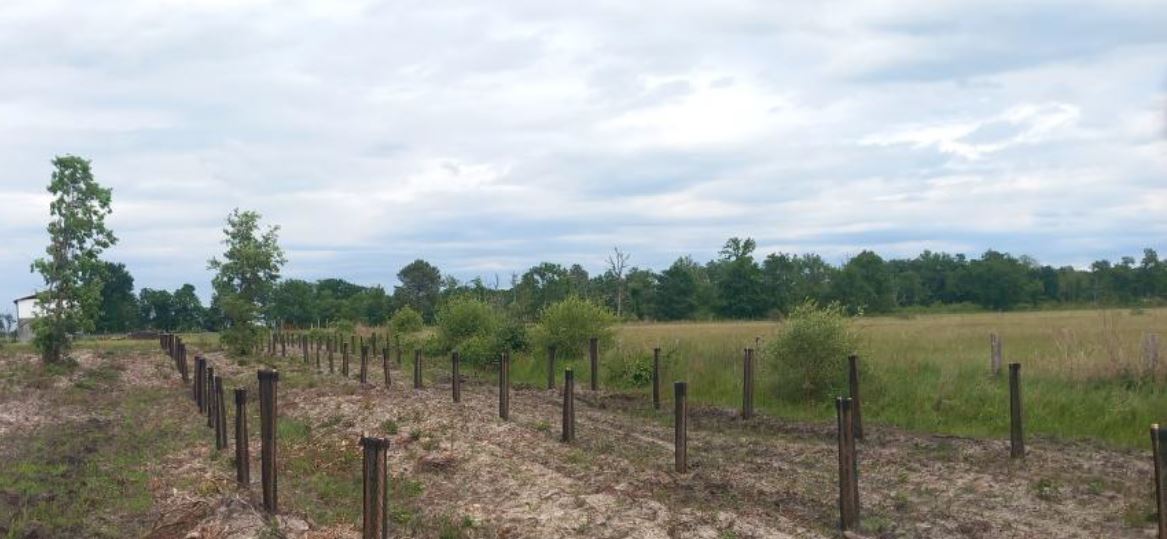
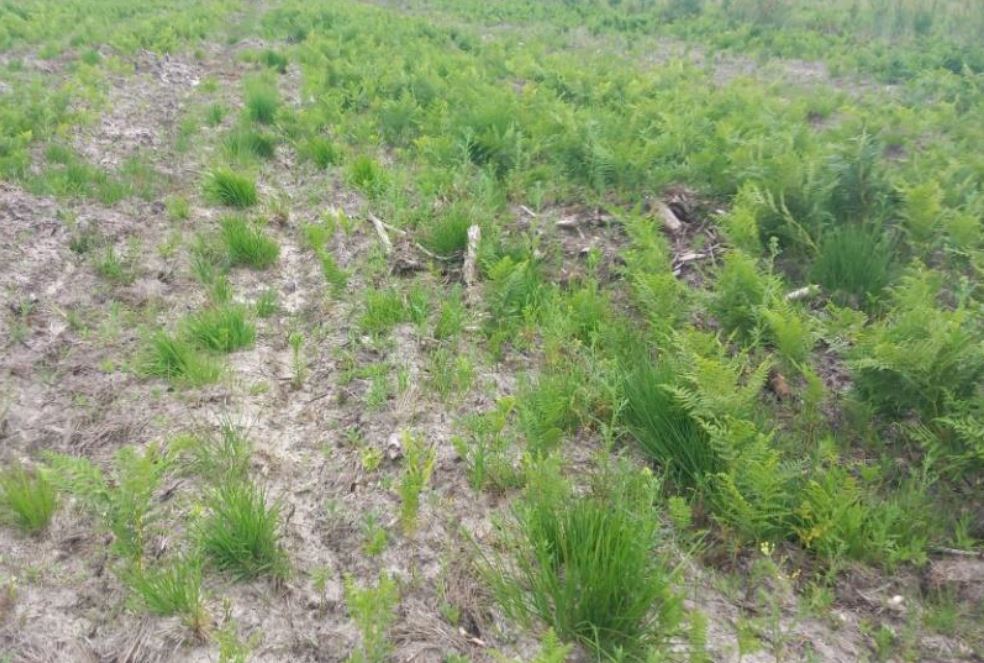
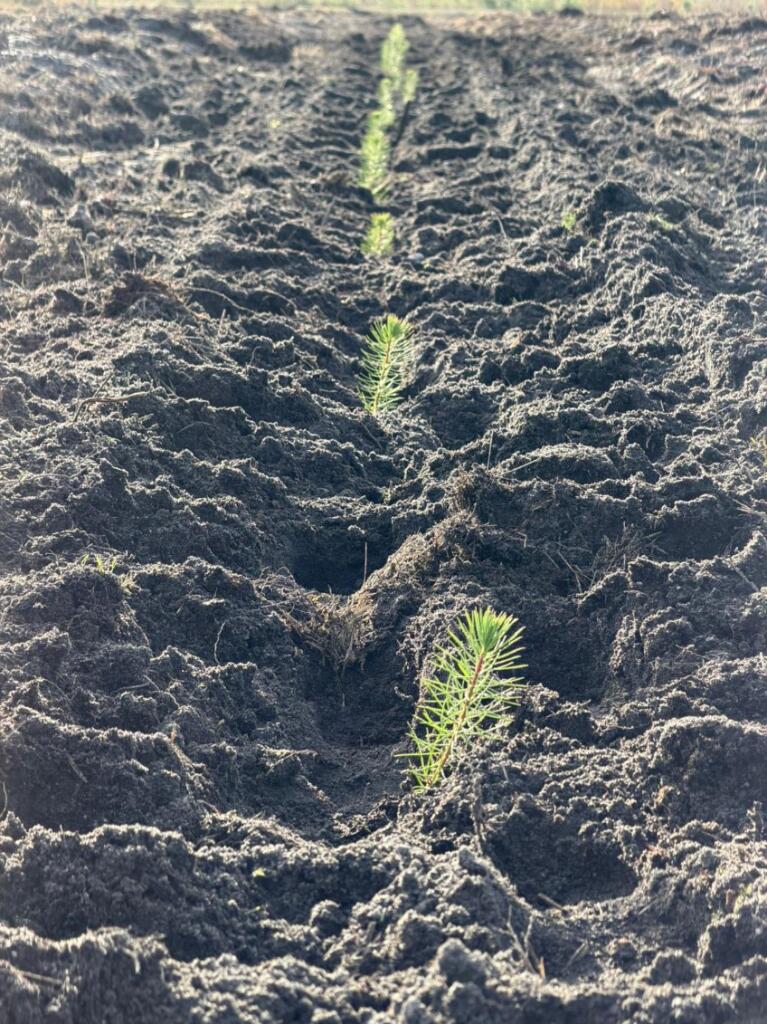
This project takes place in the commune of Belin-Béliet in Gironde. The forests in this town were ravaged by fire in the summer of 2022. The initial planting on these plots was decimated and dead on the ground. The reforestation project involves replanting 8.26 hectares of the area with mainly maritime pine, adapted to local conditions: poor sandy soil and plenty of sunshine. It will be accompanied by cork oak at the edge of the plot, which can have a ‘firebreak’ effect and will add diversity. 2114 tonnes of CO2eq will be sequestered over 30 years thanks to this project*.
The wood from these forests is harvested according to an optimized management model that extracts the best value. Through local processing, each part of the tree is properly valued, with a view to ensuring nothing is wasted:
-Pulling: Small sections and lower-quality wood are used for paper pulp production.
-Sawing: Mid-sized wood is used to make pallets, shipping crates, and other packaging products.
-Lumber: Higher-quality sections are transformed into building components or furniture.
-Recycling of by-products: Sawdust and bark are recovered for use as mulch, firelighters, or reconstituted panels, thus avoiding any waste. Pine cones may also be used for cosmetic purposes thanks to innovative research by the company Oceopins.
These initiatives boost the local economy by supporting a sustainable and more environmentally friendly sector.
-Local forestry companies will be solicited to work on this project. The plantation will be PEFC certified.
-The soil will be little worked (strip work without ploughing) and the burned trees will be entirely crushed on site to restore organic matter and thus carbon to the soil.
-The owner has taken out forestry insurance to cover reforestation in case of future fires.
-Hardwood tree borders will be put in place along the roads and paths at the limits of the parcels.
* The final value of the estimate will only be established after verification by an independent auditor and an administrative decision on verification.
 Label Bas Carbone
Examples: reducing the frequency of soil cultivation, minimalist plot preparation, restoring organic matter and preserving soil microfauna.
Examples: diversity and locality of crop species, preservation of habitat for local flora and fauna, presence of beehives for pollination.
Examples: territorial dynamics, societal demand, diversification of the activity, local sales/processing, working conditions, sharing of good practices.
Association actively participating in the reforestation of burnt plots in the Landes and Gironde.
Read morePlanting maritime pines and cork oaks to restore plots of land in Belin-Béliet
This project takes place in the commune of Belin-Béliet in Gironde. The forests in this town were ravaged by fire in the summer of 2022. The initial planting on these plots was decimated and dead on the ground. The reforestation project involves replanting 8.26 hectares of the area with mainly maritime pine, adapted to local conditions: poor sandy soil and plenty of sunshine. It will be accompanied by cork oak at the edge of the plot, which can have a ‘firebreak’ effect and will add diversity. 2114 tonnes of CO2eq will be sequestered over 30 years thanks to this project*.
The wood from these forests is harvested according to an optimized management model that extracts the best value. Through local processing, each part of the tree is properly valued, with a view to ensuring nothing is wasted:
-Pulling: Small sections and lower-quality wood are used for paper pulp production.
-Sawing: Mid-sized wood is used to make pallets, shipping crates, and other packaging products.
-Lumber: Higher-quality sections are transformed into building components or furniture.
-Recycling of by-products: Sawdust and bark are recovered for use as mulch, firelighters, or reconstituted panels, thus avoiding any waste. Pine cones may also be used for cosmetic purposes thanks to innovative research by the company Oceopins.
These initiatives boost the local economy by supporting a sustainable and more environmentally friendly sector.
-Local forestry companies will be solicited to work on this project. The plantation will be PEFC certified.
-The soil will be little worked (strip work without ploughing) and the burned trees will be entirely crushed on site to restore organic matter and thus carbon to the soil.
-The owner has taken out forestry insurance to cover reforestation in case of future fires.
-Hardwood tree borders will be put in place along the roads and paths at the limits of the parcels.
* The final value of the estimate will only be established after verification by an independent auditor and an administrative decision on verification.