 Label Bas Carbone
Examples: reducing the frequency of soil cultivation, minimalist plot preparation, restoring organic matter and preserving soil microfauna.

Examples: diversity and locality of crop species, preservation of habitat for local flora and fauna, presence of beehives for pollination.

Examples: territorial dynamics, societal demand, diversification of the activity, local sales/processing, working conditions, sharing of good practices.

Examples: Consideration of wetlands, use of adapted species, drip-connected irrigation tools.
Planting of 3.75 ha of almond trees in the Gard
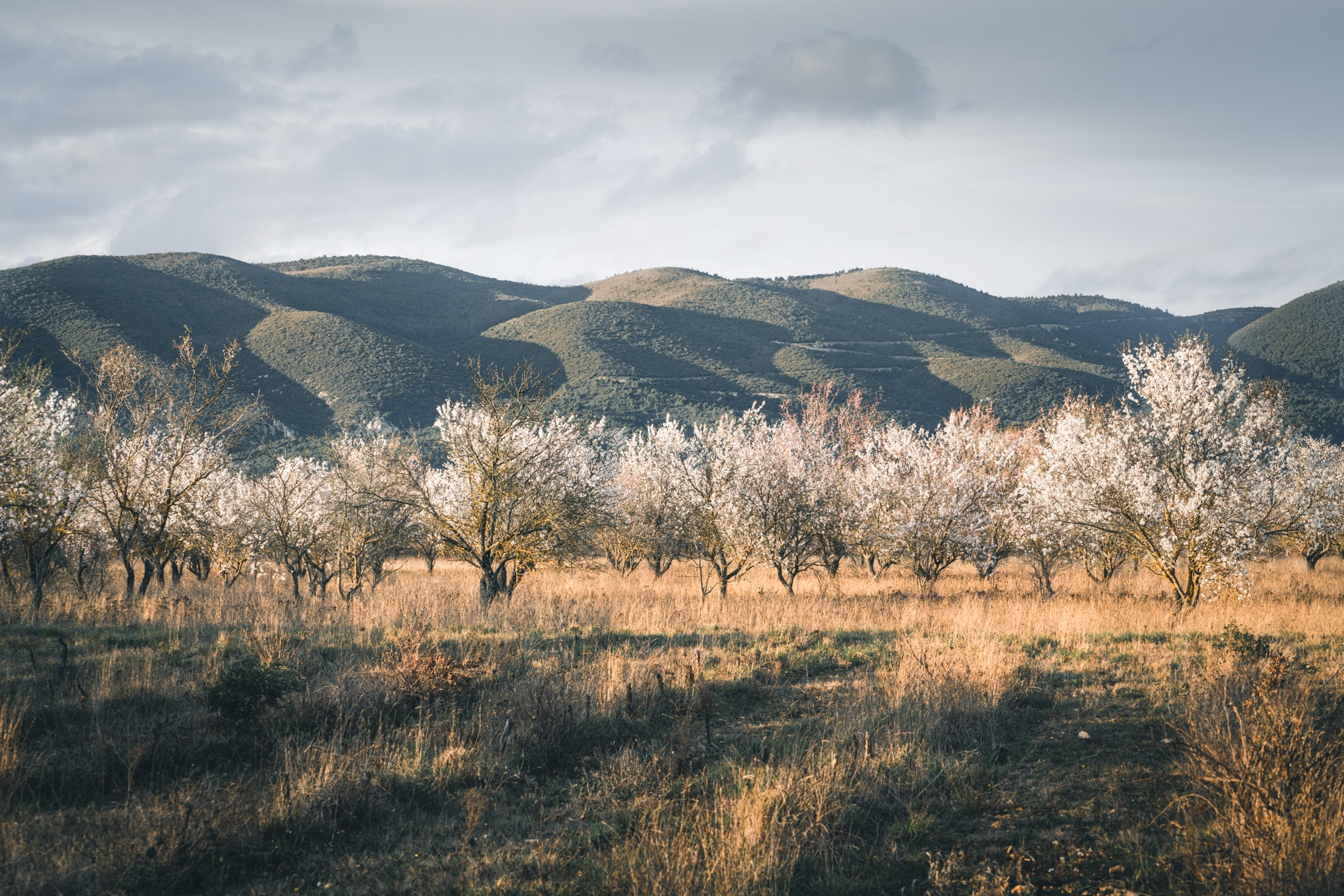
Nîmes lies within an emblematic Mediterranean terroir shaped by a warm, dry climate ideal for tree crops. This historic Roman city with millennia-old arenas and the Fontaine gardens, is surrounded by Gard landscapes dominated by Mediterranean agriculture: olives, vines, and stone fruits have thrived here for centuries. The Gard, with over 3,750 ha of expanding orchards, benefits from exceptional sunshine (more than 2,700 hours annually) and pebbly soils perfect for almond trees, iconic symbols of resilience and adaptation to climate change.
Mr. Haro and Mr. Comte plan to plant their first almond orchard on a 3.75 hectares plot in late 2024/early 2025. The plot was previously used to produce cereals. Planting permanent trees will sequester more CO2: 249.06 tonnes of CO2eq more over 20 years*.
The fruits will be harvested by the agricultural cooperative Sud Amandes, a partner in the project, which produces, processes and markets French almonds, particularly for professional confectioners, pastry chefs, nougat makers and chocolatiers.
This project will relocate almond production in France because this product is currently largely imported from abroad. The almonds will be mainly marketed in France by Sud Amandes.
The soil will also be able to sequester more CO2 because it will no longer be worked every year. In addition, this new plantation will require little fertilizer and treatment compared to previous crops. This new cultivation route will help avoid emissions and makes the project even more virtuous.
Water resources will be used in small quantities because the orchards have a precision irrigation system.
The orchard's significant permanent inter-row grassing will retain water in the soil and will be favorable to soil life. It will be maintained through mechanical weeding, without the use of plant protection products.
About ten beehives will also be associated with the project.
As this crop has been newly introduced to the farm, it will help diversify farm income while also diversifying the flora within its cultivated area.
* The final value of the estimate will only be established after verification by an independent auditor and an administrative verification decision.
 Label Bas Carbone
Examples: reducing the frequency of soil cultivation, minimalist plot preparation, restoring organic matter and preserving soil microfauna.
Examples: diversity and locality of crop species, preservation of habitat for local flora and fauna, presence of beehives for pollination.
Examples: territorial dynamics, societal demand, diversification of the activity, local sales/processing, working conditions, sharing of good practices.
Examples: Consideration of wetlands, use of adapted species, drip-connected irrigation tools.
Planting of 3.75 ha of almond trees in the Gard
Nîmes lies within an emblematic Mediterranean terroir shaped by a warm, dry climate ideal for tree crops. This historic Roman city with millennia-old arenas and the Fontaine gardens, is surrounded by Gard landscapes dominated by Mediterranean agriculture: olives, vines, and stone fruits have thrived here for centuries. The Gard, with over 3,750 ha of expanding orchards, benefits from exceptional sunshine (more than 2,700 hours annually) and pebbly soils perfect for almond trees, iconic symbols of resilience and adaptation to climate change.
Mr. Haro and Mr. Comte plan to plant their first almond orchard on a 3.75 hectares plot in late 2024/early 2025. The plot was previously used to produce cereals. Planting permanent trees will sequester more CO2: 249.06 tonnes of CO2eq more over 20 years*.
The fruits will be harvested by the agricultural cooperative Sud Amandes, a partner in the project, which produces, processes and markets French almonds, particularly for professional confectioners, pastry chefs, nougat makers and chocolatiers.
This project will relocate almond production in France because this product is currently largely imported from abroad. The almonds will be mainly marketed in France by Sud Amandes.
The soil will also be able to sequester more CO2 because it will no longer be worked every year. In addition, this new plantation will require little fertilizer and treatment compared to previous crops. This new cultivation route will help avoid emissions and makes the project even more virtuous.
Water resources will be used in small quantities because the orchards have a precision irrigation system.
The orchard's significant permanent inter-row grassing will retain water in the soil and will be favorable to soil life. It will be maintained through mechanical weeding, without the use of plant protection products.
About ten beehives will also be associated with the project.
As this crop has been newly introduced to the farm, it will help diversify farm income while also diversifying the flora within its cultivated area.
* The final value of the estimate will only be established after verification by an independent auditor and an administrative verification decision.