 Label Bas Carbone
Examples: reducing the frequency of soil cultivation, minimalist plot preparation, restoring organic matter and preserving soil microfauna.

Examples: diversity and locality of crop species, preservation of habitat for local flora and fauna, presence of beehives for pollination.

Examples: territorial dynamics, societal demand, diversification of the activity, local sales/processing, working conditions, sharing of good practices.
Reforestation of declining plots in Haudricourt with species better adapted to climate change
Located in the lush hinterland of Seine-Maritime, in Haudricourt, this project is rooted in Normandy's rich landscape, renowned for its long agricultural and forestry traditions. The region benefits from a temperate oceanic climate, ideal for mixed forests and traditional meadows. Historically, Normandy has been a hub for timber trade and livestock farming, with sustainable forest management ingrained in its local identity. Haudricourt’s clay-loam soils offer excellent fertility for both broadleaf and conifer species. Today, ecological transition is vital to protect biodiversity and strengthen the region’s resilience to climate change.
This project drives ecological and socio-economic resilience within Seine-Maritime. It supports job creation in silviculture, mobilizes technical partners, and enhances the territory through forestry innovation. It aligns with the regional movement to adapt Normandy's landscapes to climate change, while boosting the attractiveness of the local forestry sector.
This project is taking place in an area that has been badly affected by ash chalarosis, a pathogenic fungus imported from Asia that is devastating to this tree, which is the 5th most common species in French forests. Affected ash trees see their foliage wither, their crowns recede and their branches become necrotic, preventing the circulation of sap. Today, no treatment is sufficiently effective, and ash tree mortality is rapidly becoming very high, both in young trees and in more mature specimens. The ash trees planted on this plot around 30 years ago have been decimated and are dead on the ground.
The levers deployed
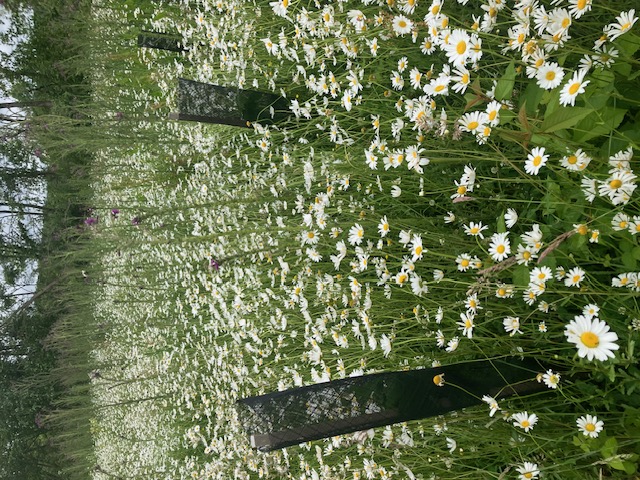
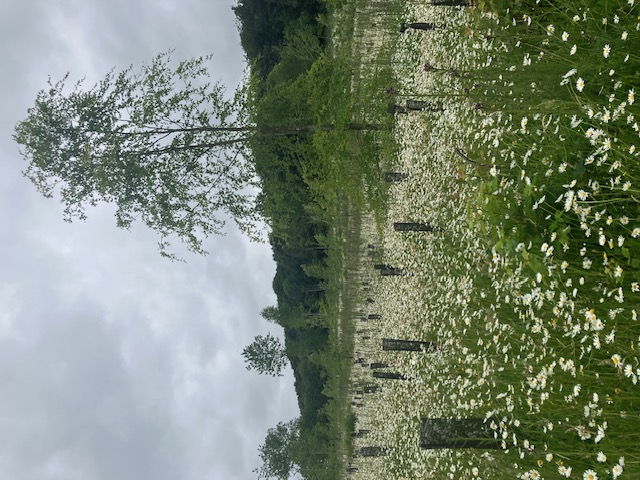
This 11.68 ha reforestation project involves replanting the area with a diversified mix of 8 tree species. This highly diversified stand will be adapted to the challenges of the future (global warming, resistance to common diseases, natural feeding of fauna, biodiversity, etc.). The pedo-climatic context of the plots was studied in order to choose the species. 4008 tonnes of CO2eq will be sequestered over 30 years thanks to this project*.
- The plantation will be PEFC certified.
- The soil will be particularly well protected, as the dying trees will be completely shredded on site to restore organic matter and therefore carbon to the soil. In addition, the soil will only be worked on the plantation lines.
- The project will be positive in terms of biodiversity thanks to the wide variety of species planted, most of which are local. The species planted are sessile oak, downy oak, beech, chestnut, poplar, American red oak, plane maple and Douglas fir. Healthy hardwood strips will also be preserved in the planting area.
* The final value of the estimate will only be established after verification by an independent auditor and an administrative decision on verification.
 Label Bas Carbone
Examples: reducing the frequency of soil cultivation, minimalist plot preparation, restoring organic matter and preserving soil microfauna.
Examples: diversity and locality of crop species, preservation of habitat for local flora and fauna, presence of beehives for pollination.
Examples: territorial dynamics, societal demand, diversification of the activity, local sales/processing, working conditions, sharing of good practices.
Reforestation of declining plots in Haudricourt with species better adapted to climate change
Located in the lush hinterland of Seine-Maritime, in Haudricourt, this project is rooted in Normandy's rich landscape, renowned for its long agricultural and forestry traditions. The region benefits from a temperate oceanic climate, ideal for mixed forests and traditional meadows. Historically, Normandy has been a hub for timber trade and livestock farming, with sustainable forest management ingrained in its local identity. Haudricourt’s clay-loam soils offer excellent fertility for both broadleaf and conifer species. Today, ecological transition is vital to protect biodiversity and strengthen the region’s resilience to climate change.
This project drives ecological and socio-economic resilience within Seine-Maritime. It supports job creation in silviculture, mobilizes technical partners, and enhances the territory through forestry innovation. It aligns with the regional movement to adapt Normandy's landscapes to climate change, while boosting the attractiveness of the local forestry sector.
This project is taking place in an area that has been badly affected by ash chalarosis, a pathogenic fungus imported from Asia that is devastating to this tree, which is the 5th most common species in French forests. Affected ash trees see their foliage wither, their crowns recede and their branches become necrotic, preventing the circulation of sap. Today, no treatment is sufficiently effective, and ash tree mortality is rapidly becoming very high, both in young trees and in more mature specimens. The ash trees planted on this plot around 30 years ago have been decimated and are dead on the ground.
The levers deployed
This 11.68 ha reforestation project involves replanting the area with a diversified mix of 8 tree species. This highly diversified stand will be adapted to the challenges of the future (global warming, resistance to common diseases, natural feeding of fauna, biodiversity, etc.). The pedo-climatic context of the plots was studied in order to choose the species. 4008 tonnes of CO2eq will be sequestered over 30 years thanks to this project*.
- The plantation will be PEFC certified.
- The soil will be particularly well protected, as the dying trees will be completely shredded on site to restore organic matter and therefore carbon to the soil. In addition, the soil will only be worked on the plantation lines.
- The project will be positive in terms of biodiversity thanks to the wide variety of species planted, most of which are local. The species planted are sessile oak, downy oak, beech, chestnut, poplar, American red oak, plane maple and Douglas fir. Healthy hardwood strips will also be preserved in the planting area.
* The final value of the estimate will only be established after verification by an independent auditor and an administrative decision on verification.