
 Label Bas Carbone
Examples: reducing the frequency of soil cultivation, minimalist plot preparation, restoring organic matter and preserving soil microfauna.

Examples: territorial dynamics, societal demand, diversification of the activity, local sales/processing, working conditions, sharing of good practices.

Pépinières Naudet is one of the main French producers of young forest plants, which are planted all over France.
Read moreReforestation of 4.29 hectares of a stand attacked by the bark beetle in Nièvre
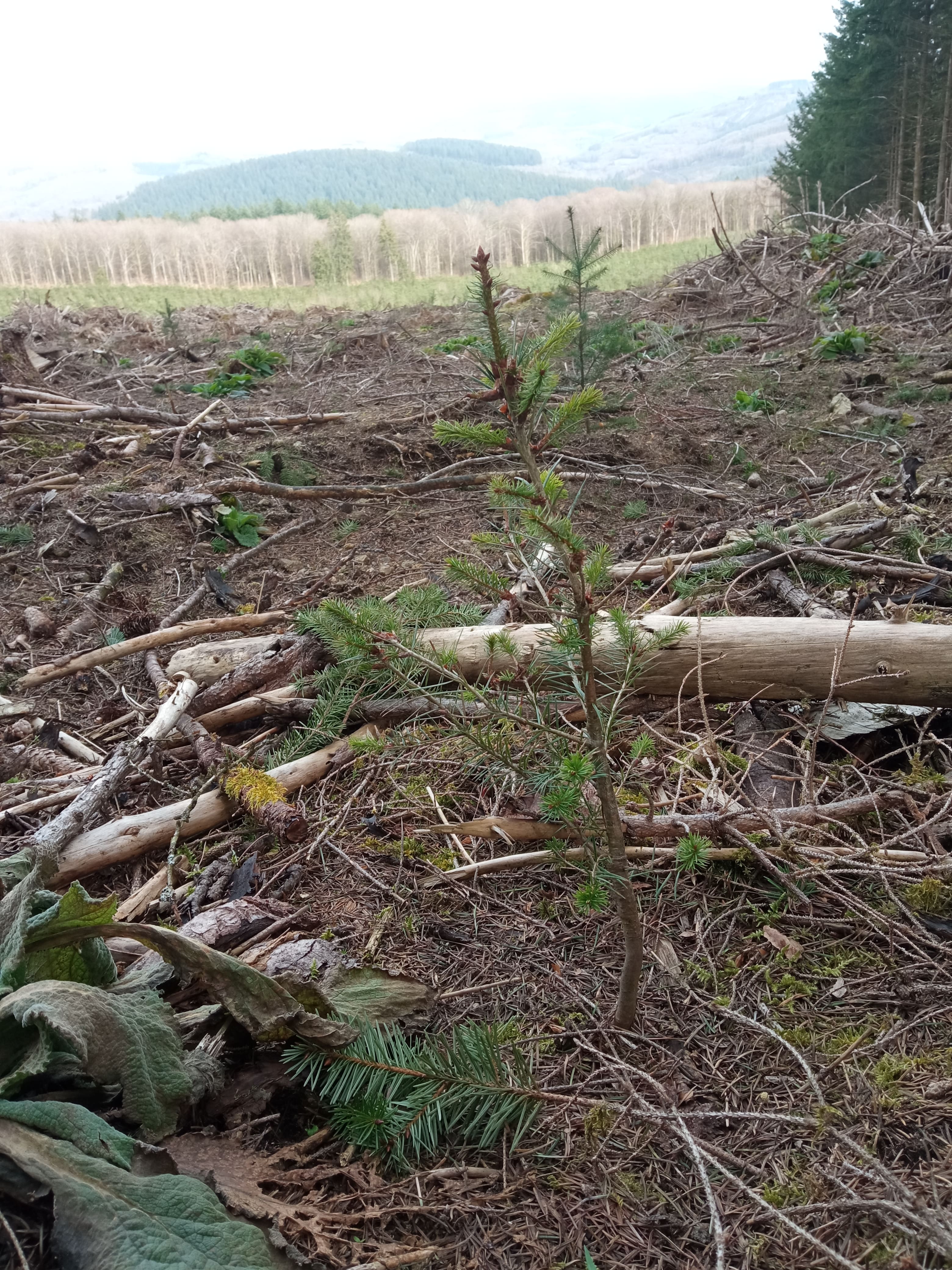
Located within the Morvan Regional Natural Park in Nièvre (Bourgogne-Franche-Comté, France), Arleuf boasts an exceptional natural heritage shaped by ancient forests, rolling valleys, and gentle hills. Historically, the Morvan has been a land of wood and water, with forestry as a central pillar of local tradition. The temperate climate, marked by regular rainfall and cool summers, supports robust forest growth and ecosystem resilience. The local economy relies heavily on forestry, agriculture, green tourism, and the sustainable management of natural resources, giving the territory a distinctive and enduring identity.
With the shortening of cold winters regulating insect populations, bark beetles are developing exponentially and nibbling away at stands. In the spruce forests of eastern France, the impact is considerable.
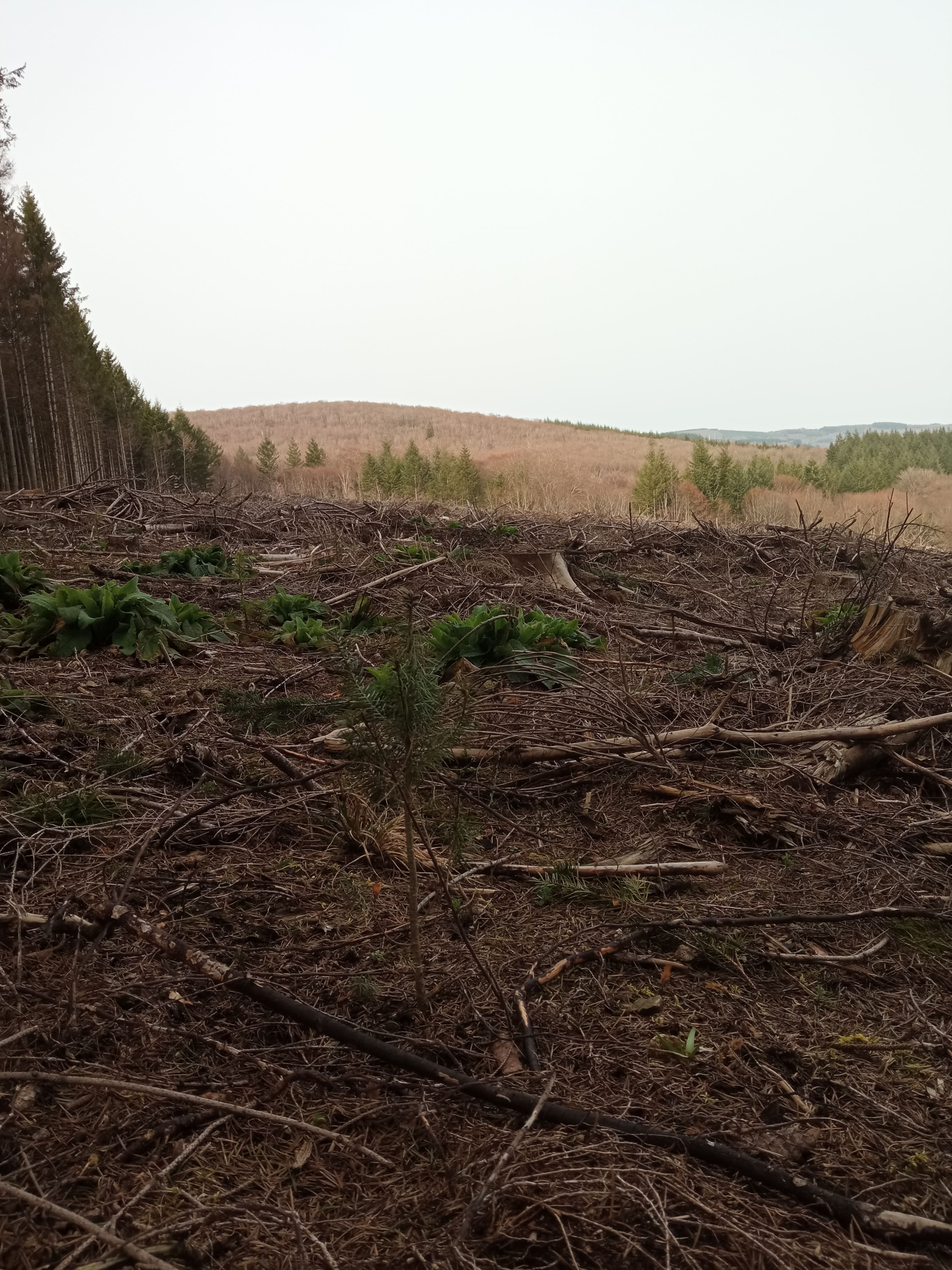
This epidemic mainly affects forests in the north and east of France, causing rapid dieback and even the death of trees. The phenomenon is easily identifiable, with stands turning from green to brown or white and becoming sensitive to the slightest gust of wind. These ‘dry’ woodlands end up crumbling to the ground, leaving desolate landscapes and no longer capturing CO2. If the forest is neither adapted nor renewed, this situation can lead to its gradual disappearance. As the trees no longer have any value, silvicultural management is also compromised. This is known as a ‘silvicultural impasse’.
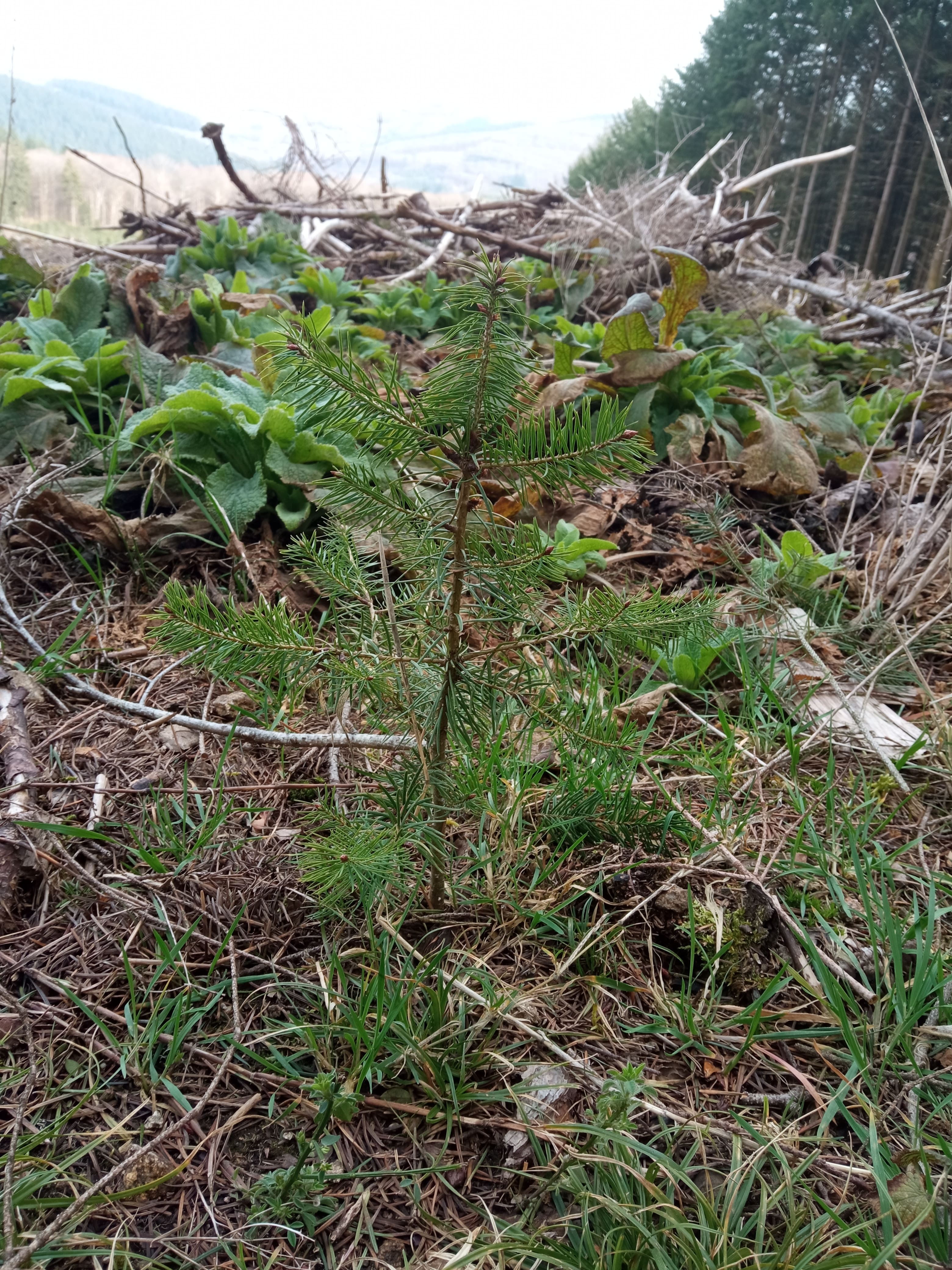
This 4.29 hectare reforestation project will enable 1304 tonnes of CO2 equivalent to be stored over 30 years*. The plots concerned by the project were all harvested because of the bark beetle. Unfortunately, the existing stand was almost monospecific, so reforestation was essential. It was decided to install a mixture of species better suited to prolonged hot periods, based on douglas fir and hybrid larch.
Socio-economic : A local forestry company (less than 50km from the site) will carry out the reforestation.
Soil preservation: The soil will be prepared very superficially before reforestation to preserve the micro-fauna and the carbon of the forest soils.
* The final value of the estimate will only be established after verification by an independent auditor and an administrative decision on verification.
 Label Bas Carbone
Examples: reducing the frequency of soil cultivation, minimalist plot preparation, restoring organic matter and preserving soil microfauna.
Examples: territorial dynamics, societal demand, diversification of the activity, local sales/processing, working conditions, sharing of good practices.
Pépinières Naudet is one of the main French producers of young forest plants, which are planted all over France.
Read moreReforestation of 4.29 hectares of a stand attacked by the bark beetle in Nièvre
Located within the Morvan Regional Natural Park in Nièvre (Bourgogne-Franche-Comté, France), Arleuf boasts an exceptional natural heritage shaped by ancient forests, rolling valleys, and gentle hills. Historically, the Morvan has been a land of wood and water, with forestry as a central pillar of local tradition. The temperate climate, marked by regular rainfall and cool summers, supports robust forest growth and ecosystem resilience. The local economy relies heavily on forestry, agriculture, green tourism, and the sustainable management of natural resources, giving the territory a distinctive and enduring identity.
With the shortening of cold winters regulating insect populations, bark beetles are developing exponentially and nibbling away at stands. In the spruce forests of eastern France, the impact is considerable.
This epidemic mainly affects forests in the north and east of France, causing rapid dieback and even the death of trees. The phenomenon is easily identifiable, with stands turning from green to brown or white and becoming sensitive to the slightest gust of wind. These ‘dry’ woodlands end up crumbling to the ground, leaving desolate landscapes and no longer capturing CO2. If the forest is neither adapted nor renewed, this situation can lead to its gradual disappearance. As the trees no longer have any value, silvicultural management is also compromised. This is known as a ‘silvicultural impasse’.
This 4.29 hectare reforestation project will enable 1304 tonnes of CO2 equivalent to be stored over 30 years*. The plots concerned by the project were all harvested because of the bark beetle. Unfortunately, the existing stand was almost monospecific, so reforestation was essential. It was decided to install a mixture of species better suited to prolonged hot periods, based on douglas fir and hybrid larch.
Socio-economic : A local forestry company (less than 50km from the site) will carry out the reforestation.
Soil preservation: The soil will be prepared very superficially before reforestation to preserve the micro-fauna and the carbon of the forest soils.
* The final value of the estimate will only be established after verification by an independent auditor and an administrative decision on verification.