
 Label Bas Carbone
Examples: reducing the frequency of soil cultivation, minimalist plot preparation, restoring organic matter and preserving soil microfauna.

Examples: diversity and locality of crop species, preservation of habitat for local flora and fauna, presence of beehives for pollination.

Examples: territorial dynamics, societal demand, diversification of the activity, local sales/processing, working conditions, sharing of good practices.

Pépinières Naudet is one of the main French producers of young forest plants, which are planted all over France.
Read moreNew afforestation in the Landes region
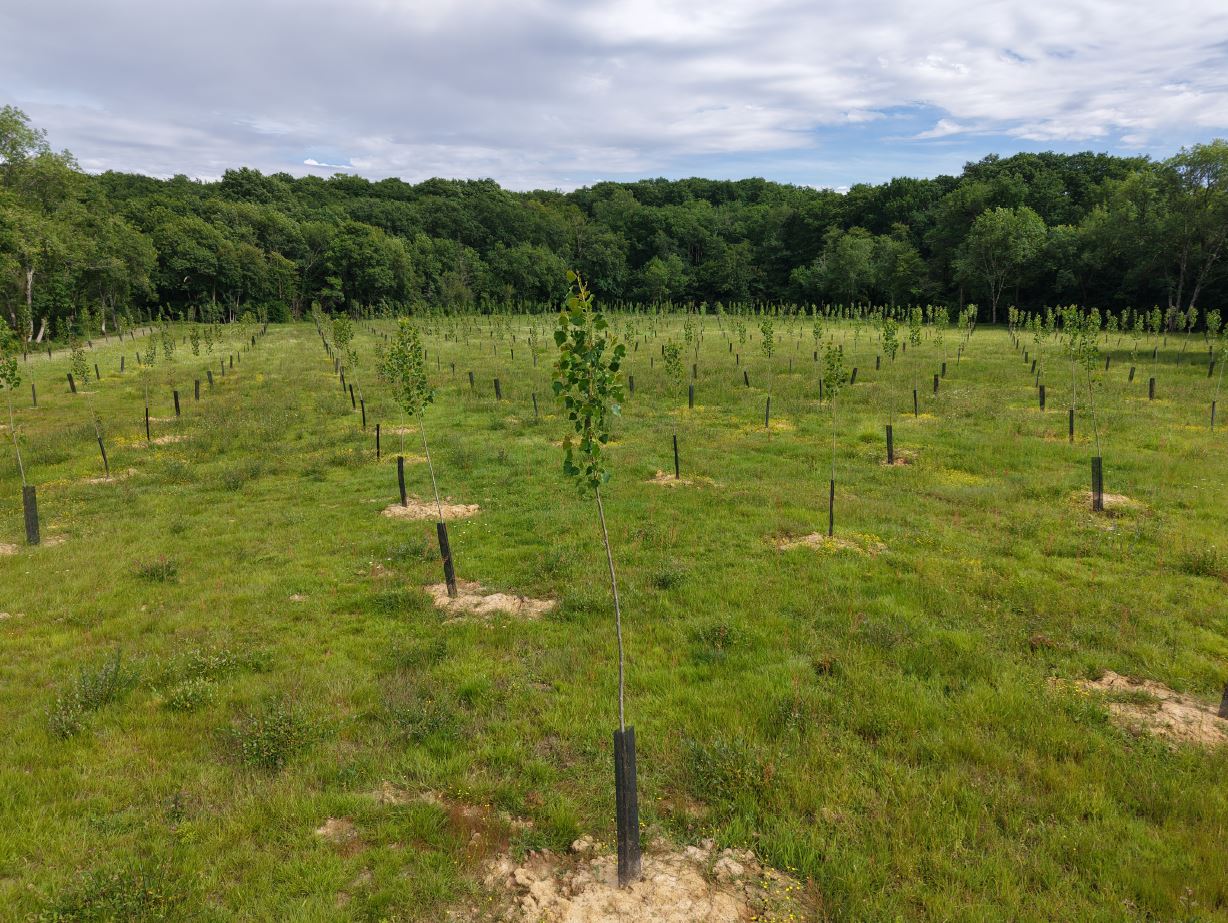
Parleboscq is situated on the border between the Landes and Gers departments, in a landscape where farmland, woodlands, and Armagnac vineyards coexist. Land use in the municipality is overwhelmingly dominated by agriculture, which accounts for approximately 77% of the total municipal area. Forested and semi-natural areas cover most of the remaining territory, while built-up areas remain very limited, reflecting the character of a rural municipality with a dispersed settlement pattern. This distribution highlights a landscape still strongly defined by its agricultural land. Against this backdrop, afforestation of non-forest plots helps diversify land use and strengthen ecological connectivity. Trees facilitate atmospheric carbon sequestration, improve soil quality by building up organic matter, curb erosion, and create new habitats for flora and fauna. At the local level, they also contribute to the area's resilience against droughts and the impacts of climate change.
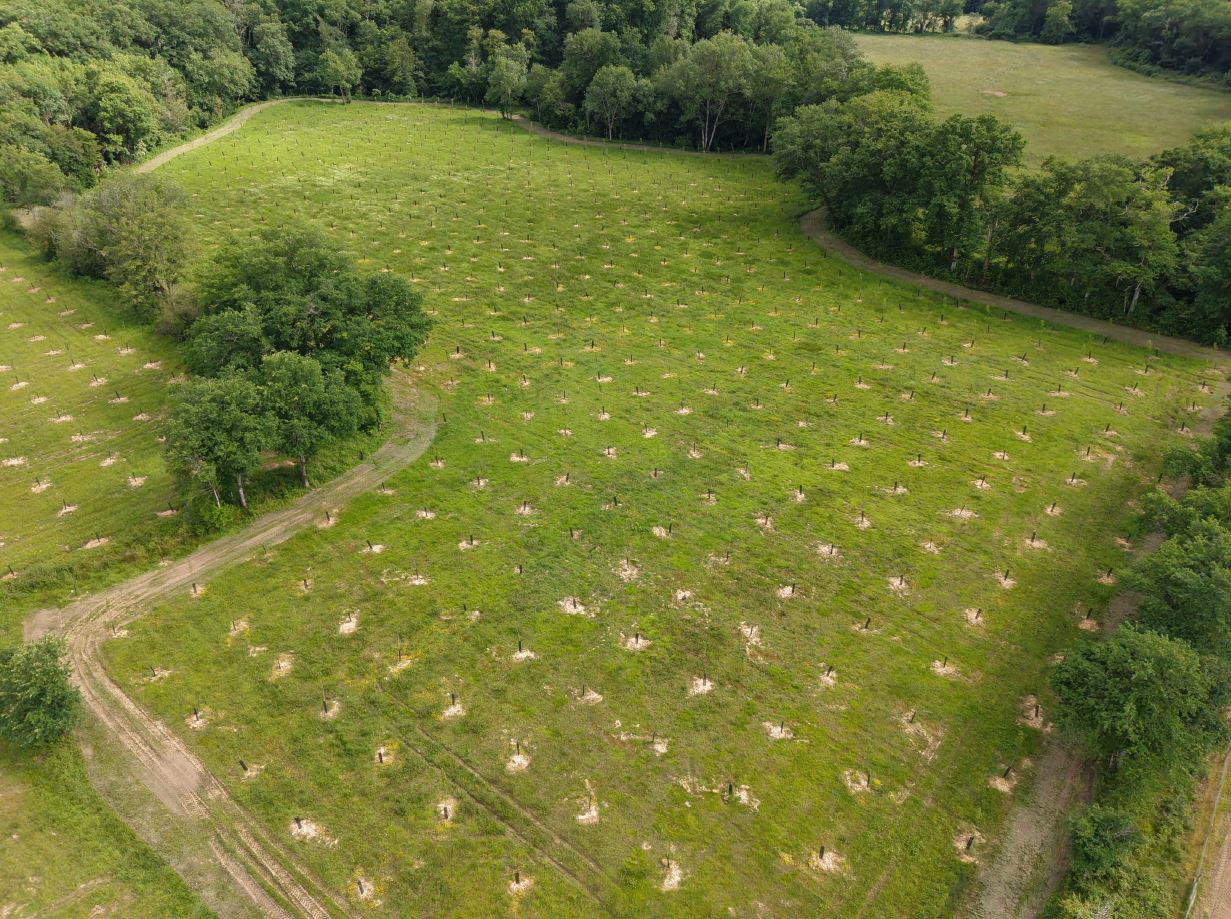
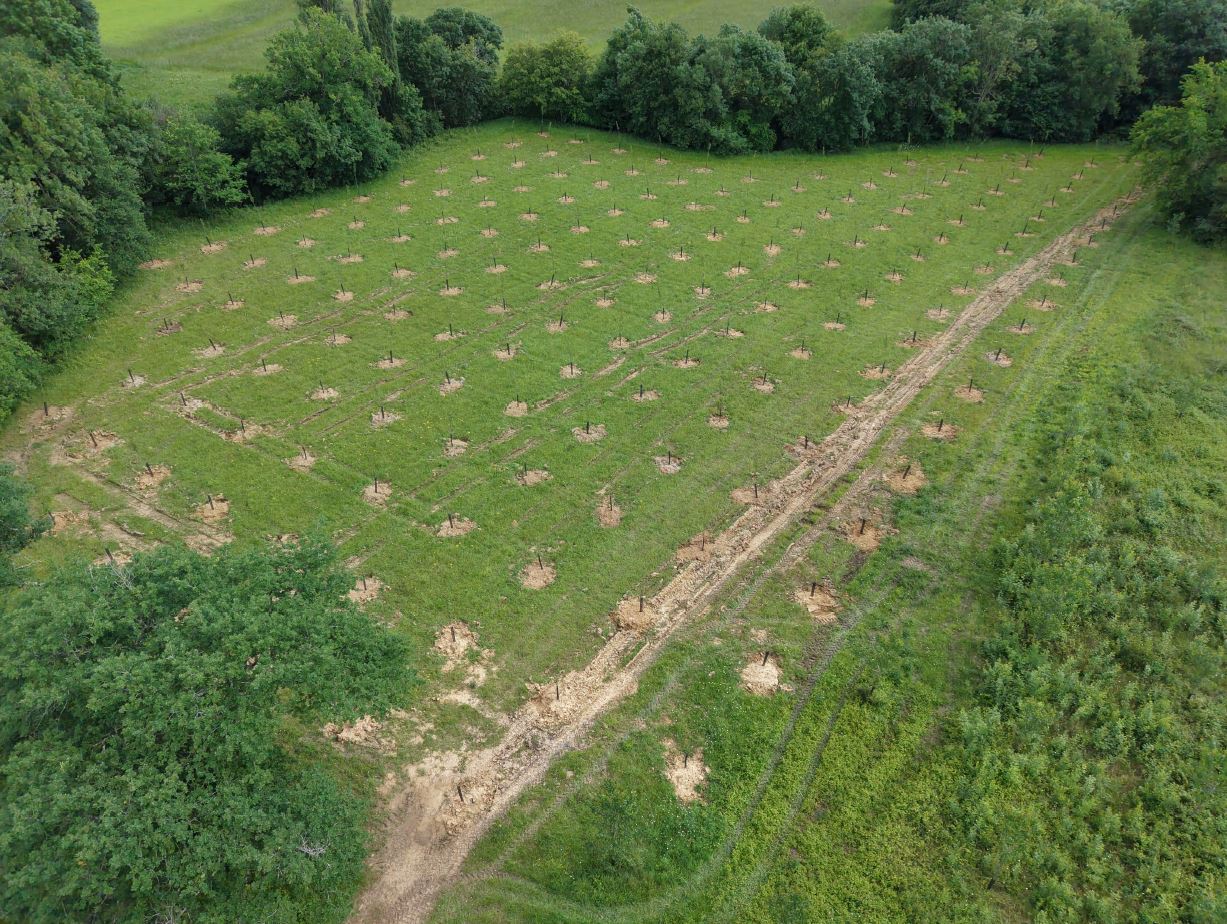
This project will take place on a meadow surrounded by woods. The planting is carried out on a single block of plots, making it possible to connect several existing woodlands. This afforestation project will create 6.4 hectares of forest using a mix of Dano, Polargo and Albelo poplars. Planting is scheduled for early 2025 and will sequester 1990 tonnes of CO2eq over 30 years*.
Socio-economic : A local forestry company will be contracted to carry out the afforestation. In addition, PEFC certification of the woodland is planned.
Soil conservation : Planting will be carried out in tilled pots to limit the impact on soil life and avoid releasing the carbon contained in the organic matter.
Biodiversity : Existing woodland edges and rows of trees will be preserved.
* The final value of the estimate will only be established after verification by an independent auditor and an administrative decision on verification.
 Label Bas Carbone
Examples: reducing the frequency of soil cultivation, minimalist plot preparation, restoring organic matter and preserving soil microfauna.
Examples: diversity and locality of crop species, preservation of habitat for local flora and fauna, presence of beehives for pollination.
Examples: territorial dynamics, societal demand, diversification of the activity, local sales/processing, working conditions, sharing of good practices.
Pépinières Naudet is one of the main French producers of young forest plants, which are planted all over France.
Read moreNew afforestation in the Landes region
Parleboscq is situated on the border between the Landes and Gers departments, in a landscape where farmland, woodlands, and Armagnac vineyards coexist. Land use in the municipality is overwhelmingly dominated by agriculture, which accounts for approximately 77% of the total municipal area. Forested and semi-natural areas cover most of the remaining territory, while built-up areas remain very limited, reflecting the character of a rural municipality with a dispersed settlement pattern. This distribution highlights a landscape still strongly defined by its agricultural land. Against this backdrop, afforestation of non-forest plots helps diversify land use and strengthen ecological connectivity. Trees facilitate atmospheric carbon sequestration, improve soil quality by building up organic matter, curb erosion, and create new habitats for flora and fauna. At the local level, they also contribute to the area's resilience against droughts and the impacts of climate change.
This project will take place on a meadow surrounded by woods. The planting is carried out on a single block of plots, making it possible to connect several existing woodlands. This afforestation project will create 6.4 hectares of forest using a mix of Dano, Polargo and Albelo poplars. Planting is scheduled for early 2025 and will sequester 1990 tonnes of CO2eq over 30 years*.
Socio-economic : A local forestry company will be contracted to carry out the afforestation. In addition, PEFC certification of the woodland is planned.
Soil conservation : Planting will be carried out in tilled pots to limit the impact on soil life and avoid releasing the carbon contained in the organic matter.
Biodiversity : Existing woodland edges and rows of trees will be preserved.
* The final value of the estimate will only be established after verification by an independent auditor and an administrative decision on verification.