 Vinéa Energie

Vinea Énergie sees the vine beyond its status as an agricultural crop: it is a renewable resource, a source of ecological energy and a pillar of the circular economy.
Read moreEnergy production from vines waste in Gironde
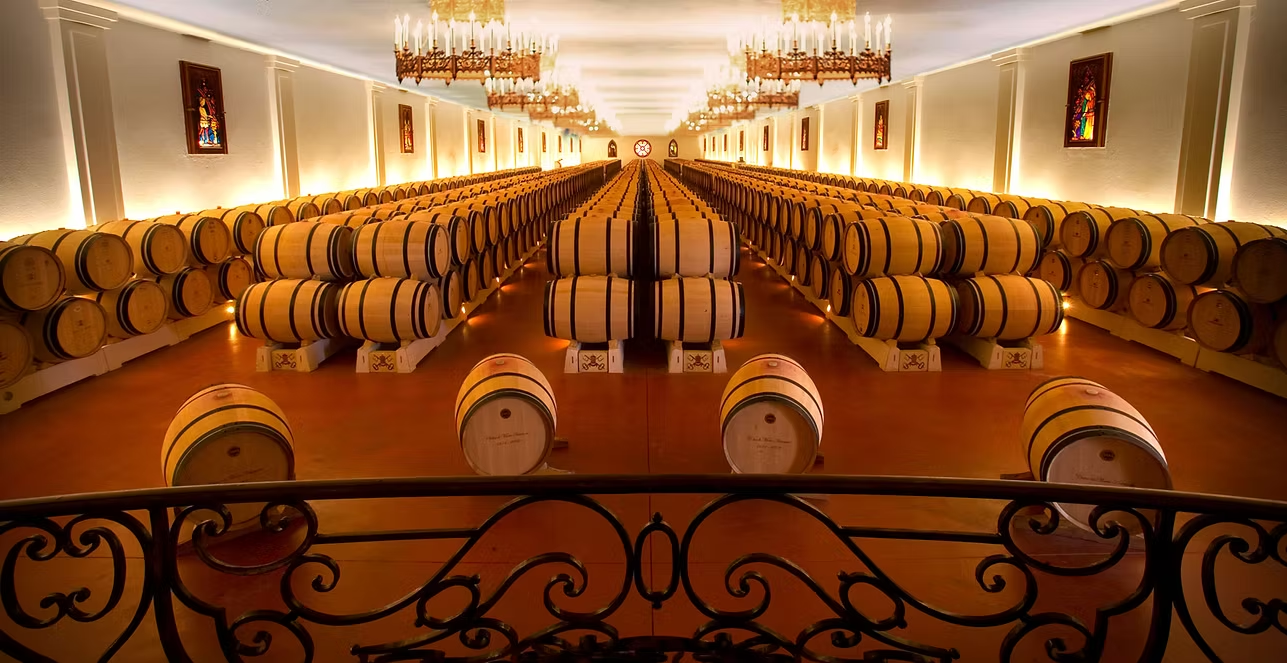
Château Pape Clément, located in Pessac in the Graves region, is one of the oldest wine estates in Bordeaux, with a rich history spanning more than 700 years. The estate owes its name to Pope Clement V, born Bertrand de Goth, who received the vineyard in 1299 while serving as Archbishop of Bordeaux. After his election to the papacy in 1305, he donated the property to the archbishopric of Bordeaux, which managed it until the French Revolution. Over the centuries, the château passed through the hands of various owners and endured periods of both prosperity and hardship, notably during the phylloxera crisis and the world wars. Since 1983, under the stewardship of Bernard Magrez, the estate has undergone major renovations and pursued a continuous quest for excellence.
The vineyard covers around 32.5 hectares, with soils composed of gravel mixed with sand and clay. The red grape varieties include 50% Cabernet Sauvignon, 47% Merlot, 2% Petit Verdot, and 1% Cabernet Franc. The white grape varieties consist of 48% Sémillon, 44% Sauvignon Blanc, 5% Sauvignon Gris, and 1% Muscadelle. This diversity, combined with a favorable climate, allows Château Pape Clément to produce wines of remarkable complexity and exceptional quality.
Mindful of current environmental challenges, Château Pape Clément is committed to sustainable viticultural practices. The estate is certified High Environmental Value (HVE) Level 3, attesting to its respect for biodiversity, responsible water management, and controlled use of agricultural inputs. This commitment reflects the château's desire to preserve its terroir for future generations while continuing to produce high-quality wines.
Château Pape Clément produces internationally renowned red and white wines. The Grand Vin red is made primarily from Cabernet Sauvignon and Merlot, offering complex aromas of dark fruits, spices, and a refined tannic structure. The white wine, primarily from Sauvignon Blanc and Sémillon, stands out for its freshness, minerality, and citrus notes. These wines have received numerous distinctions and are regularly praised by international critics.
By supporting Château Pape Clément’s projects, funders contribute to the preservation of historic heritage while promoting sustainable and environmentally respectful viticulture.
At the heart of this project is the transformation of uprooted vine stumps, traditionally considered waste and burned at the edge of vineyards, into a renewable resource. Although burning remains the simplest and most economical method, a more virtuous alternative is possible through the financing of avoided greenhouse gas emissions.
The vineyard at Château Pape Clément (Gironde) is actively engaged in this initiative, recovering and repurposing 168.7 tonnes of vine stumps, thereby enabling the estimated avoidance of 185.56 tCO₂e emissions.*
Collection and Sorting Uprooted vine stumps are collected from winegrowers in the Nouvelle-Aquitaine region, particularly around Pessac. A selective sorting process separates various types of residues (roots, stakes, wooden markers) for appropriate processing.
Transformation into Biomass The collected stumps are transported to specialized facilities where they undergo a transformation into wood chips for bioenergy. This wood biomass is used as fuel in biomass boilers, generating renewable heat and electricity.
This project enables the estate in Preignac to adopt a circular economy approach, giving a new purpose to uprooted vine stumps.
Environmental:
Economic and Social:
This project fully supports the logic of a circular economy, where vineyard residues become a valuable resource serving the energy and agricultural transitions.
* The final estimated value will be confirmed following verification by an independent auditor and a formal administrative decision.
 Vinéa Energie
Vinea Énergie sees the vine beyond its status as an agricultural crop: it is a renewable resource, a source of ecological energy and a pillar of the circular economy.
Read moreEnergy production from vines waste in Gironde
Château Pape Clément, located in Pessac in the Graves region, is one of the oldest wine estates in Bordeaux, with a rich history spanning more than 700 years. The estate owes its name to Pope Clement V, born Bertrand de Goth, who received the vineyard in 1299 while serving as Archbishop of Bordeaux. After his election to the papacy in 1305, he donated the property to the archbishopric of Bordeaux, which managed it until the French Revolution. Over the centuries, the château passed through the hands of various owners and endured periods of both prosperity and hardship, notably during the phylloxera crisis and the world wars. Since 1983, under the stewardship of Bernard Magrez, the estate has undergone major renovations and pursued a continuous quest for excellence.
The vineyard covers around 32.5 hectares, with soils composed of gravel mixed with sand and clay. The red grape varieties include 50% Cabernet Sauvignon, 47% Merlot, 2% Petit Verdot, and 1% Cabernet Franc. The white grape varieties consist of 48% Sémillon, 44% Sauvignon Blanc, 5% Sauvignon Gris, and 1% Muscadelle. This diversity, combined with a favorable climate, allows Château Pape Clément to produce wines of remarkable complexity and exceptional quality.
Mindful of current environmental challenges, Château Pape Clément is committed to sustainable viticultural practices. The estate is certified High Environmental Value (HVE) Level 3, attesting to its respect for biodiversity, responsible water management, and controlled use of agricultural inputs. This commitment reflects the château's desire to preserve its terroir for future generations while continuing to produce high-quality wines.
Château Pape Clément produces internationally renowned red and white wines. The Grand Vin red is made primarily from Cabernet Sauvignon and Merlot, offering complex aromas of dark fruits, spices, and a refined tannic structure. The white wine, primarily from Sauvignon Blanc and Sémillon, stands out for its freshness, minerality, and citrus notes. These wines have received numerous distinctions and are regularly praised by international critics.
By supporting Château Pape Clément’s projects, funders contribute to the preservation of historic heritage while promoting sustainable and environmentally respectful viticulture.
At the heart of this project is the transformation of uprooted vine stumps, traditionally considered waste and burned at the edge of vineyards, into a renewable resource. Although burning remains the simplest and most economical method, a more virtuous alternative is possible through the financing of avoided greenhouse gas emissions.
The vineyard at Château Pape Clément (Gironde) is actively engaged in this initiative, recovering and repurposing 168.7 tonnes of vine stumps, thereby enabling the estimated avoidance of 185.56 tCO₂e emissions.*
Collection and Sorting Uprooted vine stumps are collected from winegrowers in the Nouvelle-Aquitaine region, particularly around Pessac. A selective sorting process separates various types of residues (roots, stakes, wooden markers) for appropriate processing.
Transformation into Biomass The collected stumps are transported to specialized facilities where they undergo a transformation into wood chips for bioenergy. This wood biomass is used as fuel in biomass boilers, generating renewable heat and electricity.
This project enables the estate in Preignac to adopt a circular economy approach, giving a new purpose to uprooted vine stumps.
Environmental:
Economic and Social:
This project fully supports the logic of a circular economy, where vineyard residues become a valuable resource serving the energy and agricultural transitions.
* The final estimated value will be confirmed following verification by an independent auditor and a formal administrative decision.