


Vinea Énergie sees the vine beyond its status as an agricultural crop: it is a renewable resource, a source of ecological energy and a pillar of the circular economy.
Read moreEnergy production from vines in the Pyrénées-Orientales
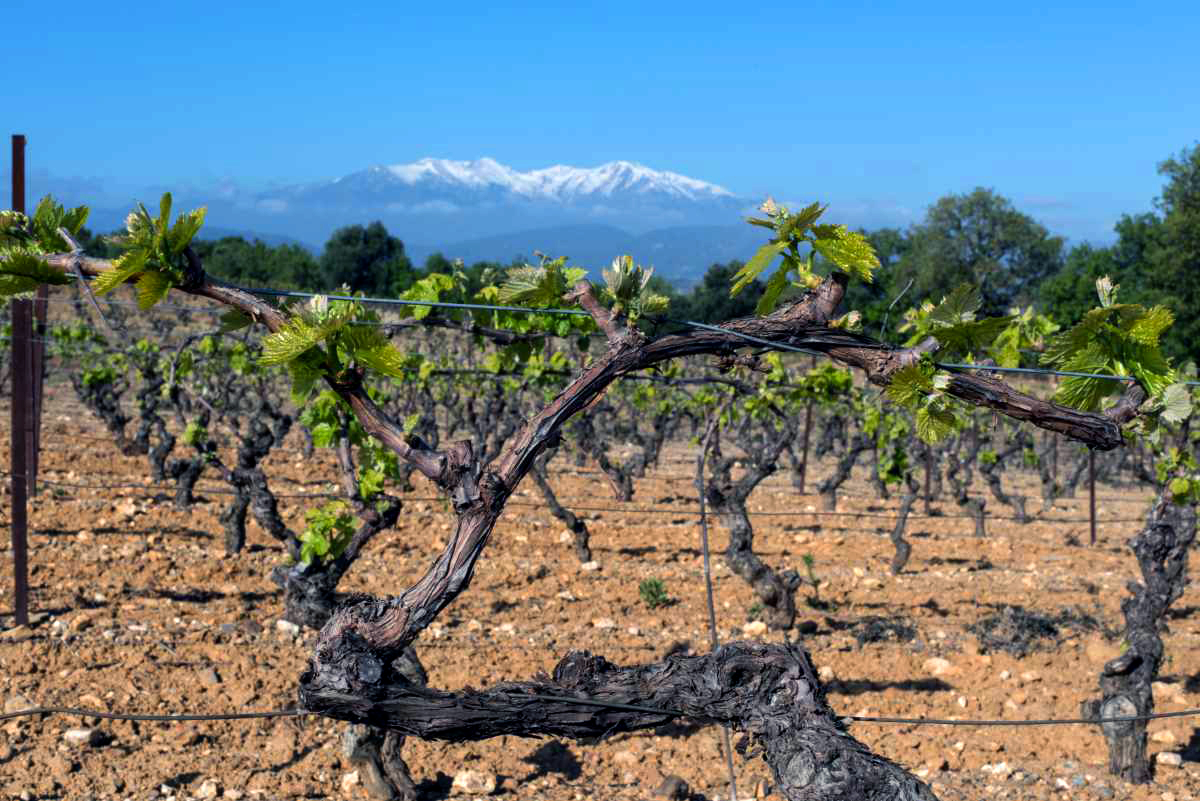
Located in Trouillas in the Pyrénées-Orientales region of southern France, Domaine de la Meunerie is the result of the passion and determination of its founder, Stéphane Batlle. A self-taught man with an unconventional background, Stéphane first worked in the restoration of historic buildings, where he developed a deep appreciation for traditional materials like stone and “cayrou” (local brick).
After pursuing agricultural studies, an internship in Burgundy introduced him to the world of winemaking and its ancestral savoir-faire. This experience sparked the certainty that he wanted to produce his own wine. He chose to renovate the old family mill and established his wine estate there, beginning a new adventure with his first vinifications in the former stables.
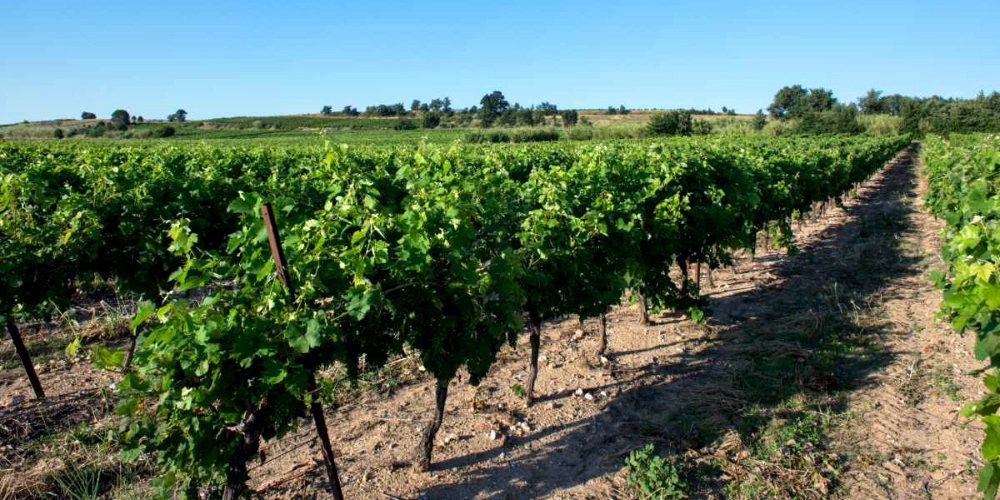
The estate spans approximately 18 hectares in the Aspres region, a typical agricultural area of the Pyrénées-Orientales, characterized by arid clay-limestone soils. With ideal sunlight and a dry northern wind that supports the health of the vines, these conditions are perfect for producing fine, elegant wines with roundness and depth.
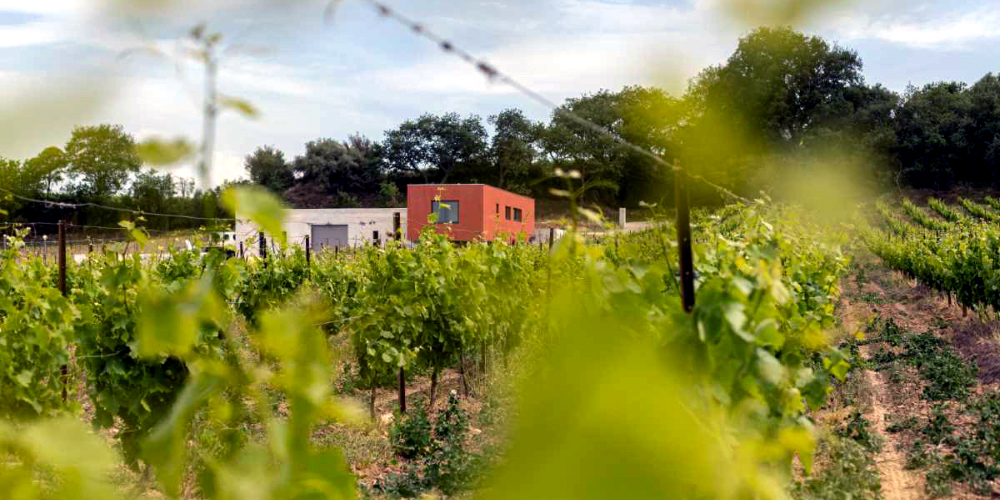
Close to the old mill, a modern semi-underground winery was built, along with the recent addition of guesthouses to support a growing wine tourism project.
Fully converted to organic farming, Domaine de la Meunerie is deeply committed to environmentally respectful viticulture. Stéphane Batlle emphasizes careful observation and respect for the land, with manual harvesting and the use of modern winemaking facilities.
The estate cultivates a wide diversity of Mediterranean grape varieties including Grenache Noir, Syrah, Mourvèdre, Carignan, Grenache Gris, Grenache Blanc, Chardonnay, Maccabeu, and Roussanne, expressing the full richness of the Aspres and Roussillon terroirs.
Among the estate’s flagship wines is "Impromptu", an original blend of 70% Chardonnay and 30% Grenache Gris, offering a unique expression of the terroir. The estate also produces red wines such as "Opus", "Caruso", and "Réminiscence", reflecting the diversity and depth of its production.
Domaine de la Meunerie thus embodies a harmonious blend of tradition and modernity, driven by the vision of a passionate winemaker committed to environmental preservation and climate action. By supporting this project, funders contribute to the promotion of sustainable viticulture and the enhancement of a family heritage rooted in respect for both land and nature.
At the heart of this project is the transformation of uprooted vine stumps, traditionally considered waste and burned at the edge of vineyards, into a renewable resource. While open-air burning remains the simplest and most economical method, a more virtuous alternative is possible through financing the avoidance of greenhouse gas emissions.
This wine estate actively participates in this transition by recovering and repurposing 5.85 tonnes of vine stumps, which enables the estimated avoidance of 6.37 tCO₂e emissions.*
Collection and Sorting The uprooted vine stumps are collected from vineyards in the Pyrénées-Orientales region, particularly around Trouillas. A selective sorting process separates the different types of residues (roots, stakes, wooden markers) for appropriate treatment.
Transformation into Biomass The collected stumps are transported to specialized facilities where they are processed into wood chips used as bioenergy. This wood fuel can be used to power local biomass boilers, producing renewable heat and electricity.
This project will enable the farm to play a full part in the circular economy, where winegrowing residues become a useful resource for the transition to energy and agriculture.
Environmental:
Economic & Social:
* The final emissions estimate will be confirmed following verification by an independent auditor and administrative approval.

Vinea Énergie sees the vine beyond its status as an agricultural crop: it is a renewable resource, a source of ecological energy and a pillar of the circular economy.
Read moreEnergy production from vines in the Pyrénées-Orientales
Located in Trouillas in the Pyrénées-Orientales region of southern France, Domaine de la Meunerie is the result of the passion and determination of its founder, Stéphane Batlle. A self-taught man with an unconventional background, Stéphane first worked in the restoration of historic buildings, where he developed a deep appreciation for traditional materials like stone and “cayrou” (local brick).
After pursuing agricultural studies, an internship in Burgundy introduced him to the world of winemaking and its ancestral savoir-faire. This experience sparked the certainty that he wanted to produce his own wine. He chose to renovate the old family mill and established his wine estate there, beginning a new adventure with his first vinifications in the former stables.
The estate spans approximately 18 hectares in the Aspres region, a typical agricultural area of the Pyrénées-Orientales, characterized by arid clay-limestone soils. With ideal sunlight and a dry northern wind that supports the health of the vines, these conditions are perfect for producing fine, elegant wines with roundness and depth.
Close to the old mill, a modern semi-underground winery was built, along with the recent addition of guesthouses to support a growing wine tourism project.
Fully converted to organic farming, Domaine de la Meunerie is deeply committed to environmentally respectful viticulture. Stéphane Batlle emphasizes careful observation and respect for the land, with manual harvesting and the use of modern winemaking facilities.
The estate cultivates a wide diversity of Mediterranean grape varieties including Grenache Noir, Syrah, Mourvèdre, Carignan, Grenache Gris, Grenache Blanc, Chardonnay, Maccabeu, and Roussanne, expressing the full richness of the Aspres and Roussillon terroirs.
Among the estate’s flagship wines is "Impromptu", an original blend of 70% Chardonnay and 30% Grenache Gris, offering a unique expression of the terroir. The estate also produces red wines such as "Opus", "Caruso", and "Réminiscence", reflecting the diversity and depth of its production.
Domaine de la Meunerie thus embodies a harmonious blend of tradition and modernity, driven by the vision of a passionate winemaker committed to environmental preservation and climate action. By supporting this project, funders contribute to the promotion of sustainable viticulture and the enhancement of a family heritage rooted in respect for both land and nature.
At the heart of this project is the transformation of uprooted vine stumps, traditionally considered waste and burned at the edge of vineyards, into a renewable resource. While open-air burning remains the simplest and most economical method, a more virtuous alternative is possible through financing the avoidance of greenhouse gas emissions.
This wine estate actively participates in this transition by recovering and repurposing 5.85 tonnes of vine stumps, which enables the estimated avoidance of 6.37 tCO₂e emissions.*
Collection and Sorting The uprooted vine stumps are collected from vineyards in the Pyrénées-Orientales region, particularly around Trouillas. A selective sorting process separates the different types of residues (roots, stakes, wooden markers) for appropriate treatment.
Transformation into Biomass The collected stumps are transported to specialized facilities where they are processed into wood chips used as bioenergy. This wood fuel can be used to power local biomass boilers, producing renewable heat and electricity.
This project will enable the farm to play a full part in the circular economy, where winegrowing residues become a useful resource for the transition to energy and agriculture.
Environmental:
Economic & Social:
* The final emissions estimate will be confirmed following verification by an independent auditor and administrative approval.


 Vinéa Energie