 Label Bas Carbone
Examples: expansion of forests close to urban and peri-urban areas, use of wood materials to naturally regulate humidity.

Examples: diversity and locality of crop species, preservation of habitat for local flora and fauna, presence of beehives for pollination.

Examples: territorial dynamics, societal demand, diversification of the activity, local sales/processing, working conditions, sharing of good practices.

Use of effective tropospheric ozone-removing species or scientific experiments.
Creation of 2.25 hectares of forest in Pas-de-Calais
Located in the Hauts-de-France region, Aire-sur-la-Lys stands out for its rich historical heritage, fertile plains, and temperate oceanic climate, marked by mild winters and moderate summers. The Pas-de-Calais department, shaped by its industrial and agricultural past, is now committed to ecological transition, focusing on enhancing natural spaces and preserving biodiversity. The area, crossed by the Lys river, is a crossroads where rural traditions meet environmental renewal initiatives.
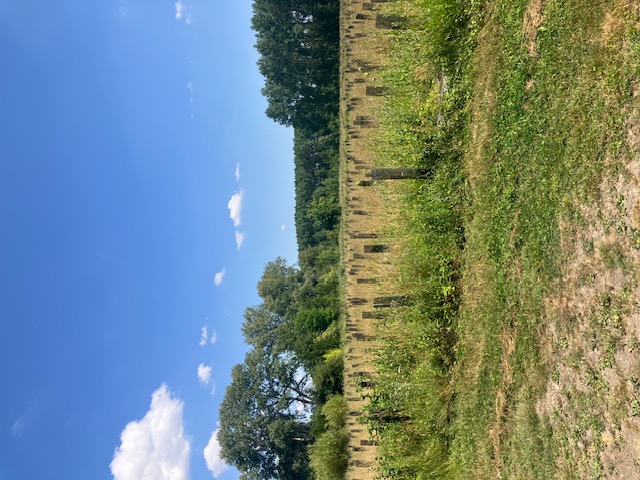
The project is located in the municipality of Aire-sur-la-Lys in Pas-de-Calais. The afforestation will take place on a difficult-to-access agricultural plot that is no longer being farmed. This afforestation project will create 2.25 hectares of forest using a diverse mix of tree species. Planting is scheduled for late 2025/early 2026 and is expected to sequester 670 tonnes of CO2eq over 30 years*.
Biodiversity: Six different species have been selected for this afforestation project: sessile oak, pedunculate oak, sycamore maple, Norway maple, silver birch and small-leaved lime. The species chosen have been studied to ensure they are resistant to global warming while being adapted to current conditions. The planting will expand an adjacent forest. A foot-to-foot intra-plot mix of species is planned to improve the diversity and resilience of the afforestation.
Socio-economic: A local forestry company will be commissioned to carry out the afforestation.
Air filtration: The project is located in the Pays de Saint-Omer urban community and contributes to improving air quality in this urban area.
Climate change: Some of the species chosen help combat pollution linked to tropospheric ozone (at low altitude), which is harmful to plant health.
* The final value of the estimate will only be established after verification by an independent auditor and an administrative verification decision.
 Label Bas Carbone
Examples: expansion of forests close to urban and peri-urban areas, use of wood materials to naturally regulate humidity.
Examples: diversity and locality of crop species, preservation of habitat for local flora and fauna, presence of beehives for pollination.
Examples: territorial dynamics, societal demand, diversification of the activity, local sales/processing, working conditions, sharing of good practices.
Use of effective tropospheric ozone-removing species or scientific experiments.
Creation of 2.25 hectares of forest in Pas-de-Calais
Located in the Hauts-de-France region, Aire-sur-la-Lys stands out for its rich historical heritage, fertile plains, and temperate oceanic climate, marked by mild winters and moderate summers. The Pas-de-Calais department, shaped by its industrial and agricultural past, is now committed to ecological transition, focusing on enhancing natural spaces and preserving biodiversity. The area, crossed by the Lys river, is a crossroads where rural traditions meet environmental renewal initiatives.
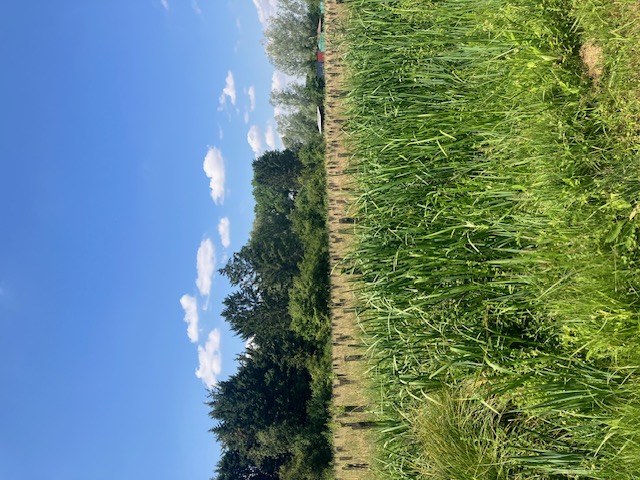
The project is located in the municipality of Aire-sur-la-Lys in Pas-de-Calais. The afforestation will take place on a difficult-to-access agricultural plot that is no longer being farmed. This afforestation project will create 2.25 hectares of forest using a diverse mix of tree species. Planting is scheduled for late 2025/early 2026 and is expected to sequester 670 tonnes of CO2eq over 30 years*.
Biodiversity: Six different species have been selected for this afforestation project: sessile oak, pedunculate oak, sycamore maple, Norway maple, silver birch and small-leaved lime. The species chosen have been studied to ensure they are resistant to global warming while being adapted to current conditions. The planting will expand an adjacent forest. A foot-to-foot intra-plot mix of species is planned to improve the diversity and resilience of the afforestation.
Socio-economic: A local forestry company will be commissioned to carry out the afforestation.
Air filtration: The project is located in the Pays de Saint-Omer urban community and contributes to improving air quality in this urban area.
Climate change: Some of the species chosen help combat pollution linked to tropospheric ozone (at low altitude), which is harmful to plant health.
* The final value of the estimate will only be established after verification by an independent auditor and an administrative verification decision.