
 Label Bas Carbone
Examples: reducing the frequency of soil cultivation, minimalist plot preparation, restoring organic matter and preserving soil microfauna.

Examples: diversity and locality of crop species, preservation of habitat for local flora and fauna, presence of beehives for pollination.

Use of effective tropospheric ozone-removing species or scientific experiments.

Pépinières Naudet is one of the main French producers of young forest plants, which are planted all over France.
Read moreRestoration of bark beetle-damaged plots in Saône-et-Loire
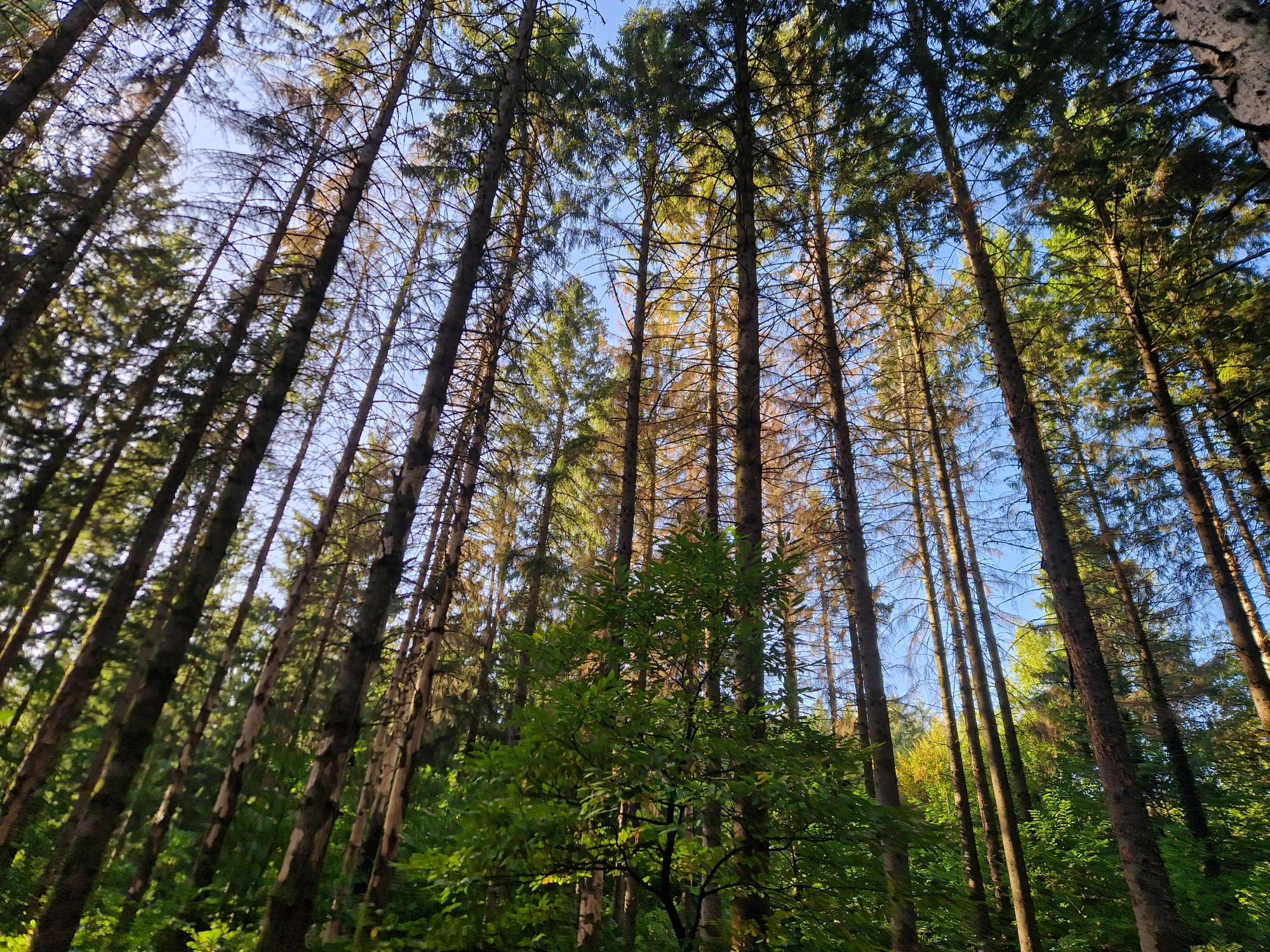
The commune of Broye, nestled in the heart of Saône-et-Loire in Burgundy, embodies the authentic charm of Burgundian landscapes. This area, shaped by a temperate oceanic climate with continental influences, stands out for its lush green hills, dense forests, and clay-limestone soils fostering exceptional biodiversity. Historically, the region is rooted in rural economy centered on agriculture and forestry, with origins tracing back to the Middle Ages when Cistercian monks shaped the lands for viticulture and livestock farming. Today, Saône-et-Loire faces climate challenges like massive spruce bark beetle attacks—pests that have devastated thousands of hectares of forests in Burgundy since 2018—threatening its precious wooded heritage.
Due to shorter cold winters regulating insect populations, bark beetles are multiplying exponentially and eating away at tree stands.
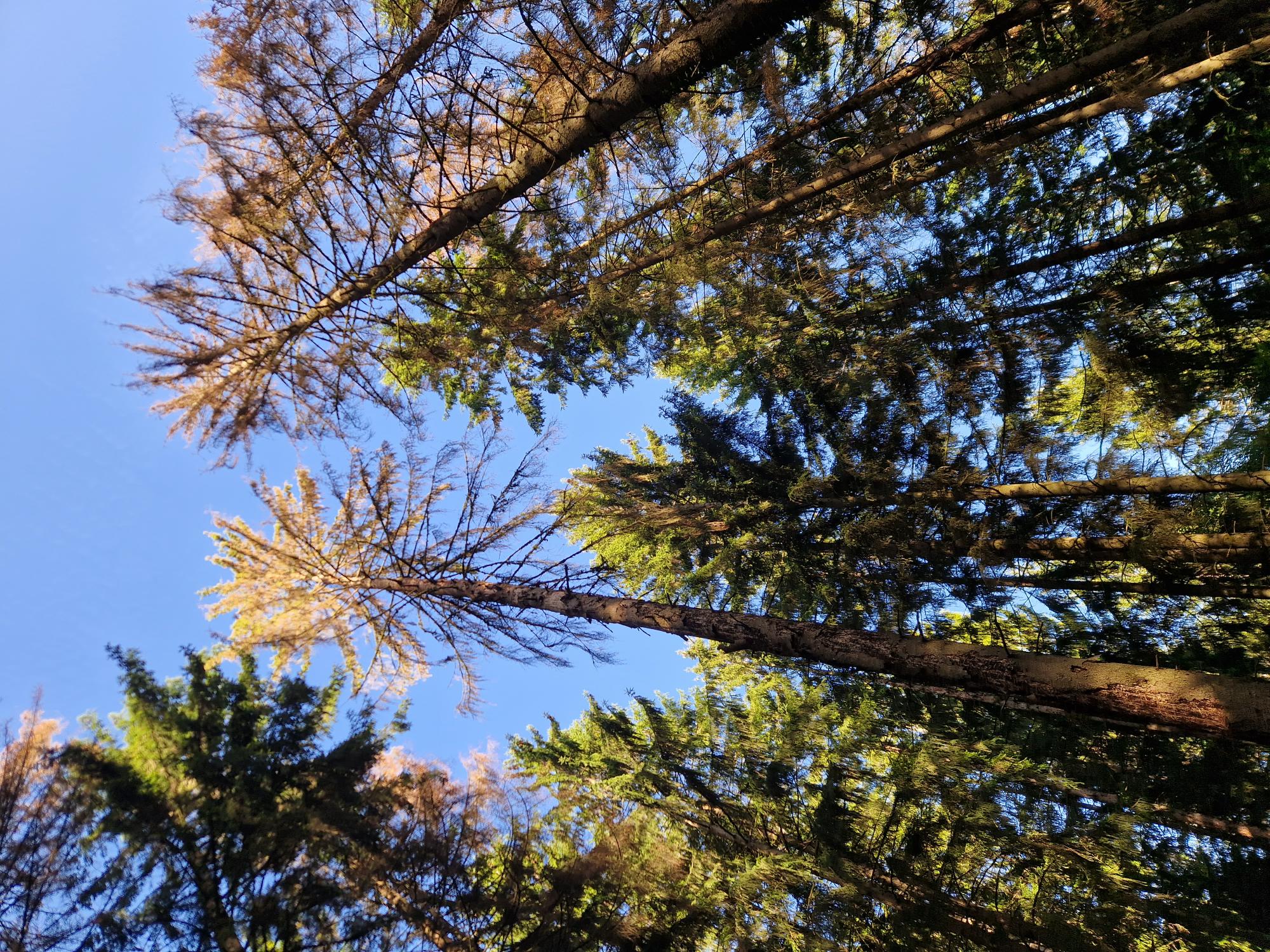
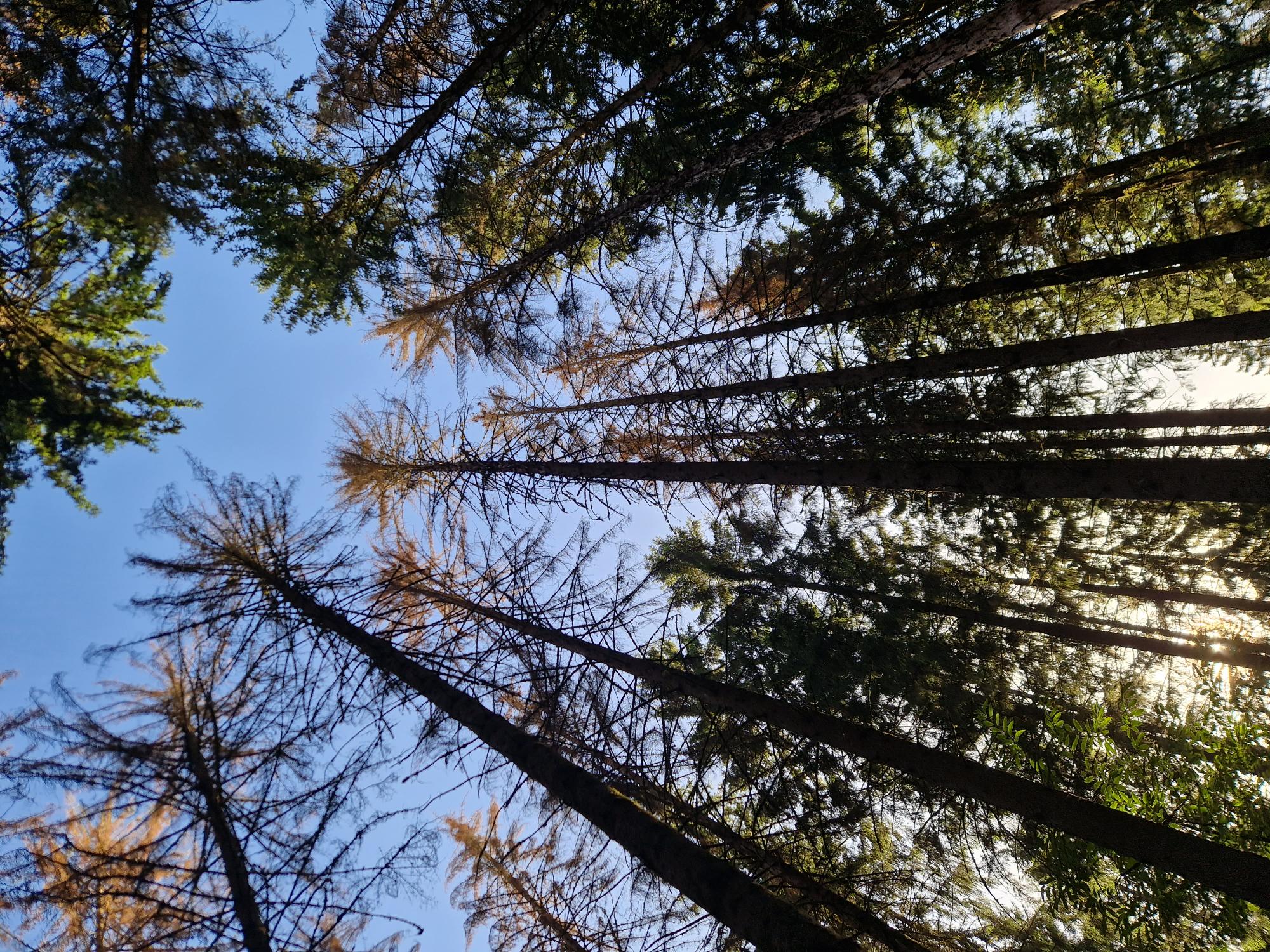
This epidemic mainly affects forests in northern and eastern France, causing rapid decline and even death of trees. This phenomenon is easily identifiable, with stands turning from green to brown or white and becoming sensitive to the slightest gust of wind. These ‘dry’ forests eventually collapse to the ground, leaving behind desolate landscapes that no longer capture CO2. If the forest is neither adapted nor renewed, this situation can lead to its gradual disappearance. As the trees no longer have any value, forestry management is also compromised. This is referred to as a ‘forestry impasse’.
This 3.5-hectare reforestation project will enable the storage of 923 tonnes of CO2 equivalent over 30 years*. The plots involved in the project have been completely harvested due to bark beetle infestation. Unfortunately, the existing stand was almost monospecific, making reforestation essential. It was decided to plant a mixture of four species (chestnut, sequoia, sessile oak and American red oak) that are better suited to prolonged hot periods.
Biodiversity: Some of the selected species are native, while others are better suited to climate change. An intra-plot mix of species is planned in clusters to improve the stand's resilience to climatic hazards.
Soil preservation: The soil will be worked before planting using tillers in order to preserve these carbon-rich forest soils.
Climate change: Most of the species chosen help to combat pollution linked to tropospheric ozone (at low altitude), which is harmful to plant health.
* The final value of the estimate will only be established after verification by an independent auditor and an administrative verification decision.
 Label Bas Carbone
Examples: reducing the frequency of soil cultivation, minimalist plot preparation, restoring organic matter and preserving soil microfauna.
Examples: diversity and locality of crop species, preservation of habitat for local flora and fauna, presence of beehives for pollination.
Use of effective tropospheric ozone-removing species or scientific experiments.
Pépinières Naudet is one of the main French producers of young forest plants, which are planted all over France.
Read moreRestoration of bark beetle-damaged plots in Saône-et-Loire
The commune of Broye, nestled in the heart of Saône-et-Loire in Burgundy, embodies the authentic charm of Burgundian landscapes. This area, shaped by a temperate oceanic climate with continental influences, stands out for its lush green hills, dense forests, and clay-limestone soils fostering exceptional biodiversity. Historically, the region is rooted in rural economy centered on agriculture and forestry, with origins tracing back to the Middle Ages when Cistercian monks shaped the lands for viticulture and livestock farming. Today, Saône-et-Loire faces climate challenges like massive spruce bark beetle attacks—pests that have devastated thousands of hectares of forests in Burgundy since 2018—threatening its precious wooded heritage.
Due to shorter cold winters regulating insect populations, bark beetles are multiplying exponentially and eating away at tree stands.
This epidemic mainly affects forests in northern and eastern France, causing rapid decline and even death of trees. This phenomenon is easily identifiable, with stands turning from green to brown or white and becoming sensitive to the slightest gust of wind. These ‘dry’ forests eventually collapse to the ground, leaving behind desolate landscapes that no longer capture CO2. If the forest is neither adapted nor renewed, this situation can lead to its gradual disappearance. As the trees no longer have any value, forestry management is also compromised. This is referred to as a ‘forestry impasse’.
This 3.5-hectare reforestation project will enable the storage of 923 tonnes of CO2 equivalent over 30 years*. The plots involved in the project have been completely harvested due to bark beetle infestation. Unfortunately, the existing stand was almost monospecific, making reforestation essential. It was decided to plant a mixture of four species (chestnut, sequoia, sessile oak and American red oak) that are better suited to prolonged hot periods.
Biodiversity: Some of the selected species are native, while others are better suited to climate change. An intra-plot mix of species is planned in clusters to improve the stand's resilience to climatic hazards.
Soil preservation: The soil will be worked before planting using tillers in order to preserve these carbon-rich forest soils.
Climate change: Most of the species chosen help to combat pollution linked to tropospheric ozone (at low altitude), which is harmful to plant health.
* The final value of the estimate will only be established after verification by an independent auditor and an administrative verification decision.