
 Label Bas Carbone
Examples: diversity and locality of crop species, preservation of habitat for local flora and fauna, presence of beehives for pollination.

Examples: territorial dynamics, societal demand, diversification of the activity, local sales/processing, working conditions, sharing of good practices.

Examples: Consideration of wetlands, use of adapted species, drip-connected irrigation tools.

Pépinières Naudet is one of the main French producers of young forest plants, which are planted all over France.
Read moreExtension of existing forest areas
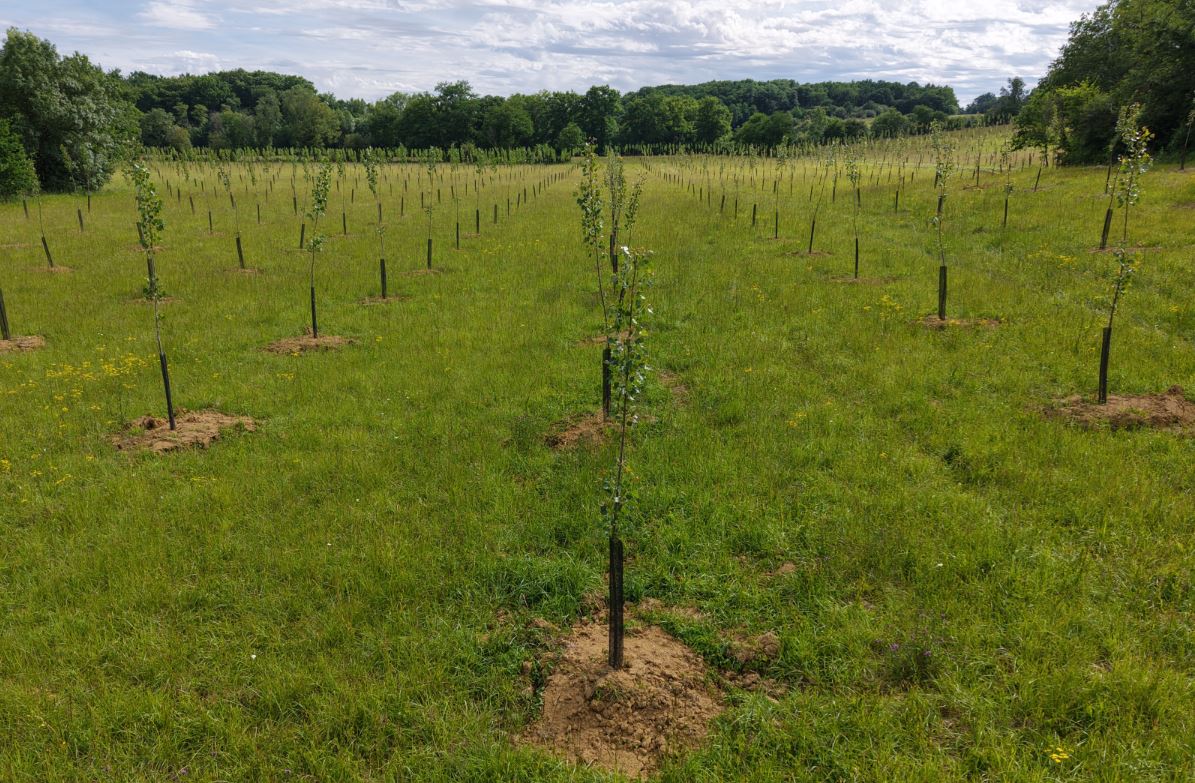
This project is taking place in the municipality of Parleboscq, located in south-western France, in the Landes department. This area is known for its vast forests, a legacy of the famous Landes massif, and for its sandy soils, rich in biodiversity and ideal for agriculture and forestry. The Landes region, historically shaped by the planting of pine trees in the 19th century to reclaim the land and boost the local economy, enjoys a temperate oceanic climate, characterised by mild winters and moderate summers, which are favourable for the development of a variety of forest species. The local economy is based on timber production, agriculture and green tourism, with a growing focus on environmental preservation and sustainable resource management.
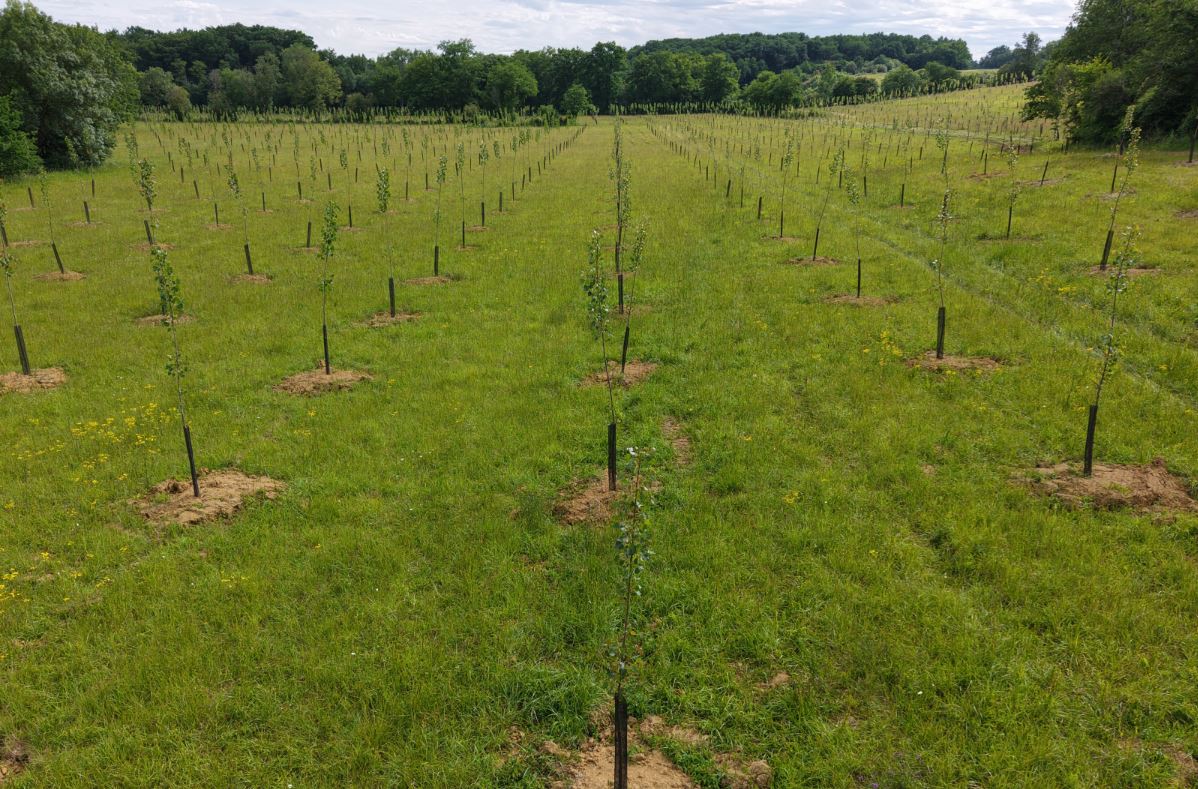
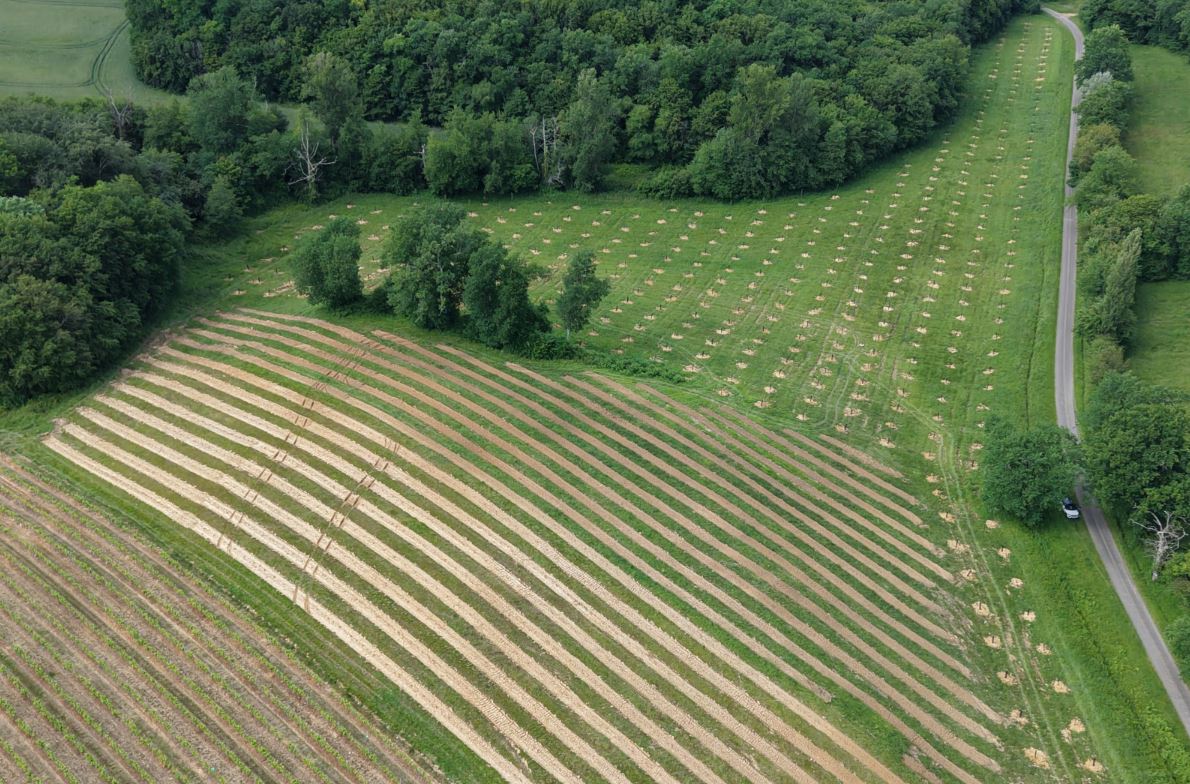
This project involves creating 15.1 hectares of forest on currently underutilized agricultural land, using a mix of Taeda pine and Polargo, Koster, Ludo and Rona poplar trees. Planting is scheduled for winter 2025/2026 and will sequester 4,382 tonnes of CO2eq over 30 years*.
Socio-economic: Local forestry companies will be commissioned for this afforestation. In addition, PEFC certification of the afforestation is planned to ensure sustainable management.
Biodiversity: The species chosen have been studied to withstand global warming while being adapted to current soil and climate conditions.
Water resource preservation: No conifers will be planted near watercourses that may run alongside certain plots.
* The final value of the estimate will only be established after verification by an independent auditor and an administrative verification decision.
 Label Bas Carbone
Examples: diversity and locality of crop species, preservation of habitat for local flora and fauna, presence of beehives for pollination.
Examples: territorial dynamics, societal demand, diversification of the activity, local sales/processing, working conditions, sharing of good practices.
Examples: Consideration of wetlands, use of adapted species, drip-connected irrigation tools.
Pépinières Naudet is one of the main French producers of young forest plants, which are planted all over France.
Read moreExtension of existing forest areas
This project is taking place in the municipality of Parleboscq, located in south-western France, in the Landes department. This area is known for its vast forests, a legacy of the famous Landes massif, and for its sandy soils, rich in biodiversity and ideal for agriculture and forestry. The Landes region, historically shaped by the planting of pine trees in the 19th century to reclaim the land and boost the local economy, enjoys a temperate oceanic climate, characterised by mild winters and moderate summers, which are favourable for the development of a variety of forest species. The local economy is based on timber production, agriculture and green tourism, with a growing focus on environmental preservation and sustainable resource management.
This project involves creating 15.1 hectares of forest on currently underutilized agricultural land, using a mix of Taeda pine and Polargo, Koster, Ludo and Rona poplar trees. Planting is scheduled for winter 2025/2026 and will sequester 4,382 tonnes of CO2eq over 30 years*.
Socio-economic: Local forestry companies will be commissioned for this afforestation. In addition, PEFC certification of the afforestation is planned to ensure sustainable management.
Biodiversity: The species chosen have been studied to withstand global warming while being adapted to current soil and climate conditions.
Water resource preservation: No conifers will be planted near watercourses that may run alongside certain plots.
* The final value of the estimate will only be established after verification by an independent auditor and an administrative verification decision.