
 Rainbow
ENEO is a methanization site in the Eure region involving local farmers. Operational since 2019, it has been injecting biogas since 2022 and converts agricultural waste into green energy and digestate.
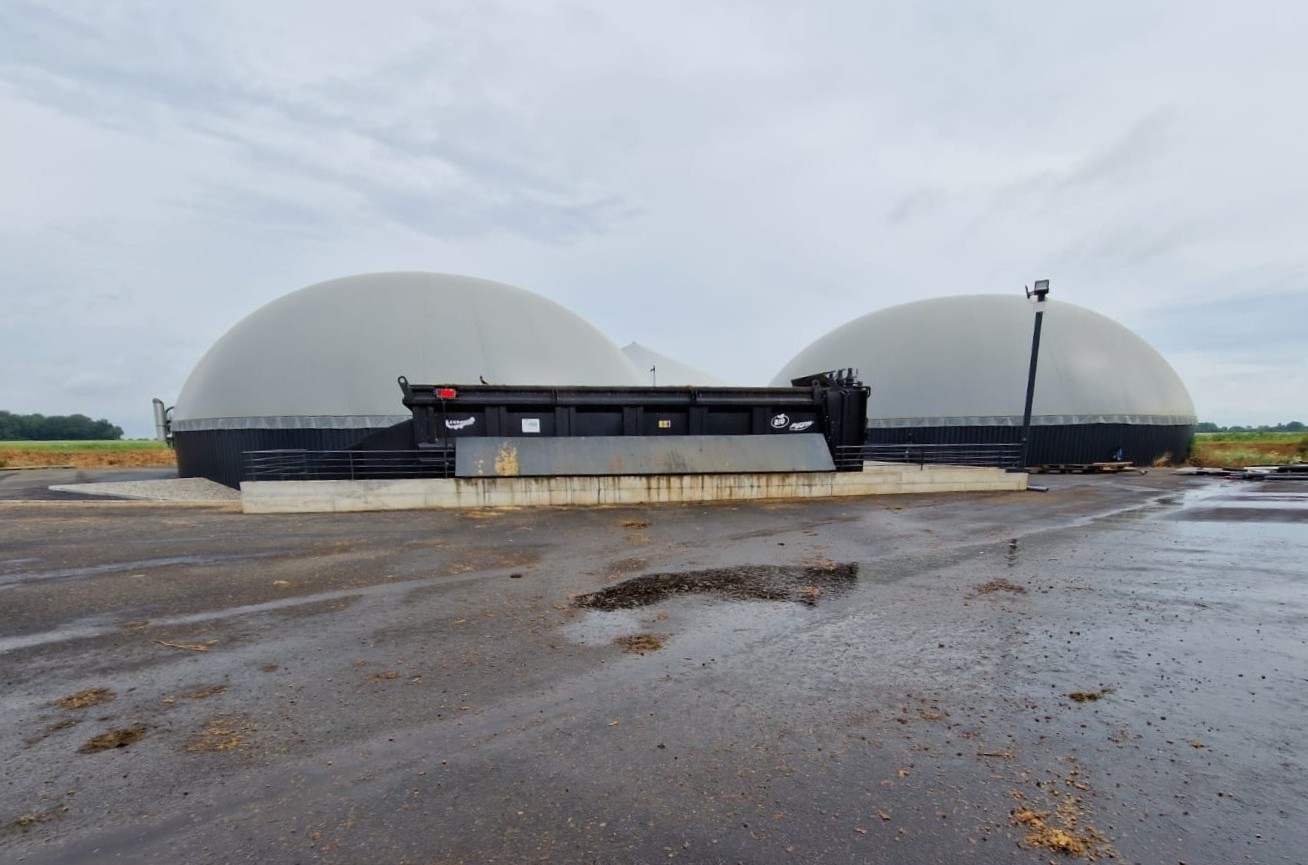
The ENEO project is set in a rural Norman area with strong agricultural potential. The site benefits from a strategic location: prime-quality land and proximity to a gas pipeline, making direct injection of biogas into the public grid both relevant and economically viable. The territorial framework is also human: the project relies on a local network of farms that supply the inputs (agricultural organic waste and cover crops) and in return use the digestate as organic fertilizer. It is therefore a genuine local circular economy initiative, strengthening energy autonomy and economic resilience in the region.
A strong environmental lever. Biogas replaces fossil natural gas (responsible for 20% of greenhouse gas emissions in France), with a 60–80% reduction in emissions. The project aligns with national targets: biogas to represent 7% of France's energy mix by 2030 and 20% by 2050 (versus only 0.9% in 2023).
An economic lever: carbon credits. Designed to maximize carbon efficiency, the project carries an additional cost that requires a 10% IRR (ADEME threshold) to secure bank loans. However, net cash was negative at the end of 2022 (−€566,773) and electricity costs reached €295/MWh (versus the expected €150/MWh) due to inflation. Carbon credit sales must therefore finance the €162,400 contribution needed for the solar panels (a €406,000 investment) and ensure the project's financial stability.
A social and partnership-based lever. The cooperation between the family farm and the neighboring association, the valorization of cover crops, and the return of digestate to the farms form the core of the model: a genuine local circular initiative that strengthens energy supply and the rural economy.
 Rainbow
ENEO is a methanization site in the Eure region involving local farmers. Operational since 2019, it has been injecting biogas since 2022 and converts agricultural waste into green energy and digestate.
The ENEO project is set in a rural Norman area with strong agricultural potential. The site benefits from a strategic location: prime-quality land and proximity to a gas pipeline, making direct injection of biogas into the public grid both relevant and economically viable. The territorial framework is also human: the project relies on a local network of farms that supply the inputs (agricultural organic waste and cover crops) and in return use the digestate as organic fertilizer. It is therefore a genuine local circular economy initiative, strengthening energy autonomy and economic resilience in the region.
A strong environmental lever. Biogas replaces fossil natural gas (responsible for 20% of greenhouse gas emissions in France), with a 60–80% reduction in emissions. The project aligns with national targets: biogas to represent 7% of France's energy mix by 2030 and 20% by 2050 (versus only 0.9% in 2023).
An economic lever: carbon credits. Designed to maximize carbon efficiency, the project carries an additional cost that requires a 10% IRR (ADEME threshold) to secure bank loans. However, net cash was negative at the end of 2022 (−€566,773) and electricity costs reached €295/MWh (versus the expected €150/MWh) due to inflation. Carbon credit sales must therefore finance the €162,400 contribution needed for the solar panels (a €406,000 investment) and ensure the project's financial stability.
A social and partnership-based lever. The cooperation between the family farm and the neighboring association, the valorization of cover crops, and the return of digestate to the farms form the core of the model: a genuine local circular initiative that strengthens energy supply and the rural economy.