
 Label Bas Carbone
Examples: reducing the frequency of soil cultivation, minimalist plot preparation, restoring organic matter and preserving soil microfauna.

Examples: diversity and locality of crop species, preservation of habitat for local flora and fauna, presence of beehives for pollination.

Examples: territorial dynamics, societal demand, diversification of the activity, local sales/processing, working conditions, sharing of good practices.

Examples: Consideration of wetlands, use of adapted species, drip-connected irrigation tools.
GAEC du Sablon
GAEC du Sablon - Exploitation agricole cultivant entre autres des noyers
Read moreWalnut orchards with virtuous practices in the heart of the Drôme
This walnut tree plantation project located in the Drôme allows both to increase carbon storage on the farm, but also to promote environmentally friendly agricultural activity.
Based in Saint Paul Lès Romans, this family farm aims to increase the surface area of its orchard by 5.18 Ha and thus allow storage of nearly 304.89 tonnes of CO2 equivalent in 20 years*.
Alexandre Barthélémy's family owns more than 200 hectares, divided between the father, mother and son. 60 Ha of field crops (corn, wheat, barley, soya, alfalfa, etc.), 60 Ha of orchards, two thirds of which are AOP for walnuts and 80 Ha intended for the breeding of Charolais and their grass meadows.
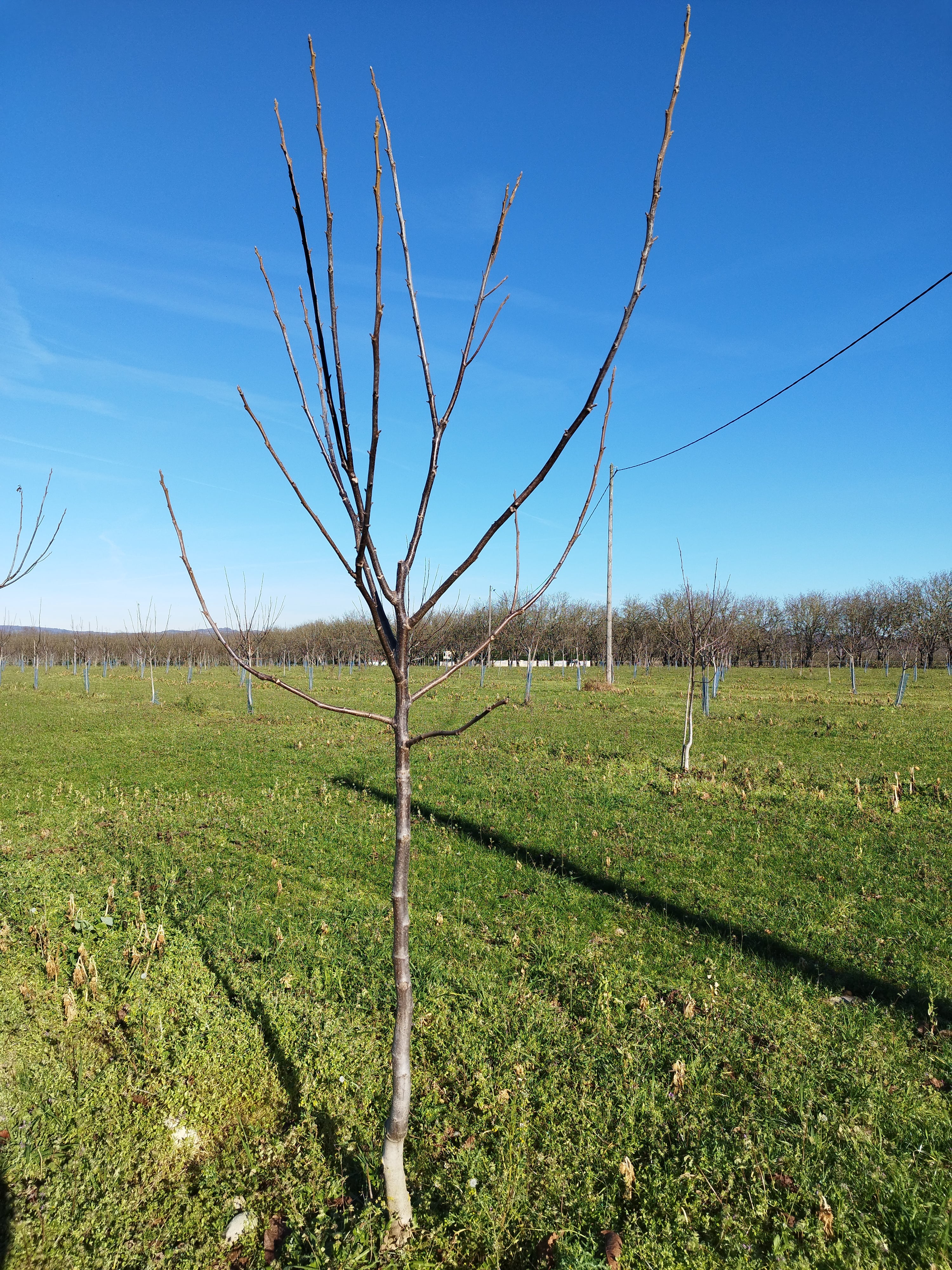
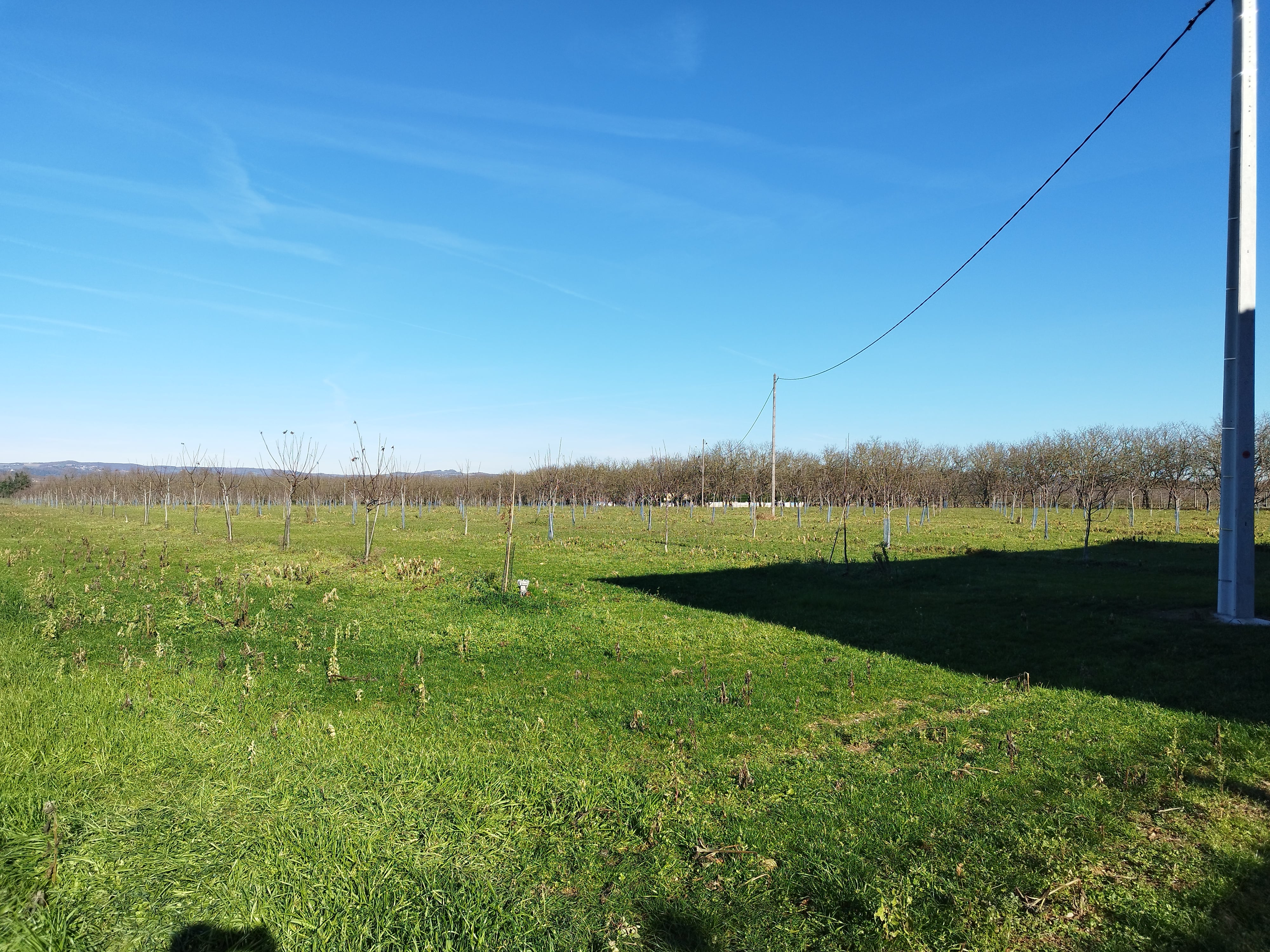
Alexandre's orchards are sustainable agriculture: the rows of walnut trees are 100% grassed, the animals are 100% autonomous regarding their food, and the walnut harvest is done on the ground.
The farmer is committed to limiting soil disturbance: Depending on the operating mode, the soil is at risk of direct or indirect disturbance with the passage of heavy machinery, the partial destruction of vegetation or herbaceous cover which may affect both flora and fauna. In an effort to limit these risks, the farm is committed to a low frequency of deep tillage operations. Measures will be taken to preserve biodiversity: In order to avoid or reduce the use of synthetic phytosanitary treatments, which not only have a heavy impact on the fauna and flora but also generate substantial greenhouse gas emissions, mechanical control of weeds will be implemented. Pests will be managed by trapping and sexual confusion, leaving chemical intervention as a last resort. The water resource will be preserved: To limit soil erosion, leaching and therefore the over-consumption of fertiliser, 100% of the orchard will benefit from a permanent grass cover. An action which will also be very beneficial for the local biodiversity and will limit the overconsumption of water. From a socio-economic perspective: the productions of the orchard are sold and processed locally in order to add value to the region and improve the economic fabric.
* The final value of the estimate will be established only after verification by an independent auditor and an administrative verification decision.
 Label Bas Carbone
Examples: reducing the frequency of soil cultivation, minimalist plot preparation, restoring organic matter and preserving soil microfauna.
Examples: diversity and locality of crop species, preservation of habitat for local flora and fauna, presence of beehives for pollination.
Examples: territorial dynamics, societal demand, diversification of the activity, local sales/processing, working conditions, sharing of good practices.
Examples: Consideration of wetlands, use of adapted species, drip-connected irrigation tools.
GAEC du Sablon
GAEC du Sablon - Exploitation agricole cultivant entre autres des noyers
Read moreWalnut orchards with virtuous practices in the heart of the Drôme
This walnut tree plantation project located in the Drôme allows both to increase carbon storage on the farm, but also to promote environmentally friendly agricultural activity.
Based in Saint Paul Lès Romans, this family farm aims to increase the surface area of its orchard by 5.18 Ha and thus allow storage of nearly 304.89 tonnes of CO2 equivalent in 20 years*.
Alexandre Barthélémy's family owns more than 200 hectares, divided between the father, mother and son. 60 Ha of field crops (corn, wheat, barley, soya, alfalfa, etc.), 60 Ha of orchards, two thirds of which are AOP for walnuts and 80 Ha intended for the breeding of Charolais and their grass meadows.
Alexandre's orchards are sustainable agriculture: the rows of walnut trees are 100% grassed, the animals are 100% autonomous regarding their food, and the walnut harvest is done on the ground.
The farmer is committed to limiting soil disturbance: Depending on the operating mode, the soil is at risk of direct or indirect disturbance with the passage of heavy machinery, the partial destruction of vegetation or herbaceous cover which may affect both flora and fauna. In an effort to limit these risks, the farm is committed to a low frequency of deep tillage operations. Measures will be taken to preserve biodiversity: In order to avoid or reduce the use of synthetic phytosanitary treatments, which not only have a heavy impact on the fauna and flora but also generate substantial greenhouse gas emissions, mechanical control of weeds will be implemented. Pests will be managed by trapping and sexual confusion, leaving chemical intervention as a last resort. The water resource will be preserved: To limit soil erosion, leaching and therefore the over-consumption of fertiliser, 100% of the orchard will benefit from a permanent grass cover. An action which will also be very beneficial for the local biodiversity and will limit the overconsumption of water. From a socio-economic perspective: the productions of the orchard are sold and processed locally in order to add value to the region and improve the economic fabric.
* The final value of the estimate will be established only after verification by an independent auditor and an administrative verification decision.