
 Label Bas Carbone
Examples: reducing the frequency of soil cultivation, minimalist plot preparation, restoring organic matter and preserving soil microfauna.

Examples: territorial dynamics, societal demand, diversification of the activity, local sales/processing, working conditions, sharing of good practices.

Examples: Consideration of wetlands, use of adapted species, drip-connected irrigation tools.
EARL Lamouroux Mathieu
EARL Lamouroux Mathieu - Farm growing hazelnuts among other things
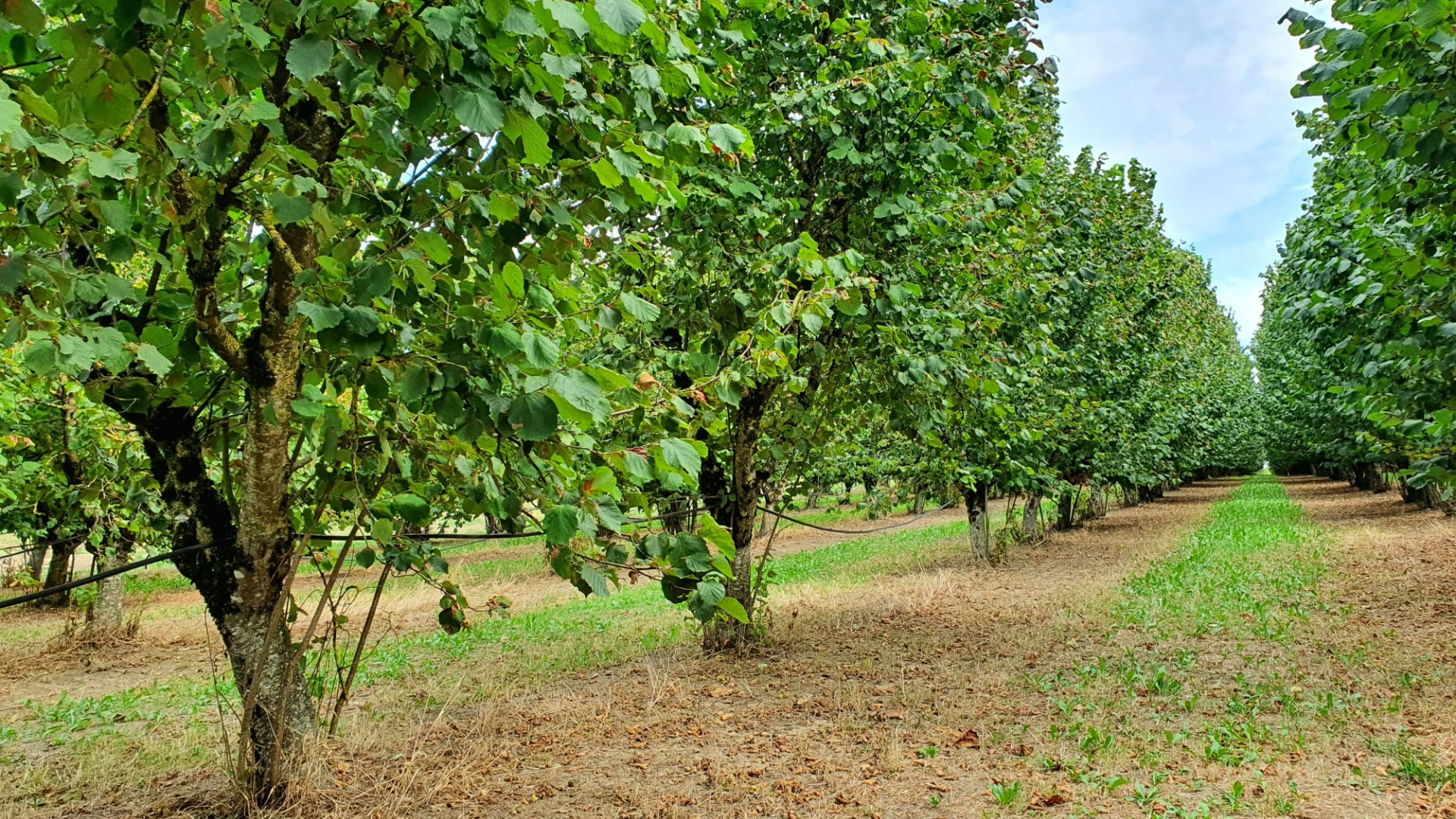
Read morePlantation of 1.6 hectares of hazelnut trees
The Tarn-et-Garonne department is located in the Occitanie region, in southwestern France. It is traversed by two major rivers, the Tarn and the Garonne, which shape its landscape. The terrain is generally flat, consisting of fertile plains and hillsides suitable for agriculture. This department is renowned for its agricultural production, particularly its orchards and market gardens. The climate is a modified oceanic type with Mediterranean influences, fostering a wide diversity of crops. The prefecture, Montauban, is a central urban center with a rich historical heritage. The region is also characterized by well-preserved fortified towns (bastides) and medieval villages. Finally, its strategic location between Toulouse and Bordeaux enhances its appeal.
Mr. Lamouroux plans to expand his hazelnut crops by planting 1.6 hectares of orchards during the winter of 2022-2023. The plots selected were previously used for annual cereal crops.
Planting permanent trees will sequester more CO2 throughout the year compared to a temporary crop. 85.48 tonnes of CO2 equivalent will be captured over 20 years*.
This project makes it possible to relocate the production of hazelnuts in France because this product is today very mainly imported from abroad. A majority of the farm's hazelnut sales will be made locally.
The soil will also be able to sequester more CO2 because it will no longer be worked each year. In addition, this new plantation will require little fertilizer and treatment compared to previous crops. This new cultural itinerary will contribute to avoiding emissions and makes the project even more virtuous.
The water resource will be used in small quantities because the orchards have a precision irrigation system that allows reasoned watering.
* The final value of the estimate will only be established after verification by an independent auditor and an administrative verification decision.
 Label Bas Carbone
Examples: reducing the frequency of soil cultivation, minimalist plot preparation, restoring organic matter and preserving soil microfauna.
Examples: territorial dynamics, societal demand, diversification of the activity, local sales/processing, working conditions, sharing of good practices.
Examples: Consideration of wetlands, use of adapted species, drip-connected irrigation tools.
EARL Lamouroux Mathieu
EARL Lamouroux Mathieu - Farm growing hazelnuts among other things
Read morePlantation of 1.6 hectares of hazelnut trees
The Tarn-et-Garonne department is located in the Occitanie region, in southwestern France. It is traversed by two major rivers, the Tarn and the Garonne, which shape its landscape. The terrain is generally flat, consisting of fertile plains and hillsides suitable for agriculture. This department is renowned for its agricultural production, particularly its orchards and market gardens. The climate is a modified oceanic type with Mediterranean influences, fostering a wide diversity of crops. The prefecture, Montauban, is a central urban center with a rich historical heritage. The region is also characterized by well-preserved fortified towns (bastides) and medieval villages. Finally, its strategic location between Toulouse and Bordeaux enhances its appeal.
Mr. Lamouroux plans to expand his hazelnut crops by planting 1.6 hectares of orchards during the winter of 2022-2023. The plots selected were previously used for annual cereal crops.
Planting permanent trees will sequester more CO2 throughout the year compared to a temporary crop. 85.48 tonnes of CO2 equivalent will be captured over 20 years*.
This project makes it possible to relocate the production of hazelnuts in France because this product is today very mainly imported from abroad. A majority of the farm's hazelnut sales will be made locally.
The soil will also be able to sequester more CO2 because it will no longer be worked each year. In addition, this new plantation will require little fertilizer and treatment compared to previous crops. This new cultural itinerary will contribute to avoiding emissions and makes the project even more virtuous.
The water resource will be used in small quantities because the orchards have a precision irrigation system that allows reasoned watering.
* The final value of the estimate will only be established after verification by an independent auditor and an administrative verification decision.