
 Label Bas Carbone
Examples: reducing the frequency of soil cultivation, minimalist plot preparation, restoring organic matter and preserving soil microfauna.

Examples: diversity and locality of crop species, preservation of habitat for local flora and fauna, presence of beehives for pollination.

Examples: territorial dynamics, societal demand, diversification of the activity, local sales/processing, working conditions, sharing of good practices.

Examples: Consideration of wetlands, use of adapted species, drip-connected irrigation tools.
EI Rozier Carine
EI Rozier Carine - Individual farm cultivating mainly chestnut trees
Read more
Association of actors of the chestnut sector in the South-West of France, gathering more than 1800 ha of orchards.
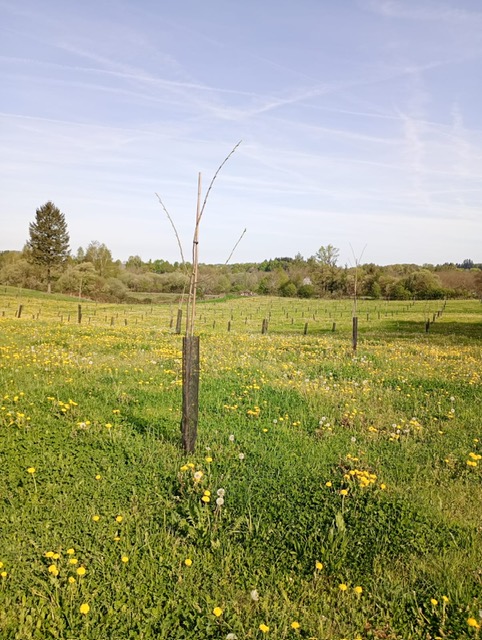
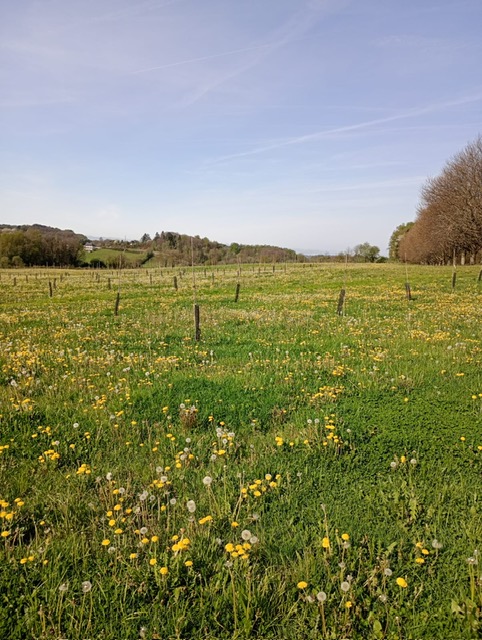
Read morePlantation of 2.9 hectares at Carine Rozier
In the lush heart of Corrèze, in Nouvelle-Aquitaine, lies the quaint village of Saint-Clément (19700), straddling Saint-Mexant (19330). This Limousin land, shaped by a temperate oceanic climate with mild winters and moderately warm summers, is a gem of rural biodiversity. Historically rooted in family farming and an economy centered on livestock and grain crops, Corrèze hosts ancient chestnut groves that have sustained generations.
Mrs. Carine Rozier plans to expand her chestnut orchard in the fall of 2023 by planting 2.9 ha of chestnut trees which will be certified Organic Agriculture. The plots chosen were previously cultivated with annual crops. Planting permanent trees will enable more CO2 to be sequestered throughout the year compared to a temporary crop: in all, 170.27 tons of CO2eq in 20 years*.
Organic Agriculture certification will impose the use of only natural inputs on chestnut trees.
The soil will also be able to sequester more CO2 because it will no longer be worked each year, it will be permanently grassed.
In addition, this new plantation will require less fertilizer and treatments compared to previous crops. This new cultural itinerary will help to avoid emissions and make the project even more virtuous.
Finally, part of the organic chestnuts will be sold locally in the region, and this activity contributes to reducing French imports of chestnuts.
* The final value of the estimate will only be established after verification by an independent auditor and an administrative verification decision.
 Label Bas Carbone
Examples: reducing the frequency of soil cultivation, minimalist plot preparation, restoring organic matter and preserving soil microfauna.
Examples: diversity and locality of crop species, preservation of habitat for local flora and fauna, presence of beehives for pollination.
Examples: territorial dynamics, societal demand, diversification of the activity, local sales/processing, working conditions, sharing of good practices.
Examples: Consideration of wetlands, use of adapted species, drip-connected irrigation tools.
EI Rozier Carine
EI Rozier Carine - Individual farm cultivating mainly chestnut trees
Read moreAssociation of actors of the chestnut sector in the South-West of France, gathering more than 1800 ha of orchards.
Read morePlantation of 2.9 hectares at Carine Rozier
In the lush heart of Corrèze, in Nouvelle-Aquitaine, lies the quaint village of Saint-Clément (19700), straddling Saint-Mexant (19330). This Limousin land, shaped by a temperate oceanic climate with mild winters and moderately warm summers, is a gem of rural biodiversity. Historically rooted in family farming and an economy centered on livestock and grain crops, Corrèze hosts ancient chestnut groves that have sustained generations.
Mrs. Carine Rozier plans to expand her chestnut orchard in the fall of 2023 by planting 2.9 ha of chestnut trees which will be certified Organic Agriculture. The plots chosen were previously cultivated with annual crops. Planting permanent trees will enable more CO2 to be sequestered throughout the year compared to a temporary crop: in all, 170.27 tons of CO2eq in 20 years*.
Organic Agriculture certification will impose the use of only natural inputs on chestnut trees.
The soil will also be able to sequester more CO2 because it will no longer be worked each year, it will be permanently grassed.
In addition, this new plantation will require less fertilizer and treatments compared to previous crops. This new cultural itinerary will help to avoid emissions and make the project even more virtuous.
Finally, part of the organic chestnuts will be sold locally in the region, and this activity contributes to reducing French imports of chestnuts.
* The final value of the estimate will only be established after verification by an independent auditor and an administrative verification decision.