
 Label Bas Carbone
Examples: reducing the frequency of soil cultivation, minimalist plot preparation, restoring organic matter and preserving soil microfauna.

Examples: territorial dynamics, societal demand, diversification of the activity, local sales/processing, working conditions, sharing of good practices.

Examples: Consideration of wetlands, use of adapted species, drip-connected irrigation tools.
Association of actors of the chestnut sector in the South-West of France, gathering more than 1800 ha of orchards.
Read moreNew orchard in Lot-et-Garonne
The Dordogne is an agricultural department characterized by a wide diversity of produce. Cattle, poultry, and duck farming play a significant role. The area is renowned for the production of foie gras, walnuts, and black truffles. Viticulture is also present, particularly in the Bergerac vineyards, while cereal crops (such as corn and wheat) are grown in the fertile valleys. The agricultural sector consists primarily of medium-sized family farms. High-quality products are promoted through numerous certifications (AOP, IGP, Label Rouge). Finally, agriculture in the Périgord region makes a major contribution to the local economy, gastronomic tourism, and landscape maintenance.
The family farm of Pierre Laborde and his son Benoît specializes in arboriculture and market gardening.
Historically, the estate cultivates field vegetables, such as tomatoes, salads, peppers and eggplants. It is since 1987 that the Laborde have diversified and started growing walnut and plum trees, and more recently in growing chestnut trees.
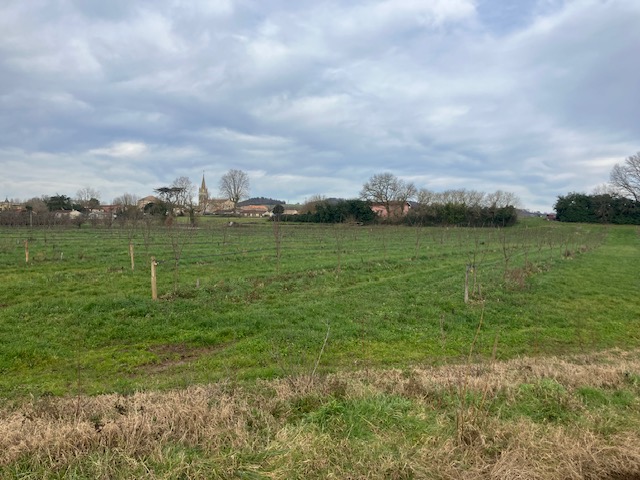
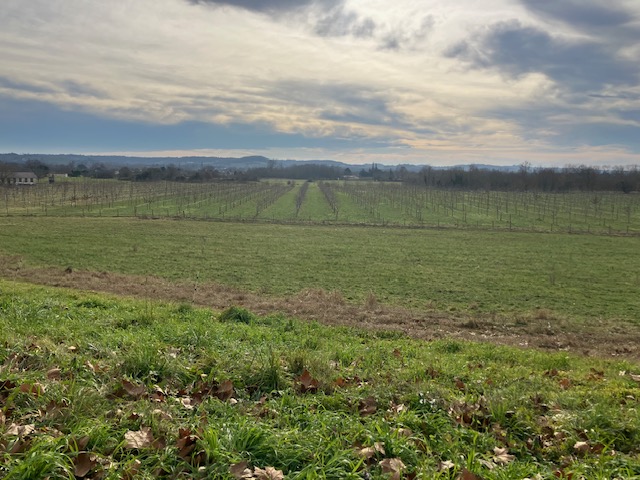
This diversification aims to establish the sustainability of the operation and to resist very volatile prices. Benoît Laborde completely took over the operation in 2023 and plans to plant 2.7 hectares of additional chestnut trees at the end of 2023 which will allow the storage of 175.49 tonnes of CO2 equivalent in 20 years*.
To manage permanent ground cover in the orchards, Benoît Laborde has developed a sheep flock, enabling savings on inputs and creating added value through the sheep kept on the estate.
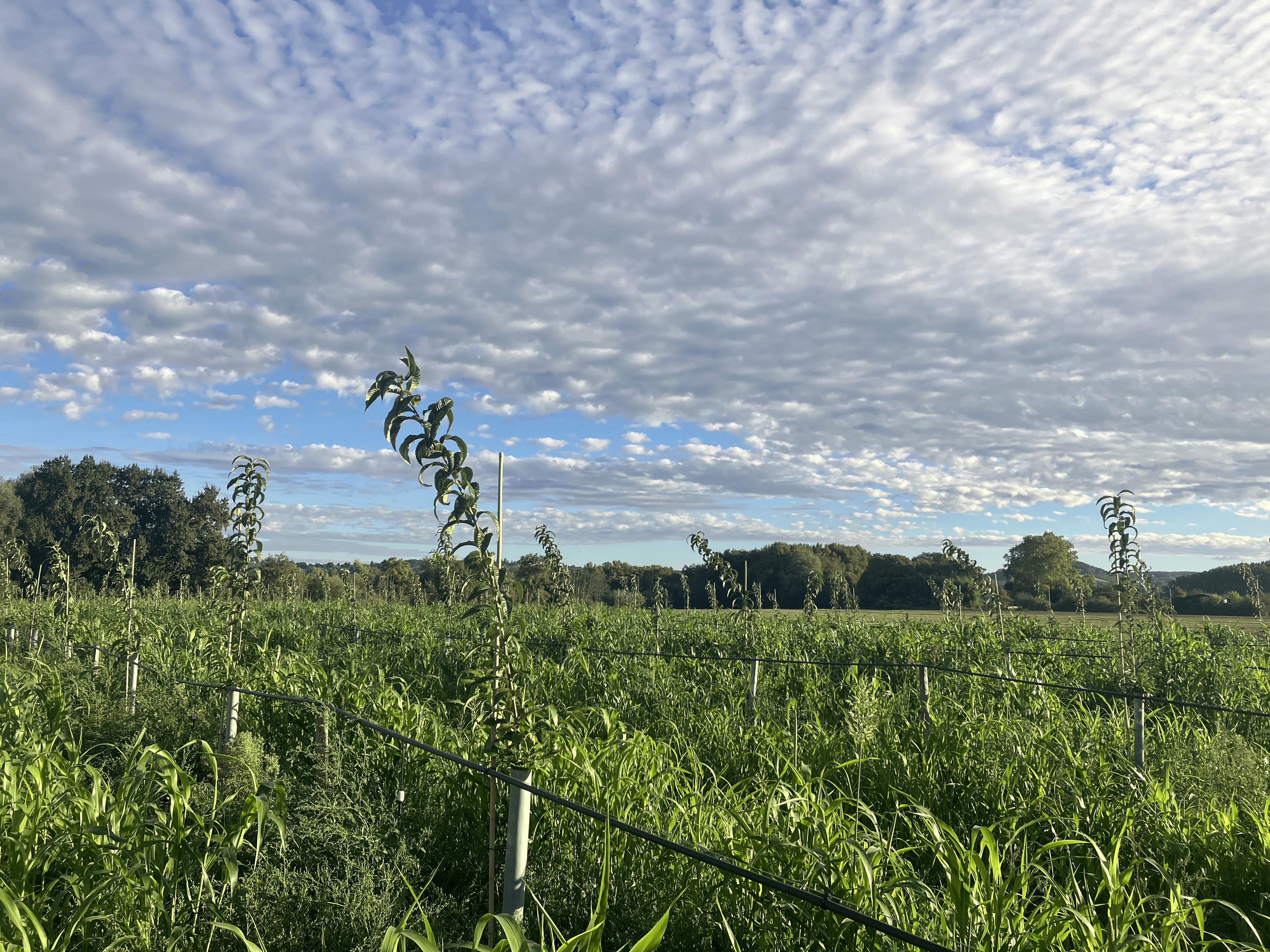
Water resource preservation: 100% of the orchard will feature ground cover and utilize precision irrigation equipment to conserve water.
Soil preservation: Planting orchards eliminates the need for soil tillage, allowing the soil—like the planted trees—to store more carbon.
Socio-economic impact: The chestnuts will be primarily sold and processed within the region. Their production will help reduce French chestnut imports.
* The final value of the estimate will only be established after verification by an independent auditor and an administrative verification decision.
 Label Bas Carbone
Examples: reducing the frequency of soil cultivation, minimalist plot preparation, restoring organic matter and preserving soil microfauna.
Examples: territorial dynamics, societal demand, diversification of the activity, local sales/processing, working conditions, sharing of good practices.
Examples: Consideration of wetlands, use of adapted species, drip-connected irrigation tools.
Association of actors of the chestnut sector in the South-West of France, gathering more than 1800 ha of orchards.
Read moreNew orchard in Lot-et-Garonne
The Dordogne is an agricultural department characterized by a wide diversity of produce. Cattle, poultry, and duck farming play a significant role. The area is renowned for the production of foie gras, walnuts, and black truffles. Viticulture is also present, particularly in the Bergerac vineyards, while cereal crops (such as corn and wheat) are grown in the fertile valleys. The agricultural sector consists primarily of medium-sized family farms. High-quality products are promoted through numerous certifications (AOP, IGP, Label Rouge). Finally, agriculture in the Périgord region makes a major contribution to the local economy, gastronomic tourism, and landscape maintenance.
The family farm of Pierre Laborde and his son Benoît specializes in arboriculture and market gardening.
Historically, the estate cultivates field vegetables, such as tomatoes, salads, peppers and eggplants. It is since 1987 that the Laborde have diversified and started growing walnut and plum trees, and more recently in growing chestnut trees.
This diversification aims to establish the sustainability of the operation and to resist very volatile prices. Benoît Laborde completely took over the operation in 2023 and plans to plant 2.7 hectares of additional chestnut trees at the end of 2023 which will allow the storage of 175.49 tonnes of CO2 equivalent in 20 years*.
To manage permanent ground cover in the orchards, Benoît Laborde has developed a sheep flock, enabling savings on inputs and creating added value through the sheep kept on the estate.
Water resource preservation: 100% of the orchard will feature ground cover and utilize precision irrigation equipment to conserve water.
Soil preservation: Planting orchards eliminates the need for soil tillage, allowing the soil—like the planted trees—to store more carbon.
Socio-economic impact: The chestnuts will be primarily sold and processed within the region. Their production will help reduce French chestnut imports.
* The final value of the estimate will only be established after verification by an independent auditor and an administrative verification decision.