
 Label Bas Carbone
Examples: reducing the frequency of soil cultivation, minimalist plot preparation, restoring organic matter and preserving soil microfauna.

Examples: territorial dynamics, societal demand, diversification of the activity, local sales/processing, working conditions, sharing of good practices.

Examples: Consideration of wetlands, use of adapted species, drip-connected irrigation tools.
Association of actors of the chestnut sector in the South-West of France, gathering more than 1800 ha of orchards.
Read moreThis farm, run by a father and son, has diversified and specialized in many sectors to combat climate change.
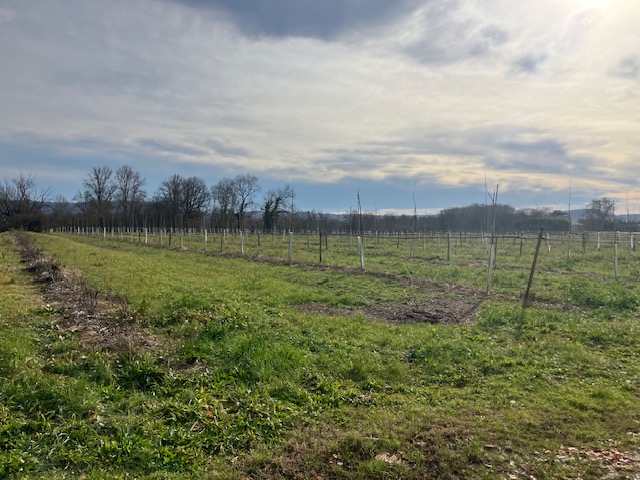
The family farm of Pierre Laborde and his son Benoît specializes in arboriculture and market gardening.
Historically, the estate has grown field vegetables, such as tomatoes, lettuces, peppers and aubergines. It is since 1987 that the Labordes have diversified and embarked on the cultivation of walnut and plum trees, and more recently in the cultivation of chestnut trees.
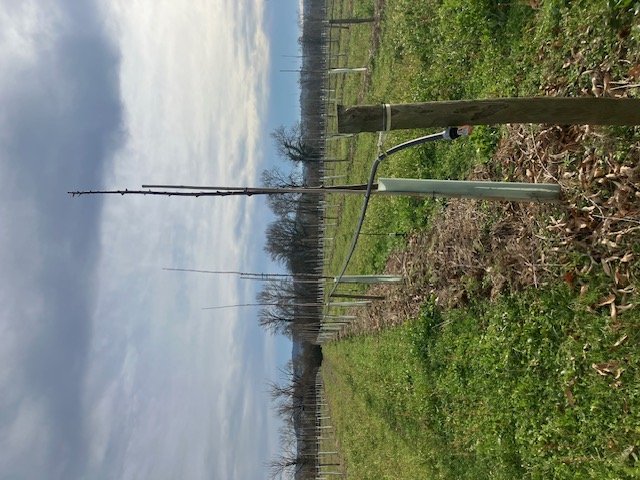
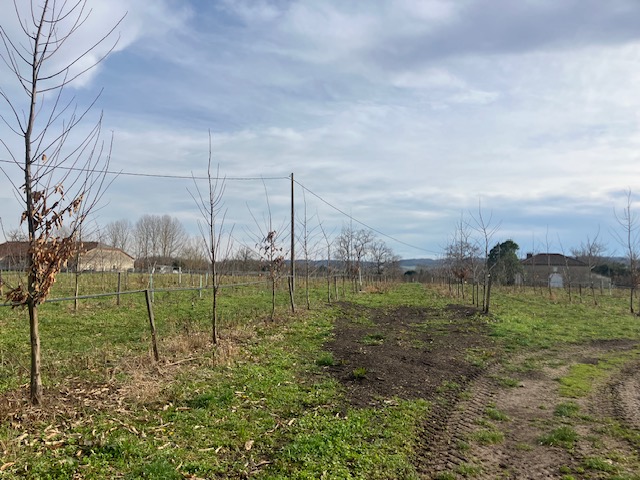
The purpose of this diversification is to establish the sustainability of operations and to resist highly volatile prices. Pierre and Benoît Laborde plan to plant 3.1 Ha of chestnut trees and 4.5 Ha of additional plum trees at the end of 2022, which will allow the storage of 409.70 tonnes of CO2 equivalent in 20 years*.
In order to regulate the permanent grass under the orchards, Benoît Laborde has developed a sheep herd, making it possible to save on inputs and create added value thanks to the sheep present on the estate.
Planting orchards eliminates the need to work the soil, which will store more carbon, just like the trees planted.
The productions of the orchards are mainly sold and processed in the Lot-et-Garonne, in particular via the Agen prune sector.
* The final value of the estimate will only be established after verification by an independent auditor and an administrative verification decision.
 Label Bas Carbone
Examples: reducing the frequency of soil cultivation, minimalist plot preparation, restoring organic matter and preserving soil microfauna.
Examples: territorial dynamics, societal demand, diversification of the activity, local sales/processing, working conditions, sharing of good practices.
Examples: Consideration of wetlands, use of adapted species, drip-connected irrigation tools.
Association of actors of the chestnut sector in the South-West of France, gathering more than 1800 ha of orchards.
Read moreThis farm, run by a father and son, has diversified and specialized in many sectors to combat climate change.
The family farm of Pierre Laborde and his son Benoît specializes in arboriculture and market gardening.
Historically, the estate has grown field vegetables, such as tomatoes, lettuces, peppers and aubergines. It is since 1987 that the Labordes have diversified and embarked on the cultivation of walnut and plum trees, and more recently in the cultivation of chestnut trees.
The purpose of this diversification is to establish the sustainability of operations and to resist highly volatile prices. Pierre and Benoît Laborde plan to plant 3.1 Ha of chestnut trees and 4.5 Ha of additional plum trees at the end of 2022, which will allow the storage of 409.70 tonnes of CO2 equivalent in 20 years*.
In order to regulate the permanent grass under the orchards, Benoît Laborde has developed a sheep herd, making it possible to save on inputs and create added value thanks to the sheep present on the estate.
Planting orchards eliminates the need to work the soil, which will store more carbon, just like the trees planted.
The productions of the orchards are mainly sold and processed in the Lot-et-Garonne, in particular via the Agen prune sector.
* The final value of the estimate will only be established after verification by an independent auditor and an administrative verification decision.