
 Label Bas Carbone
Examples: diversity and locality of crop species, preservation of habitat for local flora and fauna, presence of beehives for pollination.

Examples: territorial dynamics, societal demand, diversification of the activity, local sales/processing, working conditions, sharing of good practices.

Examples: Consideration of wetlands, use of adapted species, drip-connected irrigation tools.
EARL DE FITON
EARL DE FITON - Exploitation agricole cultivant entre autres des noyers.
Read more
Agricultural walnut and hazelnut cooperative that brings together more than 350 producers in the western half of France.
Read moreFirst plantation of 1,68 ha of walnut trees at EARL de Fiton in Lot-et-Garonne
Located in Nouvelle-Aquitaine, the town of Gontaud-de-Nogaret lies at the heart of Lot-et-Garonne, a department renowned for its fertile terroir and diverse landscapes. This region, with its deep-rooted rural history, enjoys a temperate climate ideal for fruit and vegetable farming. The local economy strongly relies on agriculture, with flagship products such as Agen prunes, fresh produce, and cereals. The territory also fosters innovation and ecological transition, encouraging crop diversification and tree planting to strengthen farm resilience against climate change.
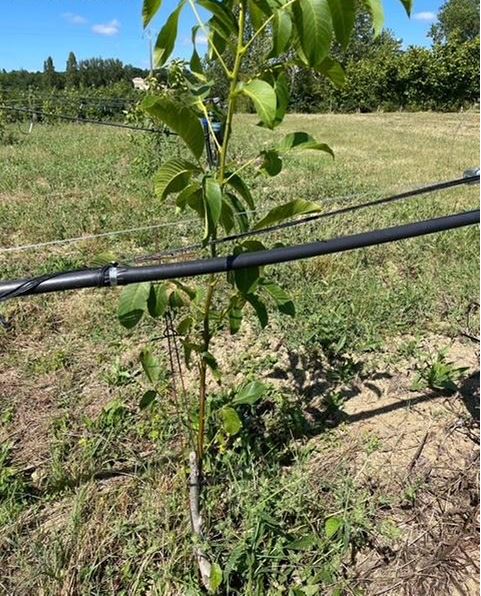
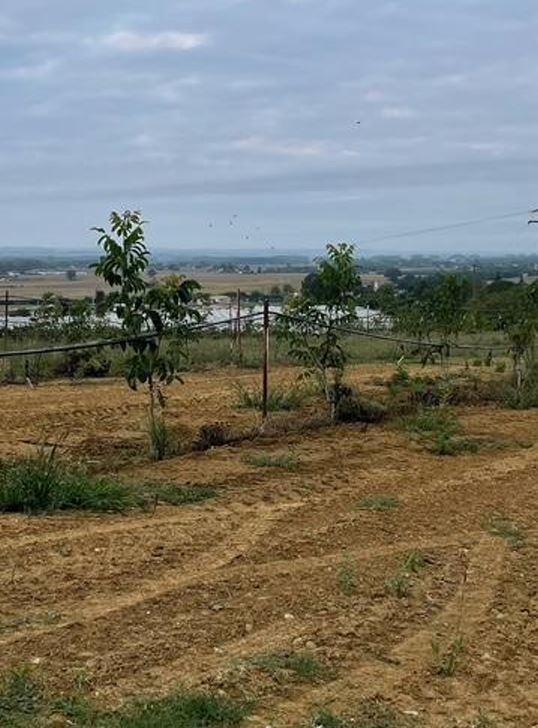
EARL de Fiton plans to enter walnut cultivation by planting 1.68 hectares of walnut trees in the winter of 2022-2023. The selected plots were previously used for annual cereal crops.
Planting permanent trees will sequester more CO2 throughout the year compared to a temporary crop. This project will store 62.9 tons of CO2 equivalent in 20 years*.
The project responds to social and economic issues: The production of walnuts allows the farmer to diversify his sources of income, which guarantees him more security for the years to come.
A biodiversity-friendly project: establishing new permanent crops on the farm will provide a stable habitat for various species that were not necessarily present before.
The soil will also be able to sequester more CO2: because it will no longer be worked each year. In addition, this new plantation will use organic fertilizers.
The water resource will be protected: In order to limit soil erosion and leaching, 80% of the orchard will benefit from permanent grass cover. An action which will also be very beneficial for local biodiversity and will limit water consumption. Precision irrigation equipment will also be used to limit the quantities of water needed for crops.
* The final value of the estimate will only be established after verification by an independent auditor and an administrative verification decision.
 Label Bas Carbone
Examples: diversity and locality of crop species, preservation of habitat for local flora and fauna, presence of beehives for pollination.
Examples: territorial dynamics, societal demand, diversification of the activity, local sales/processing, working conditions, sharing of good practices.
Examples: Consideration of wetlands, use of adapted species, drip-connected irrigation tools.
EARL DE FITON
EARL DE FITON - Exploitation agricole cultivant entre autres des noyers.
Read moreAgricultural walnut and hazelnut cooperative that brings together more than 350 producers in the western half of France.
Read moreFirst plantation of 1,68 ha of walnut trees at EARL de Fiton in Lot-et-Garonne
Located in Nouvelle-Aquitaine, the town of Gontaud-de-Nogaret lies at the heart of Lot-et-Garonne, a department renowned for its fertile terroir and diverse landscapes. This region, with its deep-rooted rural history, enjoys a temperate climate ideal for fruit and vegetable farming. The local economy strongly relies on agriculture, with flagship products such as Agen prunes, fresh produce, and cereals. The territory also fosters innovation and ecological transition, encouraging crop diversification and tree planting to strengthen farm resilience against climate change.
EARL de Fiton plans to enter walnut cultivation by planting 1.68 hectares of walnut trees in the winter of 2022-2023. The selected plots were previously used for annual cereal crops.
Planting permanent trees will sequester more CO2 throughout the year compared to a temporary crop. This project will store 62.9 tons of CO2 equivalent in 20 years*.
The project responds to social and economic issues: The production of walnuts allows the farmer to diversify his sources of income, which guarantees him more security for the years to come.
A biodiversity-friendly project: establishing new permanent crops on the farm will provide a stable habitat for various species that were not necessarily present before.
The soil will also be able to sequester more CO2: because it will no longer be worked each year. In addition, this new plantation will use organic fertilizers.
The water resource will be protected: In order to limit soil erosion and leaching, 80% of the orchard will benefit from permanent grass cover. An action which will also be very beneficial for local biodiversity and will limit water consumption. Precision irrigation equipment will also be used to limit the quantities of water needed for crops.
* The final value of the estimate will only be established after verification by an independent auditor and an administrative verification decision.