
 Label Bas Carbone
Examples: reducing the frequency of soil cultivation, minimalist plot preparation, restoring organic matter and preserving soil microfauna.

Examples: diversity and locality of crop species, preservation of habitat for local flora and fauna, presence of beehives for pollination.

Examples: territorial dynamics, societal demand, diversification of the activity, local sales/processing, working conditions, sharing of good practices.

Examples: Consideration of wetlands, use of adapted species, drip-connected irrigation tools.
EARL de PIERREBERNAT
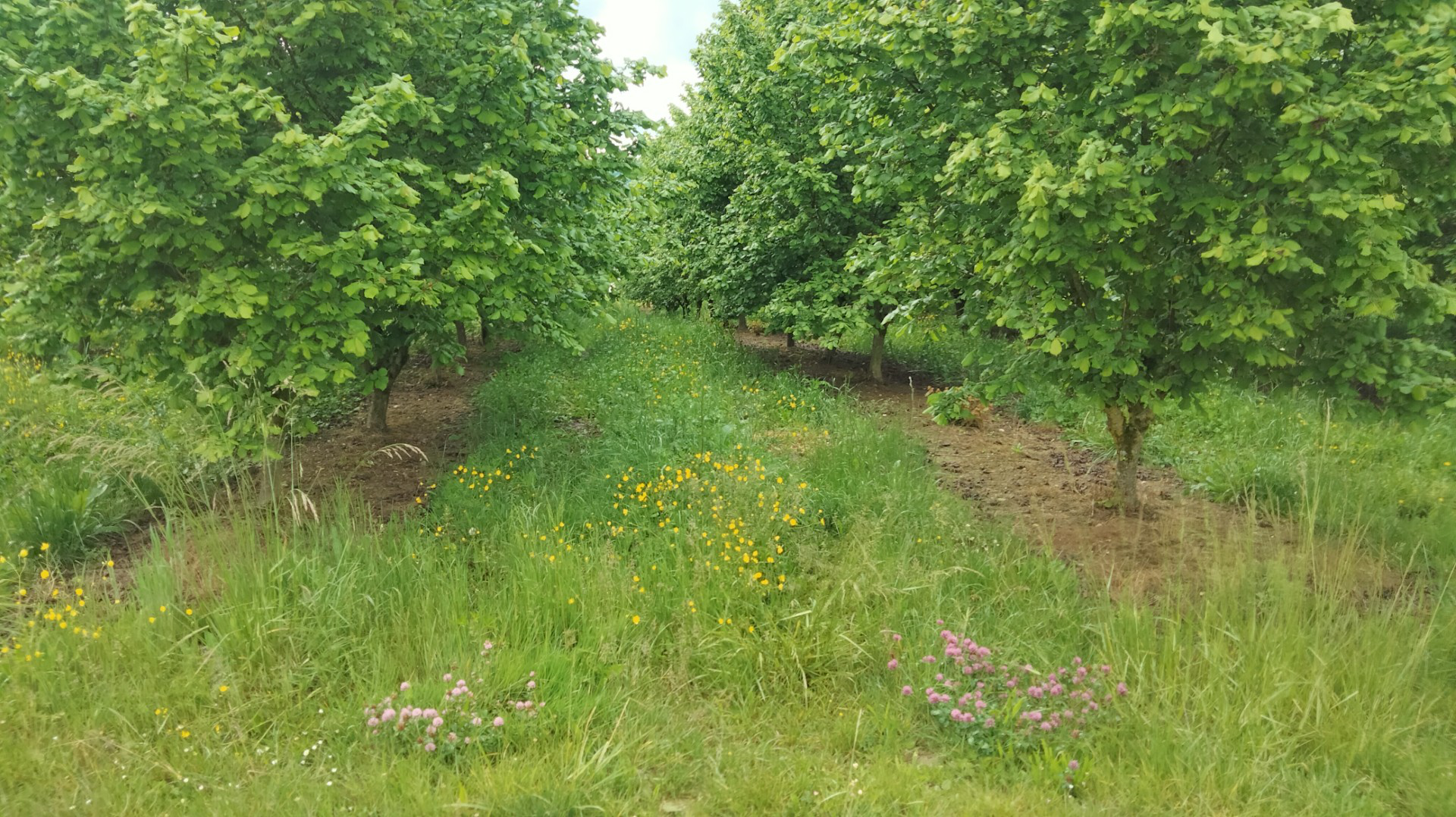
EARL de PIERREBERNAT - Exploitation agricole avec vergers de noisetiers.
Read more
Agricultural walnut and hazelnut cooperative that brings together more than 350 producers in the western half of France.
Read moreExpansion of an orchard as a substitute for field crops
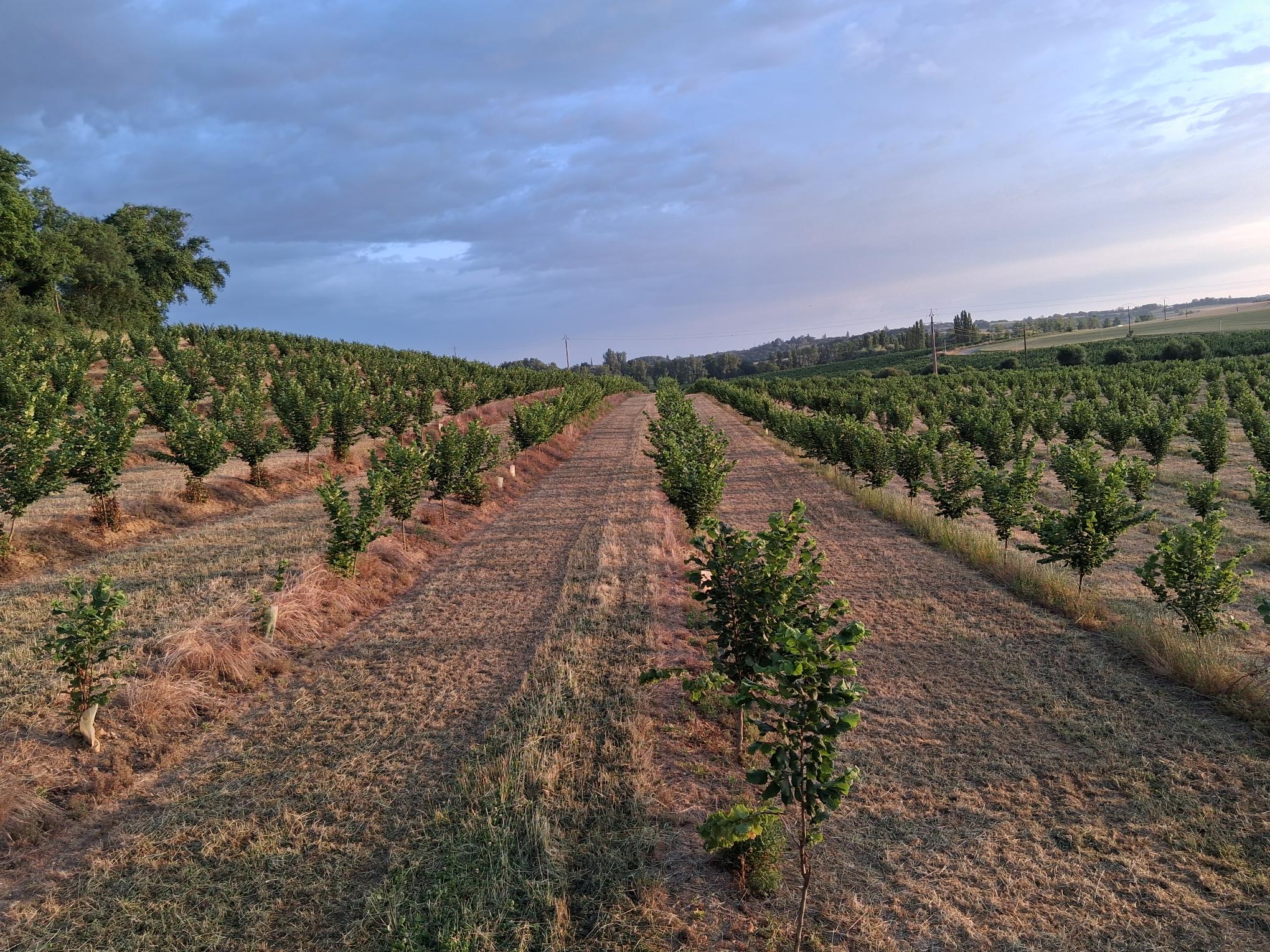
Grégory (34, set up in 2017) and Yann (37, set up in 2019) are in the process of taking over the farm from their two fathers, who will be retiring in 2019 and 2022, and from their uncle Paul (due to retire in 2025). They wish to continue the fruit-growing project started by the previous generation, and in particular to grow hazelnuts. The farm currently has 8 hectares of plum trees, 20 hectares of walnut trees and 90 hectares of hazelnut trees in the commune of Labretonie.
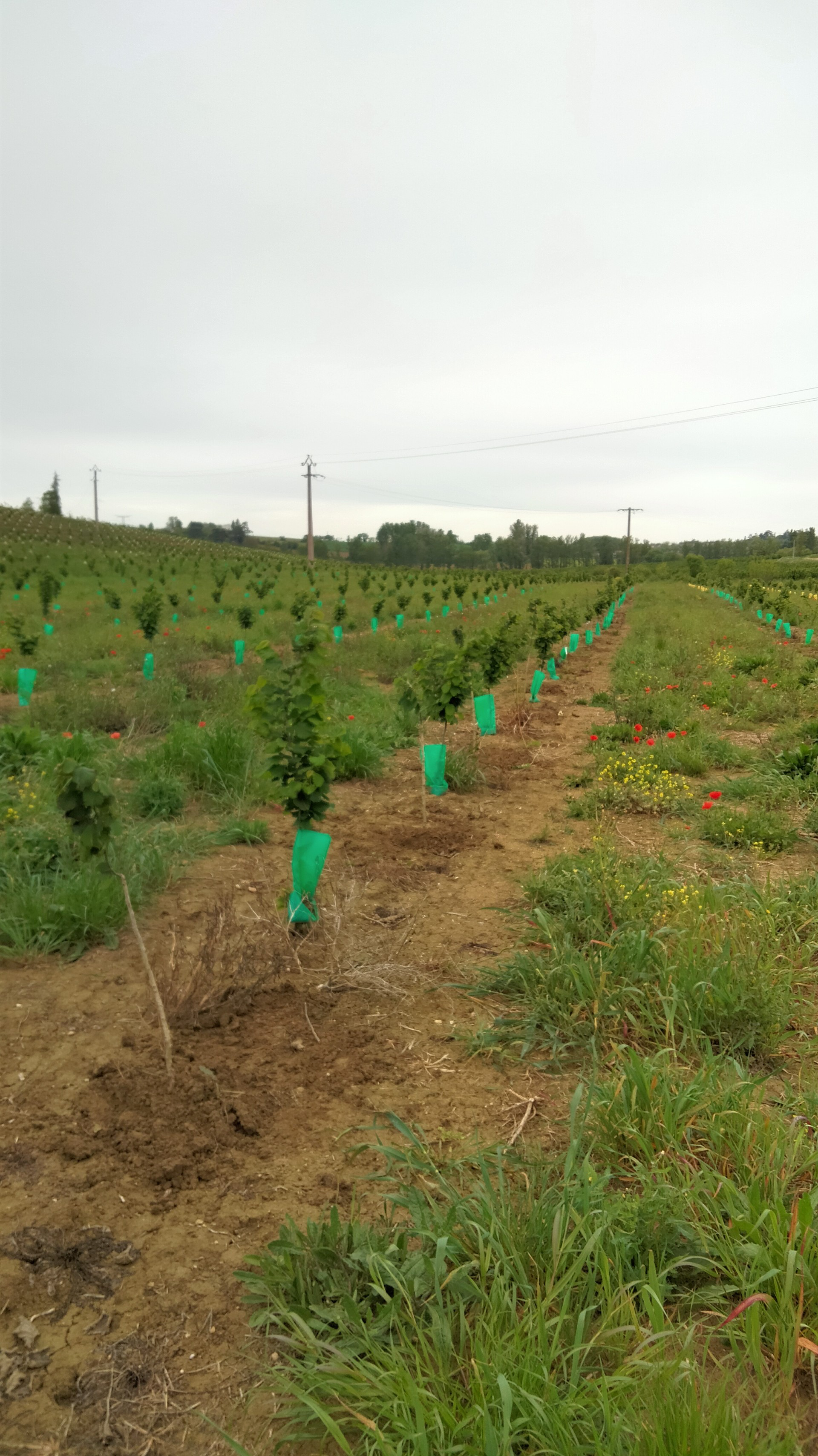
The project involves helping the farm to plant 10 hectares of hazelnut trees. The selected plots were previously used for annual crops such as cereals. Planting permanent trees will enable more CO2 to be sequestered throughout the year than would be the case with a temporary crop. The soil will also be able to sequester more CO2 because it will no longer be worked every year. What's more, this new plantation will require very little fertiliser and treatment compared with previous crops. This new cultivation method will help to avoid emissions and make the project even more virtuous.
"Our ambition, thanks in part to this project, is to maintain family farming on a human scale in France. We're proud of French know-how and we want to ensure that it continues, despite the current difficulties, particularly with regard to production resources, which are falling sharply in the face of emerging pests (such as the devil's bug) and rising energy and input costs". (Yann, one of the three partners of EARL Pierre Bernat).
Relocate hazelnut production to France : Future hazelnuts will be marketed by the Unicoque cooperative and are destined for the industrial market for all hazelnut-based preparations (chocolate, cakes, spreads, biscuits, salted products) for which French production is far from sufficient to satisfy demand, with France importing 90% of its hazelnut consumption.
Limiting environmental impact and preserving biodiversity : The farm strives to produce quality fruit while keeping the environmental impact of its production to a minimum. As soon as possible, it implements alternative solutions such as mating disruption for codling moth, differentiated mowing, organic fertilisers, sheep grazing in orchards and plant cover. Beehives are also kept around the orchards.
The farm has held High Environmental Value (HVE) certification since the summer of 2021, which guarantees that its inputs (fertilisers, irrigation, plant protection products) are managed sensibly and efficiently, and that the hedges, tree lines, woodland edges and other natural features of ecological interest around the plots are preserved.
Preserving water resources : The farm has 6 hillside reservoirs, which are filled with rainwater in winter and completely disconnected from any watercourse in summer. The orchards are irrigated using localised systems: overhead drip irrigation for the older orchards and underground drip irrigation for the newer ones (including the project). Soil moisture probes are used to control inputs as effectively as possible and maximise water efficiency.
Socio-economic impact : The 3 partners (Grégory, Paul and Yann) are supported by an employee who works ⅔ of the time on the farm and ⅓ of the time for the Unicoque cooperative, of which the farm is a member, as well as an employee who used to be a beautician in the Paris region in reconversion.
The farm is very attached to group work, which is why 100% of the fruit is marketed through the cooperative (UNICOQUE AND FRANCE PRUNE). By working together (around 300 growers in each cooperative), the growers have every chance of offering excellent products of the highest possible quality, and can take advantage of the group to improve their production techniques together. In addition, the 3 partners are involved in these structures (director of Unicoque and director of the Association Nationale des Producteurs de Noisette (ANPN), which manages hazelnut research and experimentation).
Energy consumption : The farm also produces solar energy, with 2 buildings equipped with photovoltaic panels, as well as a solar tracker for self-consumption of irrigation pumps.
 Label Bas Carbone
Examples: reducing the frequency of soil cultivation, minimalist plot preparation, restoring organic matter and preserving soil microfauna.
Examples: diversity and locality of crop species, preservation of habitat for local flora and fauna, presence of beehives for pollination.
Examples: territorial dynamics, societal demand, diversification of the activity, local sales/processing, working conditions, sharing of good practices.
Examples: Consideration of wetlands, use of adapted species, drip-connected irrigation tools.
EARL de PIERREBERNAT
EARL de PIERREBERNAT - Exploitation agricole avec vergers de noisetiers.
Read moreAgricultural walnut and hazelnut cooperative that brings together more than 350 producers in the western half of France.
Read moreExpansion of an orchard as a substitute for field crops
Grégory (34, set up in 2017) and Yann (37, set up in 2019) are in the process of taking over the farm from their two fathers, who will be retiring in 2019 and 2022, and from their uncle Paul (due to retire in 2025). They wish to continue the fruit-growing project started by the previous generation, and in particular to grow hazelnuts. The farm currently has 8 hectares of plum trees, 20 hectares of walnut trees and 90 hectares of hazelnut trees in the commune of Labretonie.
The project involves helping the farm to plant 10 hectares of hazelnut trees. The selected plots were previously used for annual crops such as cereals. Planting permanent trees will enable more CO2 to be sequestered throughout the year than would be the case with a temporary crop. The soil will also be able to sequester more CO2 because it will no longer be worked every year. What's more, this new plantation will require very little fertiliser and treatment compared with previous crops. This new cultivation method will help to avoid emissions and make the project even more virtuous.
"Our ambition, thanks in part to this project, is to maintain family farming on a human scale in France. We're proud of French know-how and we want to ensure that it continues, despite the current difficulties, particularly with regard to production resources, which are falling sharply in the face of emerging pests (such as the devil's bug) and rising energy and input costs". (Yann, one of the three partners of EARL Pierre Bernat).
Relocate hazelnut production to France : Future hazelnuts will be marketed by the Unicoque cooperative and are destined for the industrial market for all hazelnut-based preparations (chocolate, cakes, spreads, biscuits, salted products) for which French production is far from sufficient to satisfy demand, with France importing 90% of its hazelnut consumption.
Limiting environmental impact and preserving biodiversity : The farm strives to produce quality fruit while keeping the environmental impact of its production to a minimum. As soon as possible, it implements alternative solutions such as mating disruption for codling moth, differentiated mowing, organic fertilisers, sheep grazing in orchards and plant cover. Beehives are also kept around the orchards.
The farm has held High Environmental Value (HVE) certification since the summer of 2021, which guarantees that its inputs (fertilisers, irrigation, plant protection products) are managed sensibly and efficiently, and that the hedges, tree lines, woodland edges and other natural features of ecological interest around the plots are preserved.
Preserving water resources : The farm has 6 hillside reservoirs, which are filled with rainwater in winter and completely disconnected from any watercourse in summer. The orchards are irrigated using localised systems: overhead drip irrigation for the older orchards and underground drip irrigation for the newer ones (including the project). Soil moisture probes are used to control inputs as effectively as possible and maximise water efficiency.
Socio-economic impact : The 3 partners (Grégory, Paul and Yann) are supported by an employee who works ⅔ of the time on the farm and ⅓ of the time for the Unicoque cooperative, of which the farm is a member, as well as an employee who used to be a beautician in the Paris region in reconversion.
The farm is very attached to group work, which is why 100% of the fruit is marketed through the cooperative (UNICOQUE AND FRANCE PRUNE). By working together (around 300 growers in each cooperative), the growers have every chance of offering excellent products of the highest possible quality, and can take advantage of the group to improve their production techniques together. In addition, the 3 partners are involved in these structures (director of Unicoque and director of the Association Nationale des Producteurs de Noisette (ANPN), which manages hazelnut research and experimentation).
Energy consumption : The farm also produces solar energy, with 2 buildings equipped with photovoltaic panels, as well as a solar tracker for self-consumption of irrigation pumps.