
 Label Bas Carbone
Examples: reducing the frequency of soil cultivation, minimalist plot preparation, restoring organic matter and preserving soil microfauna.

Examples: diversity and locality of crop species, preservation of habitat for local flora and fauna, presence of beehives for pollination.

Examples: territorial dynamics, societal demand, diversification of the activity, local sales/processing, working conditions, sharing of good practices.

Examples: Consideration of wetlands, use of adapted species, drip-connected irrigation tools.
GAEC des Eaux Claires
GAEC des Eaux Claires - Exploitation agricole cultivant entre autres des noisetiers.
Read more
Agricultural walnut and hazelnut cooperative that brings together more than 350 producers in the western half of France.
Read moreExpansion of Mister Magne's orchard
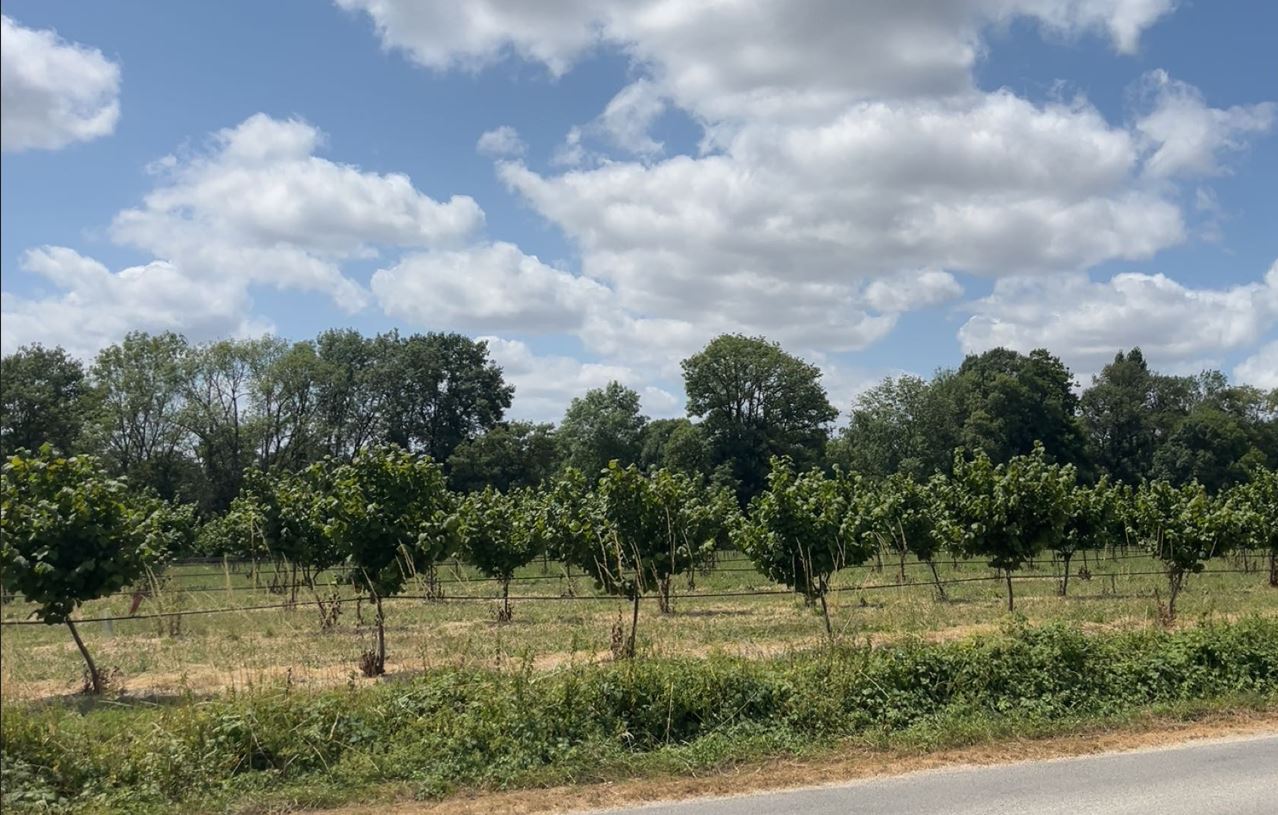
Located in the heart of Charente, Montmérac is part of Nouvelle-Aquitaine, a region renowned for its rolling countryside, dynamic agricultural sector, and temperate climate ideal for fruit growing. Charente boasts a rich rural history and has seen its agriculture diversify over centuries, now focusing on high-value crops. The local economy is structured around agriculture, viticulture, and forestry, benefiting from a preserved environment that supports biodiversity.
The French hazelnut industry, led by Unicoque-Koki, is growing rapidly to meet rising European demand. France, historically a producer, is investing in orchard modernization, agronomic quality, and traceability. In Charente, expanding hazelnut orchards revitalizes agriculture, helps farms adapt to climate change, and boosts the local economy, while encouraging sustainable resource management.
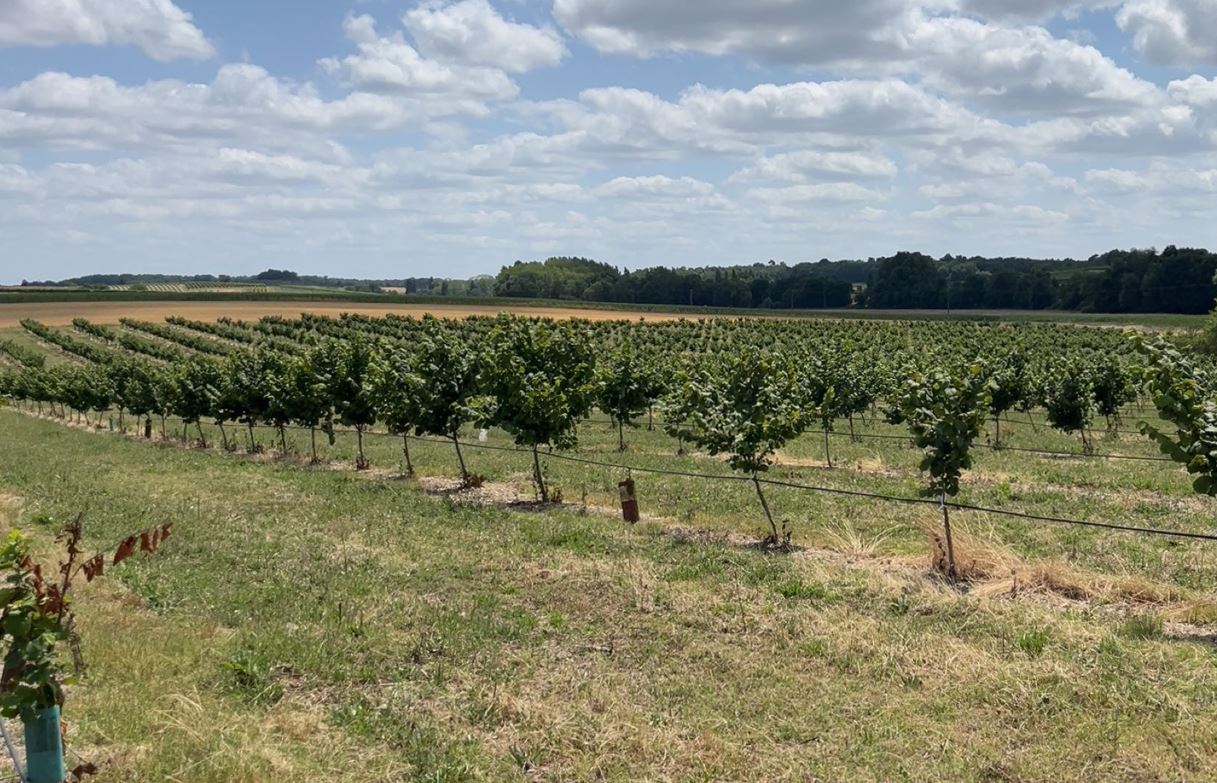
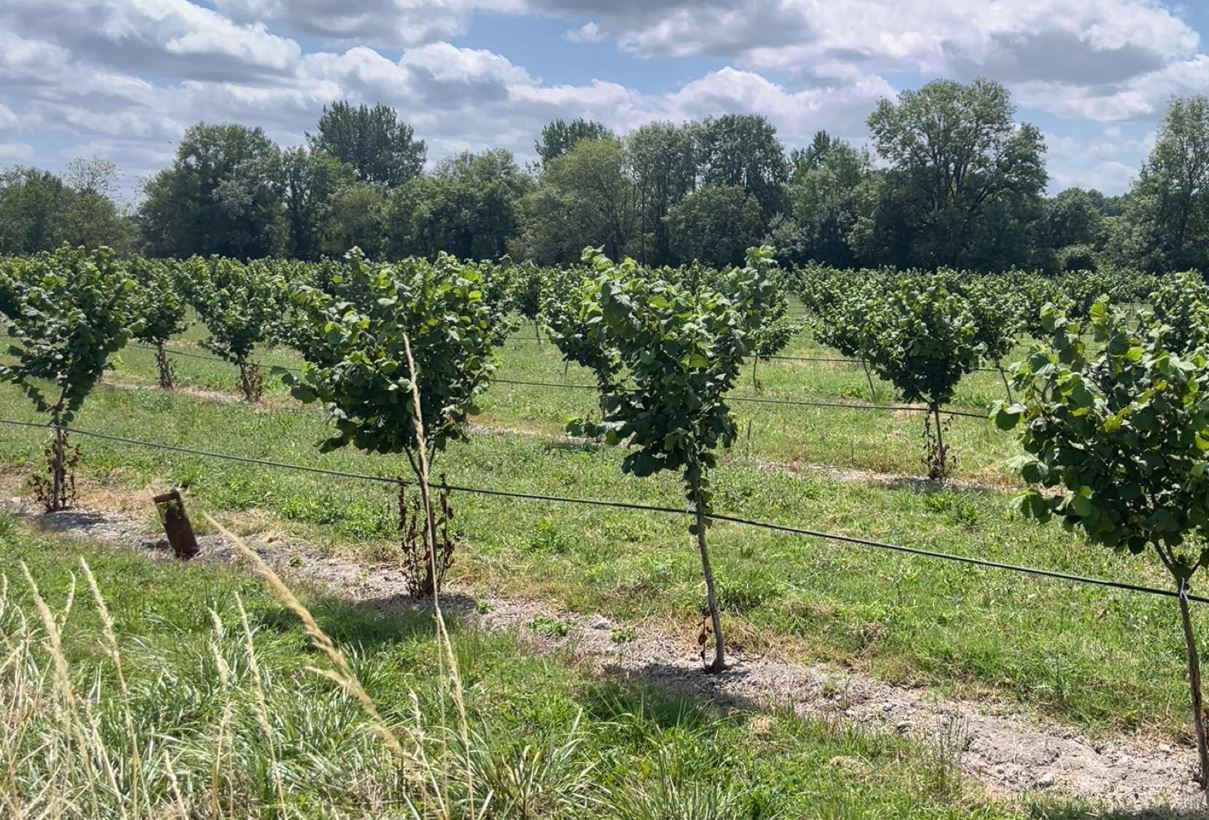
The selected plots were previously used for annual crops such as cereals. Planting permanent trees will sequester more CO2 throughout the year compared to a temporary crop. The soil will also be able to sequester more CO2 because it will no longer be worked each year. In addition, this new plantation will require very little fertilizer and treatment compared to previous crops. This new cultural itinerary will contribute to avoiding emissions and makes the project even more virtuous.
The farm has been certified High Environmental Value (HVE) since 2020, which guarantees a reasoned and efficient management of its inputs (fertilizers, irrigation, phytosanitary products) as well as the preservation of hedges, tree lines, wood edges and others. natural features of ecological interest around the plots.
This project makes it possible to relocate the production of hazelnuts in France because this product is today very mainly imported from abroad. A majority of the farm's hazelnut sales are regional.
 Label Bas Carbone
Examples: reducing the frequency of soil cultivation, minimalist plot preparation, restoring organic matter and preserving soil microfauna.
Examples: diversity and locality of crop species, preservation of habitat for local flora and fauna, presence of beehives for pollination.
Examples: territorial dynamics, societal demand, diversification of the activity, local sales/processing, working conditions, sharing of good practices.
Examples: Consideration of wetlands, use of adapted species, drip-connected irrigation tools.
GAEC des Eaux Claires
GAEC des Eaux Claires - Exploitation agricole cultivant entre autres des noisetiers.
Read moreAgricultural walnut and hazelnut cooperative that brings together more than 350 producers in the western half of France.
Read moreExpansion of Mister Magne's orchard
Located in the heart of Charente, Montmérac is part of Nouvelle-Aquitaine, a region renowned for its rolling countryside, dynamic agricultural sector, and temperate climate ideal for fruit growing. Charente boasts a rich rural history and has seen its agriculture diversify over centuries, now focusing on high-value crops. The local economy is structured around agriculture, viticulture, and forestry, benefiting from a preserved environment that supports biodiversity.
The French hazelnut industry, led by Unicoque-Koki, is growing rapidly to meet rising European demand. France, historically a producer, is investing in orchard modernization, agronomic quality, and traceability. In Charente, expanding hazelnut orchards revitalizes agriculture, helps farms adapt to climate change, and boosts the local economy, while encouraging sustainable resource management.
The selected plots were previously used for annual crops such as cereals. Planting permanent trees will sequester more CO2 throughout the year compared to a temporary crop. The soil will also be able to sequester more CO2 because it will no longer be worked each year. In addition, this new plantation will require very little fertilizer and treatment compared to previous crops. This new cultural itinerary will contribute to avoiding emissions and makes the project even more virtuous.
The farm has been certified High Environmental Value (HVE) since 2020, which guarantees a reasoned and efficient management of its inputs (fertilizers, irrigation, phytosanitary products) as well as the preservation of hedges, tree lines, wood edges and others. natural features of ecological interest around the plots.
This project makes it possible to relocate the production of hazelnuts in France because this product is today very mainly imported from abroad. A majority of the farm's hazelnut sales are regional.