
 Label Bas Carbone
Examples: reducing the frequency of soil cultivation, minimalist plot preparation, restoring organic matter and preserving soil microfauna.

Examples: territorial dynamics, societal demand, diversification of the activity, local sales/processing, working conditions, sharing of good practices.

Examples: Consideration of wetlands, use of adapted species, drip-connected irrigation tools.

Agricultural walnut and hazelnut cooperative that brings together more than 350 producers in the western half of France.
Read moreExtension of Mr. Briais' orchard
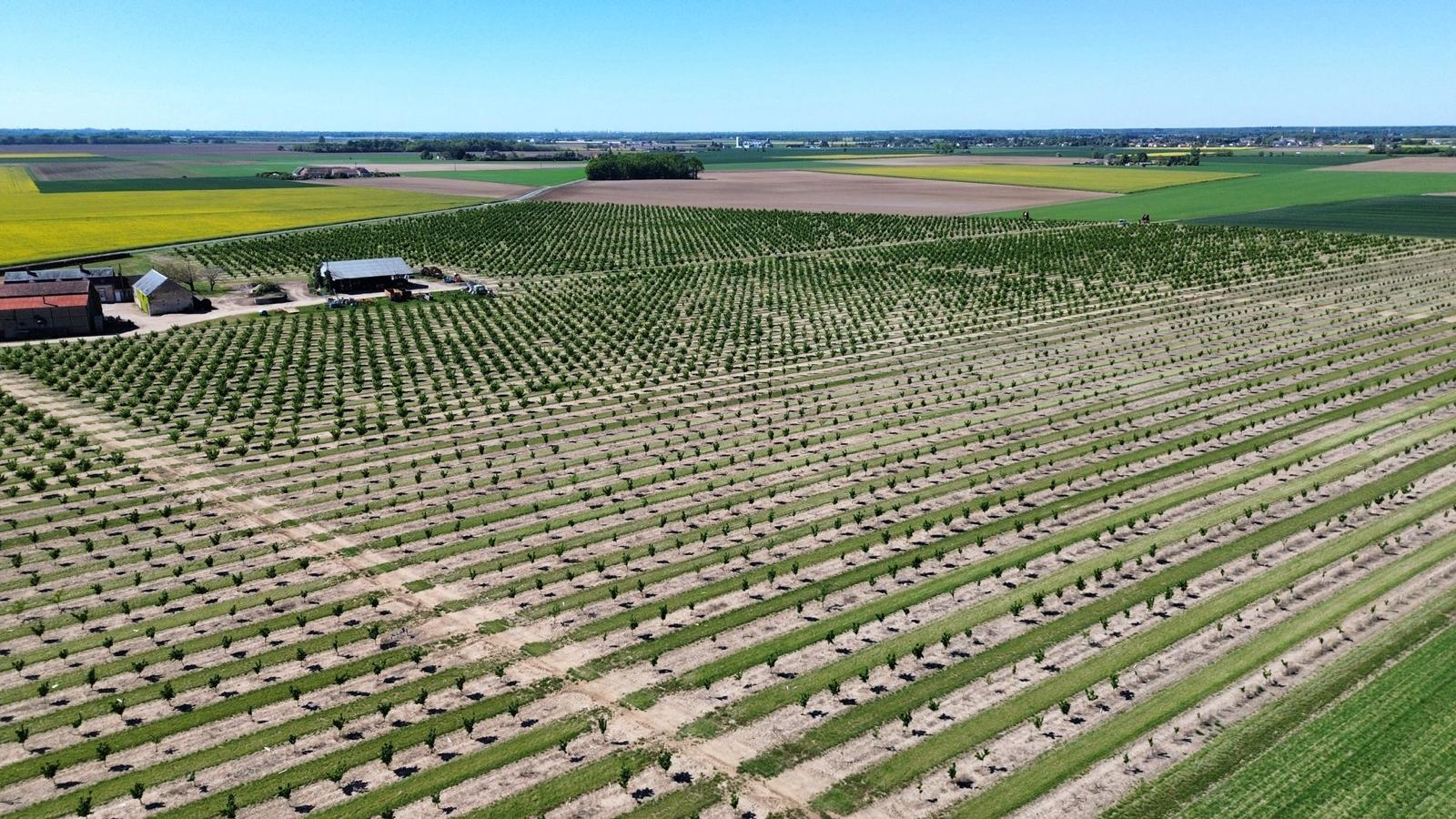
In Vienne-en-Val, a village in the Loiret department of the Centre-Val de Loire region, the project led by EARL ERMA is rooted in a territory with a rich agricultural history, shaped by a mild, temperate-oceanic climate and fertile loamy soils. The region, crossed by the Loire River, enjoys a diverse ecosystem ideal for agricultural diversification source. While field crops have long been dominant, a shift towards fruit arboriculture is accelerating, in line with ecological and food transition challenges.
EARL ERMA, operated by the Briais family since 1990, reflects the evolution of local agriculture: initially focused on large-scale crops, the farm is now diversifying its production. Recognized for its innovative capacity and commitment to environmentally friendly practices, the farm now partners with Unicoque-Koki, a major player in France's nut sector source.
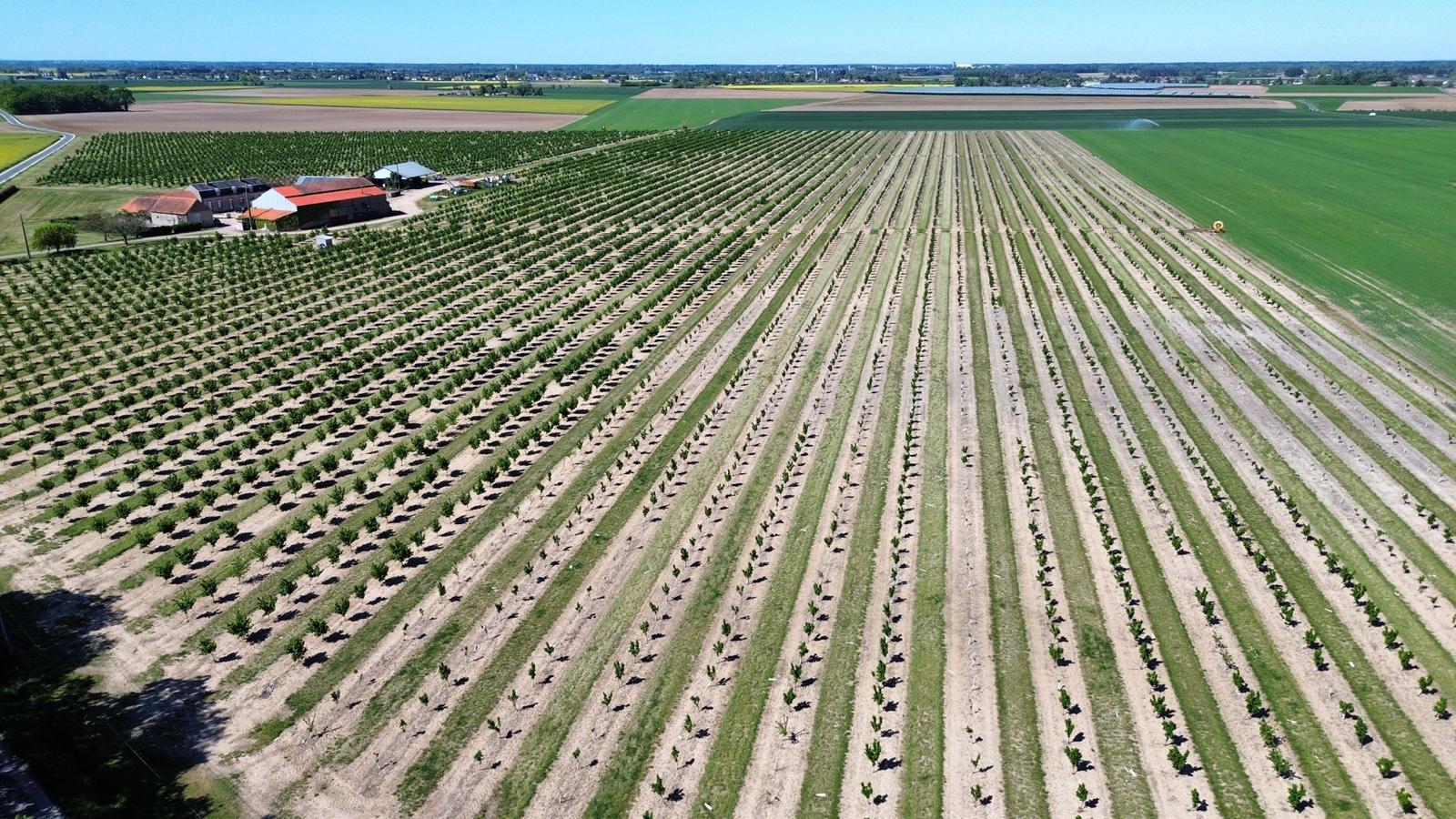
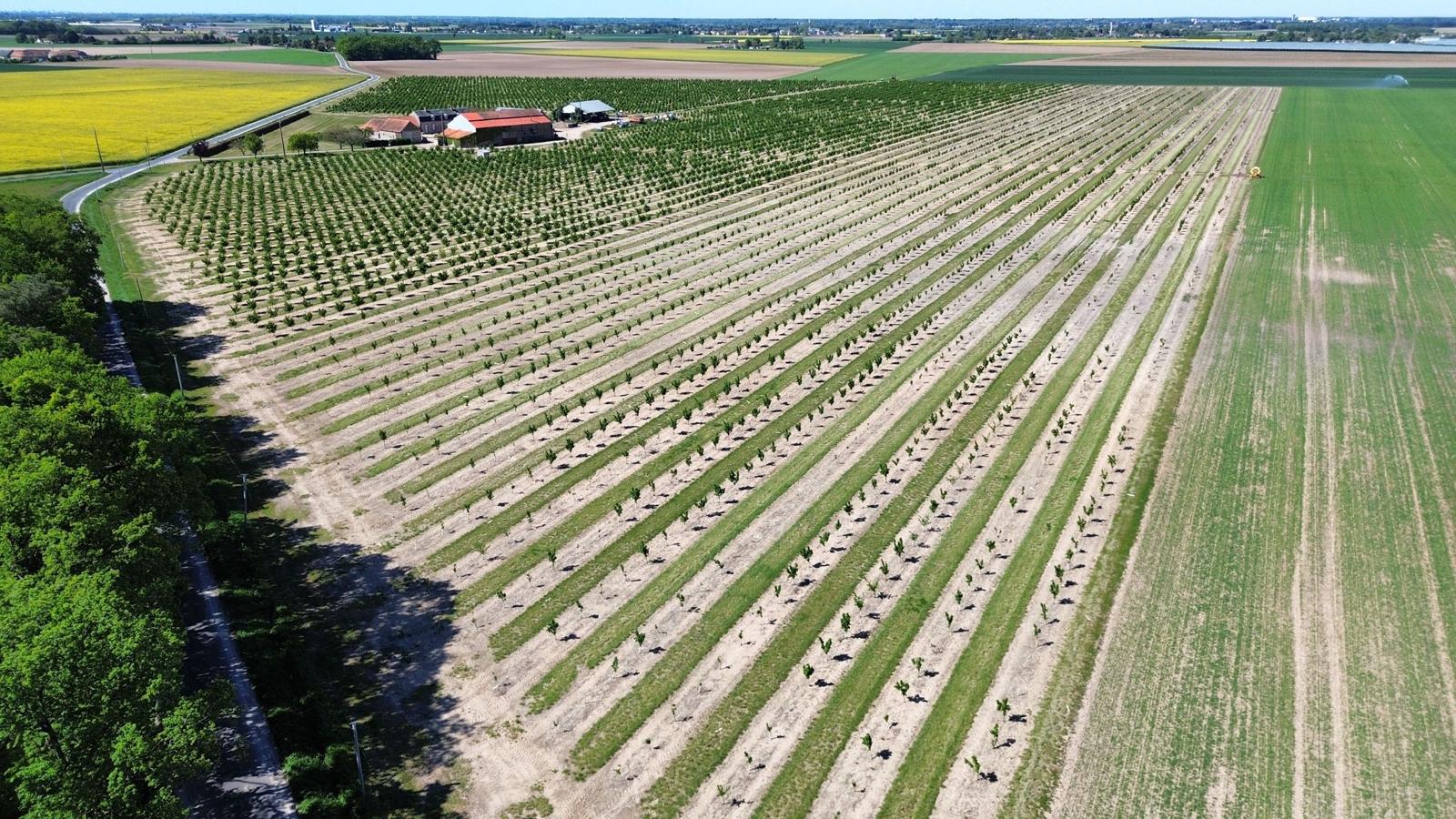
Mr. Vianney Briais plans to expand his hazelnut crops by planting nearly 8 ha of orchards in December 2022. The selected plots were previously used for annual cereal crops, like the majority of agricultural land in Beauce.
Planting permanent trees will sequester more CO2 throughout the year compared to a temporary crop. This project will make it possible to store 371.11 tonnes of CO2 equivalent in 20 years*.
This project makes it possible to relocate the production of hazelnuts in France because this product is today very mainly imported from abroad. A majority of the farm's hazelnut sales are made locally.
The soil will also be able to sequester more CO2 because it will no longer be worked each year. In addition, this new plantation will require little fertilizer and treatment compared to previous crops. This new cultural itinerary will contribute to avoiding emissions and makes the project even more virtuous.
The water resource will be used in small quantities because the orchards have a buried drip irrigation system which allows reasoned watering.
* The final value of the estimate will only be established after verification by an independent auditor and an administrative verification decision.
 Label Bas Carbone
Examples: reducing the frequency of soil cultivation, minimalist plot preparation, restoring organic matter and preserving soil microfauna.
Examples: territorial dynamics, societal demand, diversification of the activity, local sales/processing, working conditions, sharing of good practices.
Examples: Consideration of wetlands, use of adapted species, drip-connected irrigation tools.
Agricultural walnut and hazelnut cooperative that brings together more than 350 producers in the western half of France.
Read moreExtension of Mr. Briais' orchard
In Vienne-en-Val, a village in the Loiret department of the Centre-Val de Loire region, the project led by EARL ERMA is rooted in a territory with a rich agricultural history, shaped by a mild, temperate-oceanic climate and fertile loamy soils. The region, crossed by the Loire River, enjoys a diverse ecosystem ideal for agricultural diversification source. While field crops have long been dominant, a shift towards fruit arboriculture is accelerating, in line with ecological and food transition challenges.
EARL ERMA, operated by the Briais family since 1990, reflects the evolution of local agriculture: initially focused on large-scale crops, the farm is now diversifying its production. Recognized for its innovative capacity and commitment to environmentally friendly practices, the farm now partners with Unicoque-Koki, a major player in France's nut sector source.
Mr. Vianney Briais plans to expand his hazelnut crops by planting nearly 8 ha of orchards in December 2022. The selected plots were previously used for annual cereal crops, like the majority of agricultural land in Beauce.
Planting permanent trees will sequester more CO2 throughout the year compared to a temporary crop. This project will make it possible to store 371.11 tonnes of CO2 equivalent in 20 years*.
This project makes it possible to relocate the production of hazelnuts in France because this product is today very mainly imported from abroad. A majority of the farm's hazelnut sales are made locally.
The soil will also be able to sequester more CO2 because it will no longer be worked each year. In addition, this new plantation will require little fertilizer and treatment compared to previous crops. This new cultural itinerary will contribute to avoiding emissions and makes the project even more virtuous.
The water resource will be used in small quantities because the orchards have a buried drip irrigation system which allows reasoned watering.
* The final value of the estimate will only be established after verification by an independent auditor and an administrative verification decision.